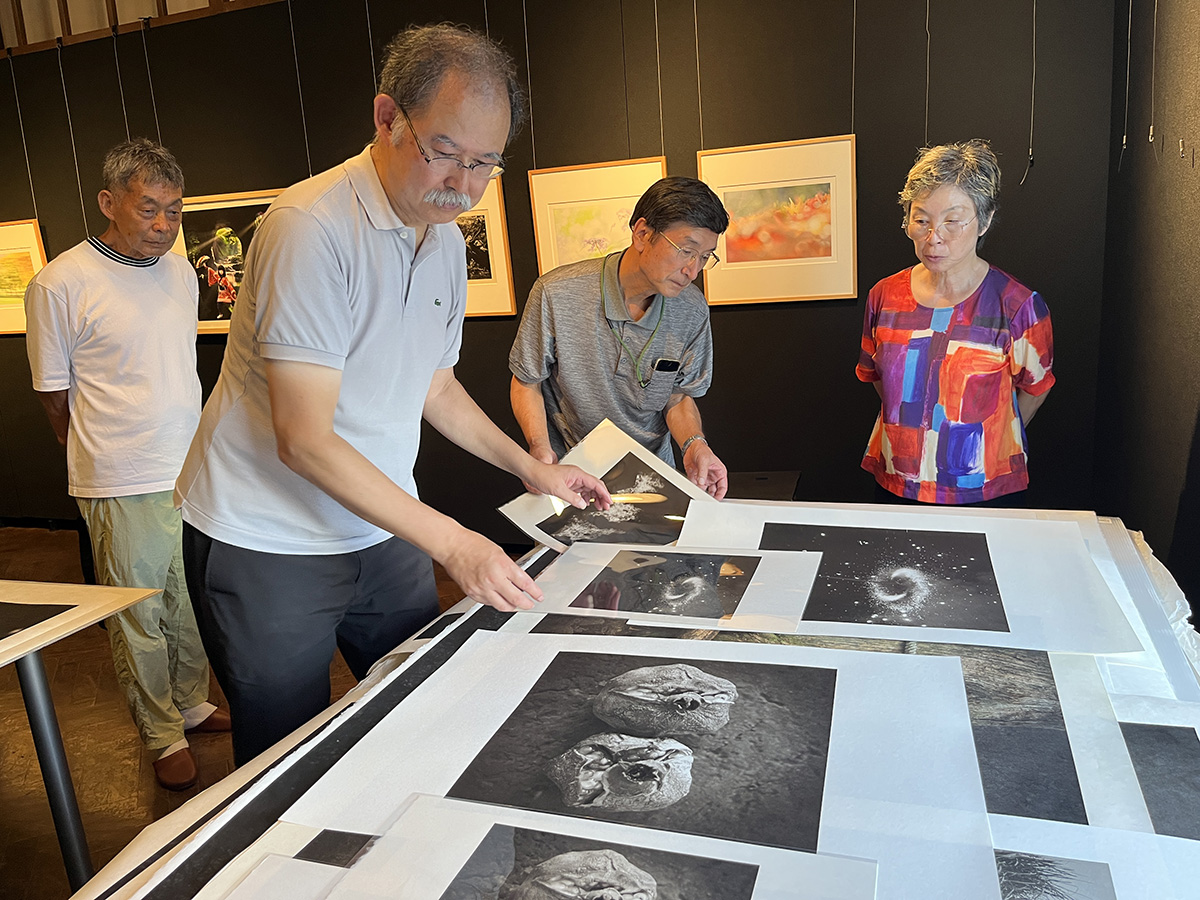
Visiting ISEWASHI to Check Prints for the Mexico Group Exhibition
September 5–6, 2025
メキシコでのグループ展のためのプリント確認に伊勢和紙さんへ
September 5th-6th, 2025 / 2025年9月5、6日
The SAMURAI FOTO exhibition “Ofrendas (Offerings)” will be held at the SAQ Gallery in Mexico City from October 2 to 30, 2025. For this show, most of the works’ paper and prints were produced by IseWashi.
Since its founding, many members of SAMURAI FOTO have chosen IseWashi for their exhibition works. Even last year, IseWashi was selected for works permanently preserved at the Pushkin Museum.
Ise Jingu, often called “the spiritual home of the Japanese heart,” inspired the creation of this pure paper, originally made for sacred amulets (ofuda). The inkjet-compatible IseWashi, developed to maintain its traditional texture, excellent printability, and surface strength while prioritizing purity, greatly enhances the artistic quality of fine art photographs.
Please enjoy glimpses of the historic scenery where the sacred paper is made, the print correction techniques, and hands-on experience with handmade paper.
10月2日から30日までメキシコシティのSAQギャラリーで開催されるSAMURAI FOTO展 “Ofrendas(捧げもの)”。今回はその出展作品の用紙とプリントのほとんどを伊勢和紙さんにお願いしました。
SAMURAI FOTOでは設立当初から多くのメンバーが展覧会には伊勢和紙を使用させていただいてきました。昨年、プーシキン美術館の永久保存になった作品にも伊勢和紙は選ばれています。
「日本人の心のふるさと」といわれる伊勢神宮。その神様の御神札(おふだ)のために生み出された清らかな和紙。清浄を第一に和紙らしい風合い、優れた印刷適性、表面強度を生かして開発されたインクジェットプリンタ対応の伊勢和紙は、ファインアート写真の作品性を格段に上げてくれます。
神宮御用紙を生み出す由緒ある光景と、プリントのための補正技術、手漉き体験の様子などをご覧ください。
“IseWashi.: Paper Made for the Gods”
神様のための紙「伊勢和紙」
IseWashi
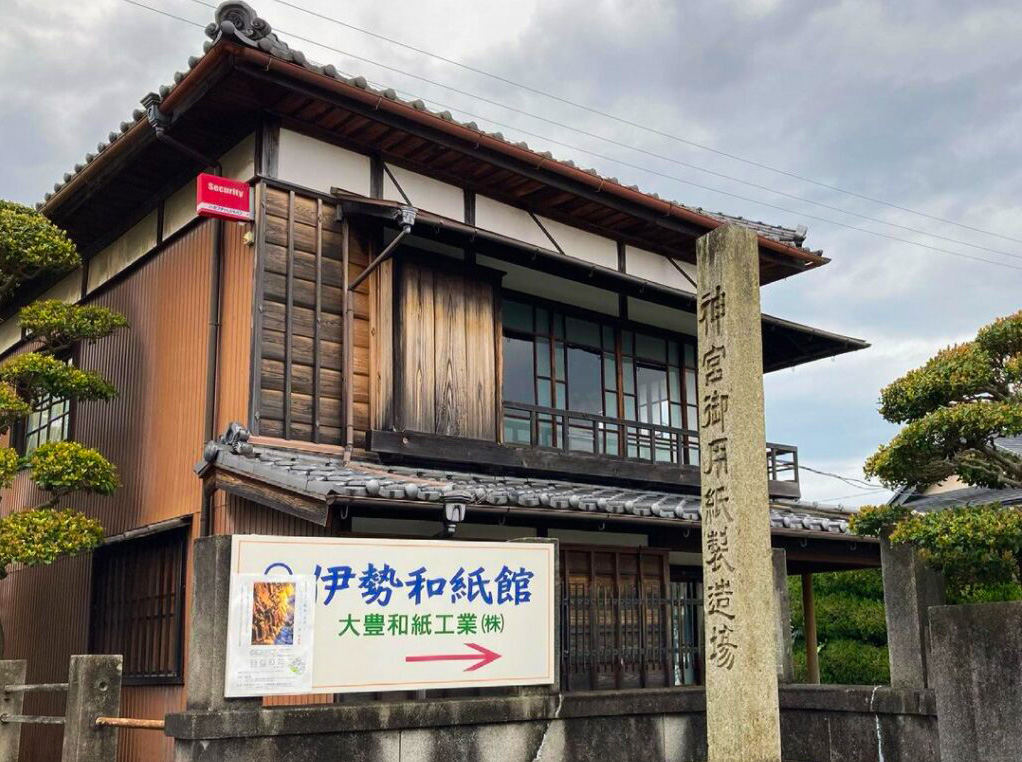
IseWashi is a traditional paper made in region of Ise, Mie Prefecture, since the early Meiji period for producing the sacred amulets (ofuda) of Ise Jingu. Taihou wasi kougyou K.K. continues this tradition as the official maker of shrine paper.
https://isewashi.co.jp/
伊勢和紙とは三重県伊勢市にある伊勢神宮の御神札(おふだ)を全国に頒布するために明治初期よりこの地で漉かれてきた紙のこと。その伝統を継いで神宮御用紙を奉製してきたのが大豐和紙工業です。
About Ise Jingu
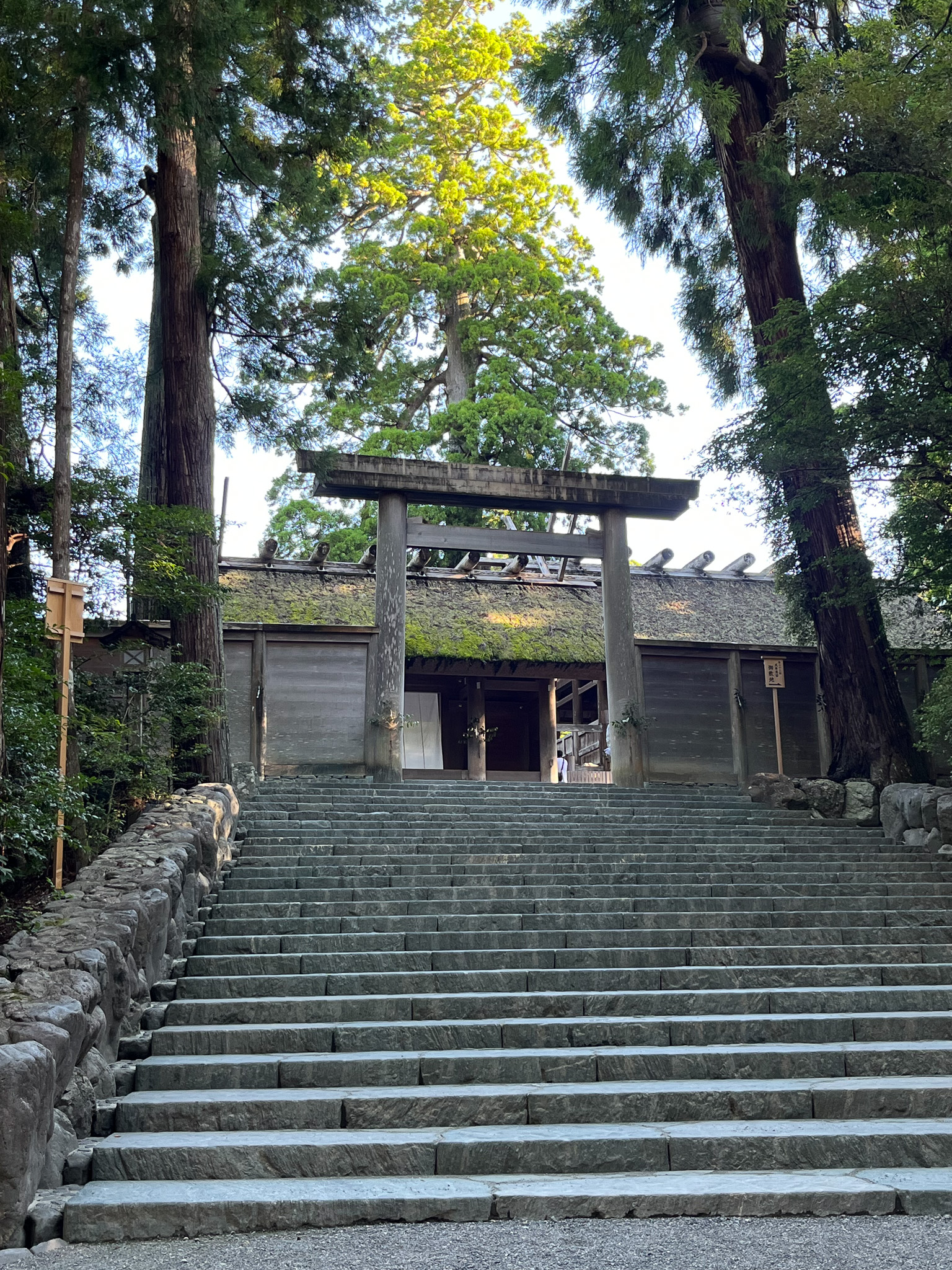
With a history of 1,500–2,000 years, Ise Jingu is Japan’s central shrine, comprising 125 shrines. It enshrines Amaterasu Omikami, the ancestral deity of the Imperial Family, and Toyouke Omikami, guardian of industry.
伊勢神宮は1500~2000年の歴史を持つ全国の神社の中心で、125社の宮社からなる広大な神社の集合体です。皇室の祖先神と日本人の総氏神である天照大御神と産業の守り神である豊受大御神をお祀りしています。
Visiting Taihou wasi kougyou K.K.
Just a short walk from Ise Jingu’s Outer Shrine, Taihou wasi kougyou K.K. impresses visitors with its historic charm. The site includes factories for handmade and machine-made paper, shops, and galleries in buildings nearly 100 years old. Fresh spring water, essential for papermaking, has flowed here since ancient times.
伊勢神宮外宮から歩いてすぐにある大豐和紙工業を訪れると、誰もがその佇まいに心を奪われます。敷地内には手漉きや機械抄きの工場だけでなく、ショップやギャラリーなど築90~100年の建物が使われています。悠久の昔からここには紙漉きに必要な地下水が湧き出ています。
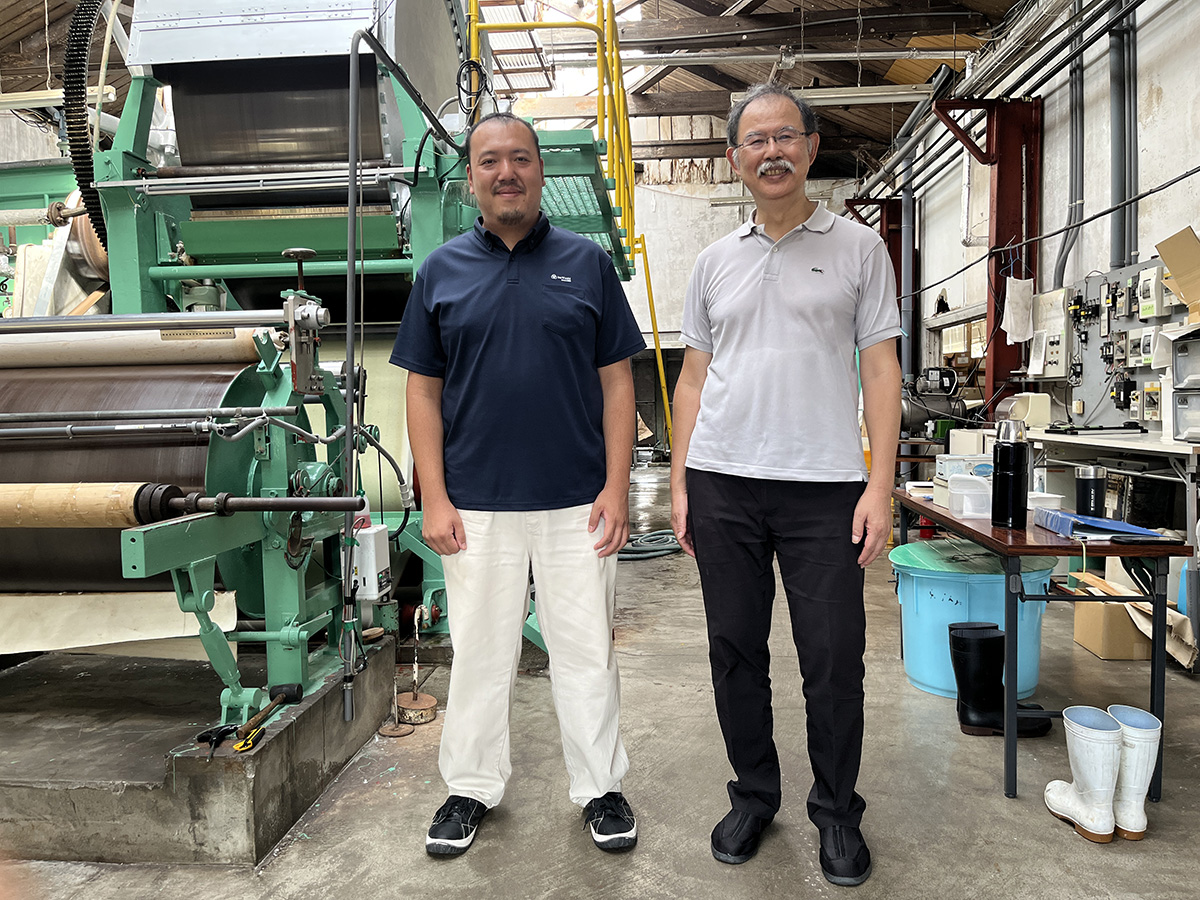
“The defining feature of IseWashi is its purity. Both handmade and machine-made paper are kept completely free of impurities such as dust, producing a perfectly pure white,” says President Yoshiaki Nakagita (left).
Next to him is Chairman Yosie Nakagita (right), who developed the inkjet-compatible IseWashi.
「伊勢和紙の特徴は清浄さ。手漉きも機械抄きもチリなどの雑物が一切混入しない、どこまでも純粋な白が求められます」という代表取締役の中北喜亮さん(左)。インクジェット対応の和紙を開発した会長の中北喜得さん(右)。
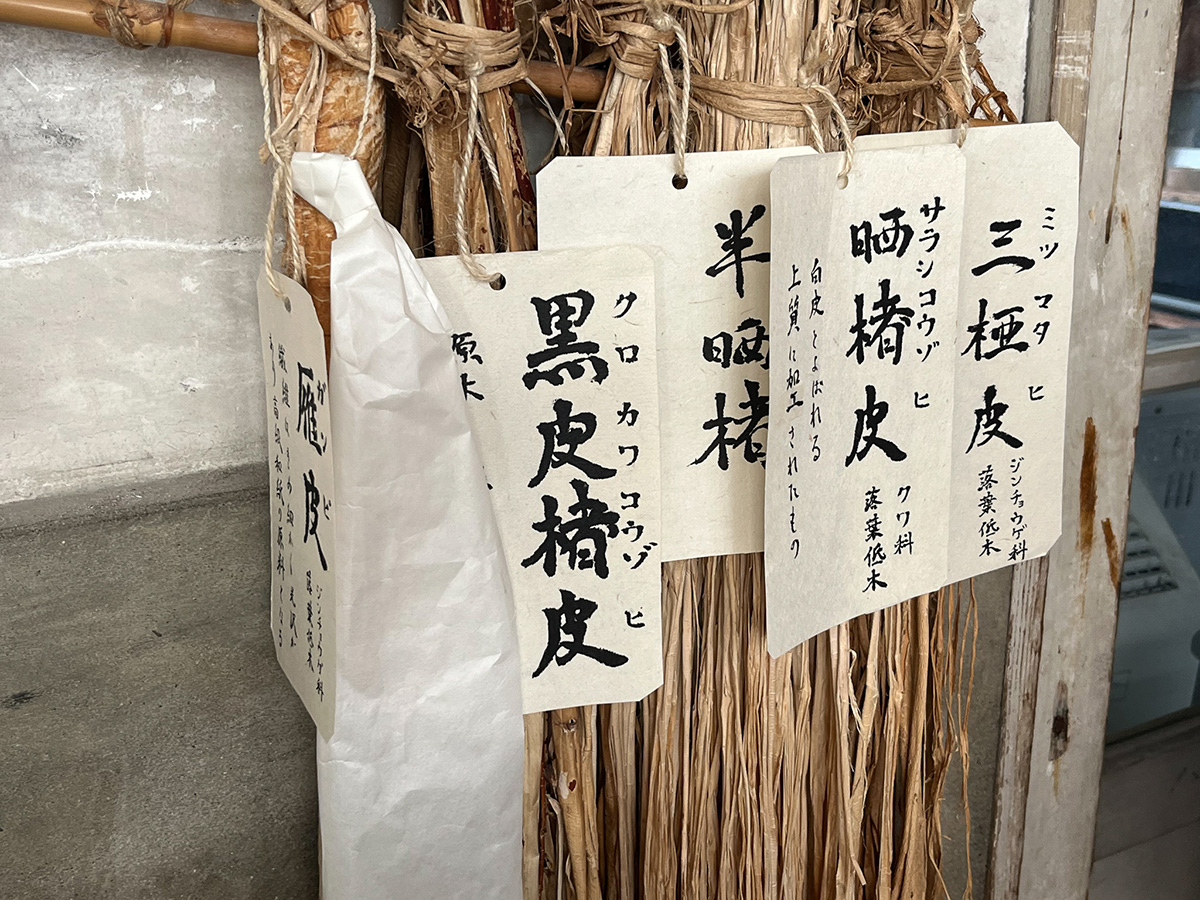
Raw Materials of Japanese Paper Washi
Ise Washi is made from plant bark. Fibers are taken from the inner bark (jimpi) and carefully purified. Handmade IseWashi blends different fibers—kozo, mitsumata, gampi, and basho—depending on the purpose. The natural thickening comes from the roots of the tororo-aoi plant.
和紙の原材料は植物の樹皮です。表皮の内側にある靭皮(じんぴ)から繊維を取り出し、丹念に不純成分を取り除いていきます。手漉き伊勢和紙の原材には目的に応じて楮(コウゾ)、三椏(ミツマタ)、雁皮(ガンピ)、芭蕉(バショウ)を配合して使い、粘剤としてはトロロアオイの根から抽出する液を用います。
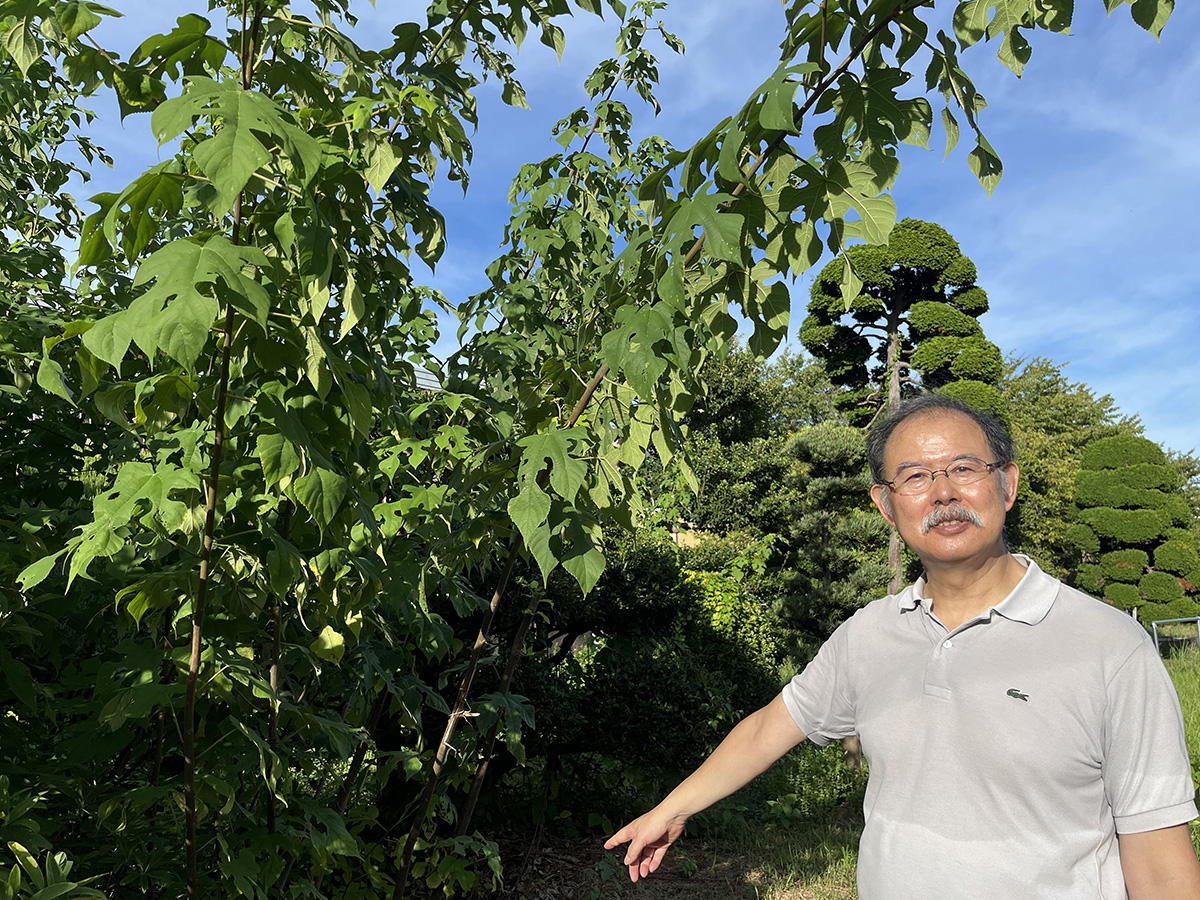
Fibers at Taihou wasi kougyou K.K.
Kozo fibers are strong and harvested annually. Gampi is soft and delicate, harvested every five years. Mitsumata is silky, between kozo and gampi, while Basho is firm and easy to handle.
大豐和紙工業の敷地内に生育している楮(コウゾ)の木。楮は繊維が強く1年に1回刈り取ります。雁皮は繊維が短く柔らかいので扱いが難しいそうで、5年に1回しか刈り取れません。三椏は楮と雁皮の中間の性質を持ち、女性の肌のよう。芭蕉はコシがあり、扱いやすい材料だといいます。
Handmade ISEWASHI Process
手漉き伊勢和紙の工程
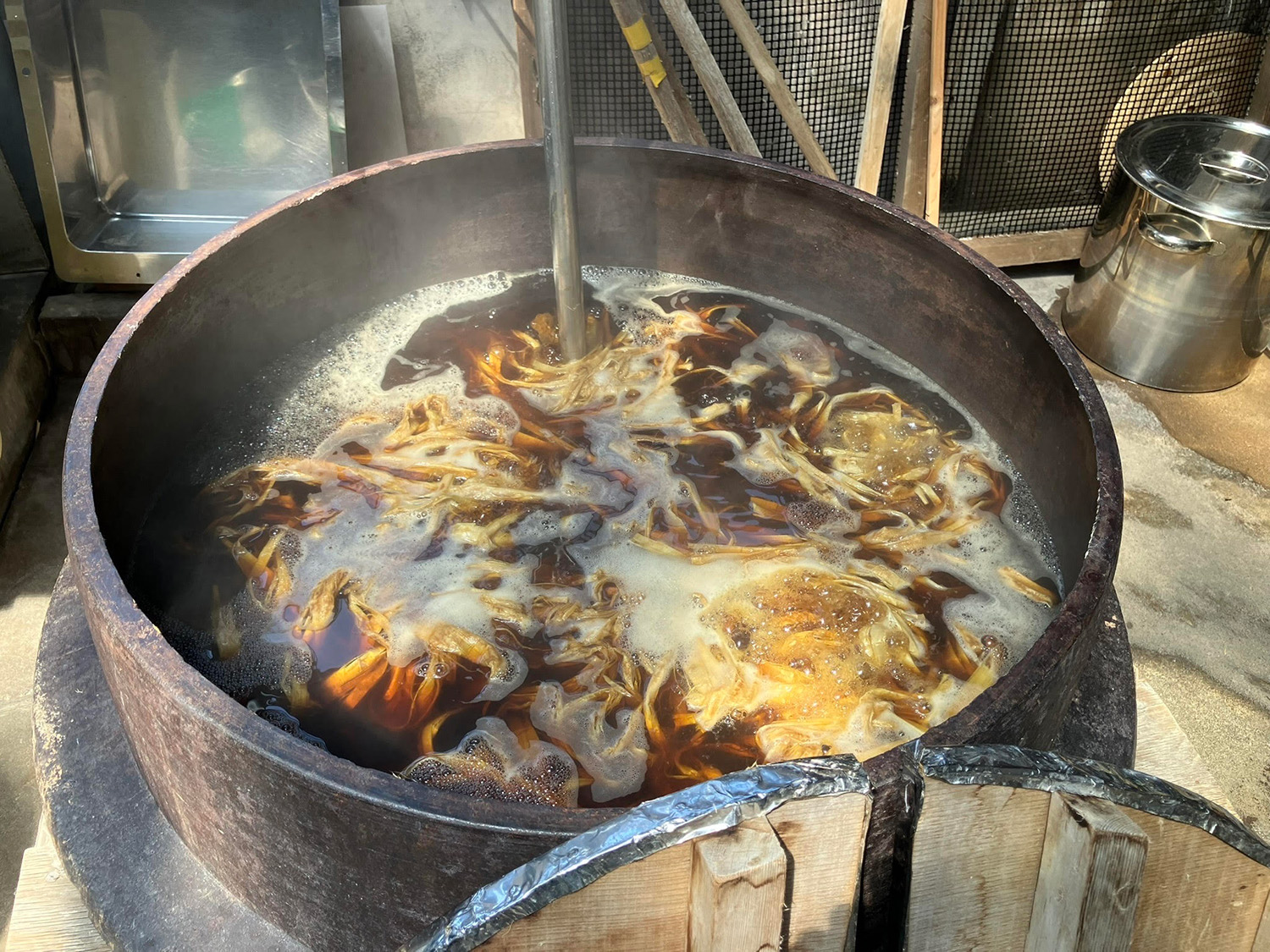
Soaking and Boiling
After harvest, the dried bark is soaked in water to soften the fibers. It is then boiled in a large caldron. Unwanted substances, such as pectin that bind the fibers, are dissolved with soda ash (sodium carbonate) to make the fibers easier to process.
水漬け(みずつけ)、煮熟(しゃじく)
収穫後、乾燥させておいた木の皮は水につけて水分を含ませて繊維を柔らかくします。それを大釜に入れて煮ます。繊維を固めているペクチンなど不要な物質をソーダ灰(無水炭酸ナトリウム)で溶かして解しやすくします。
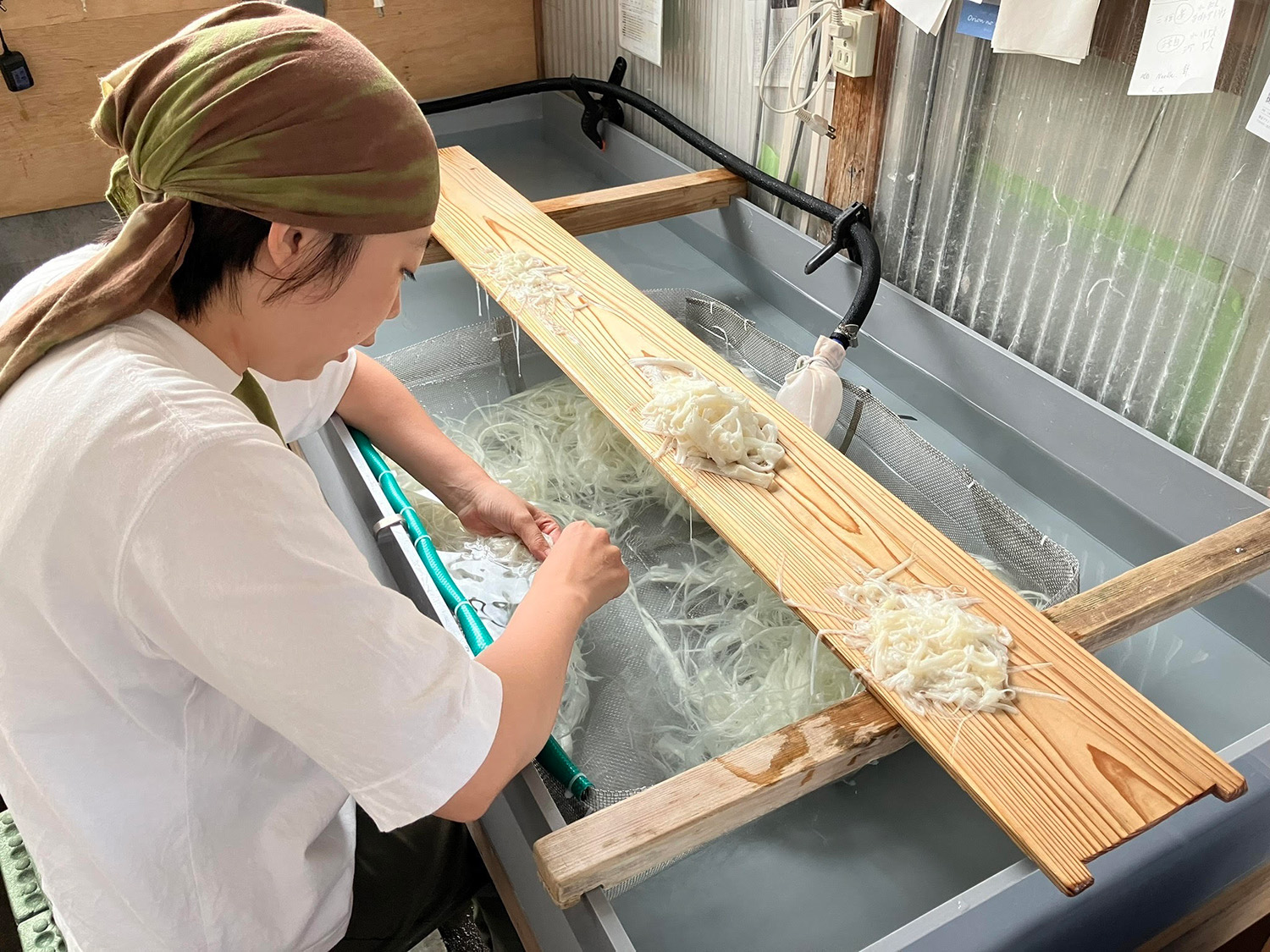
Washing and Purifying
After boiling, unwanted substances such as resins, lye, and impurities are washed away with running water. The water is changed repeatedly, and the fibers are carefully rinsed and refined to remove even the finest debris. This meticulous process with eyes and fingertips ensures the paper’s purity.
水洗い、さらし、水より
煮熟して溶かされた樹脂分や灰汁や垢などの不要な成分を流水を洗い流します。何度も水を換えて繰り返しよく洗い、水よりでさらに微細なゴミなどを丹念に取り除きます。目と指先で清浄な和紙にしていく大切な工程です。
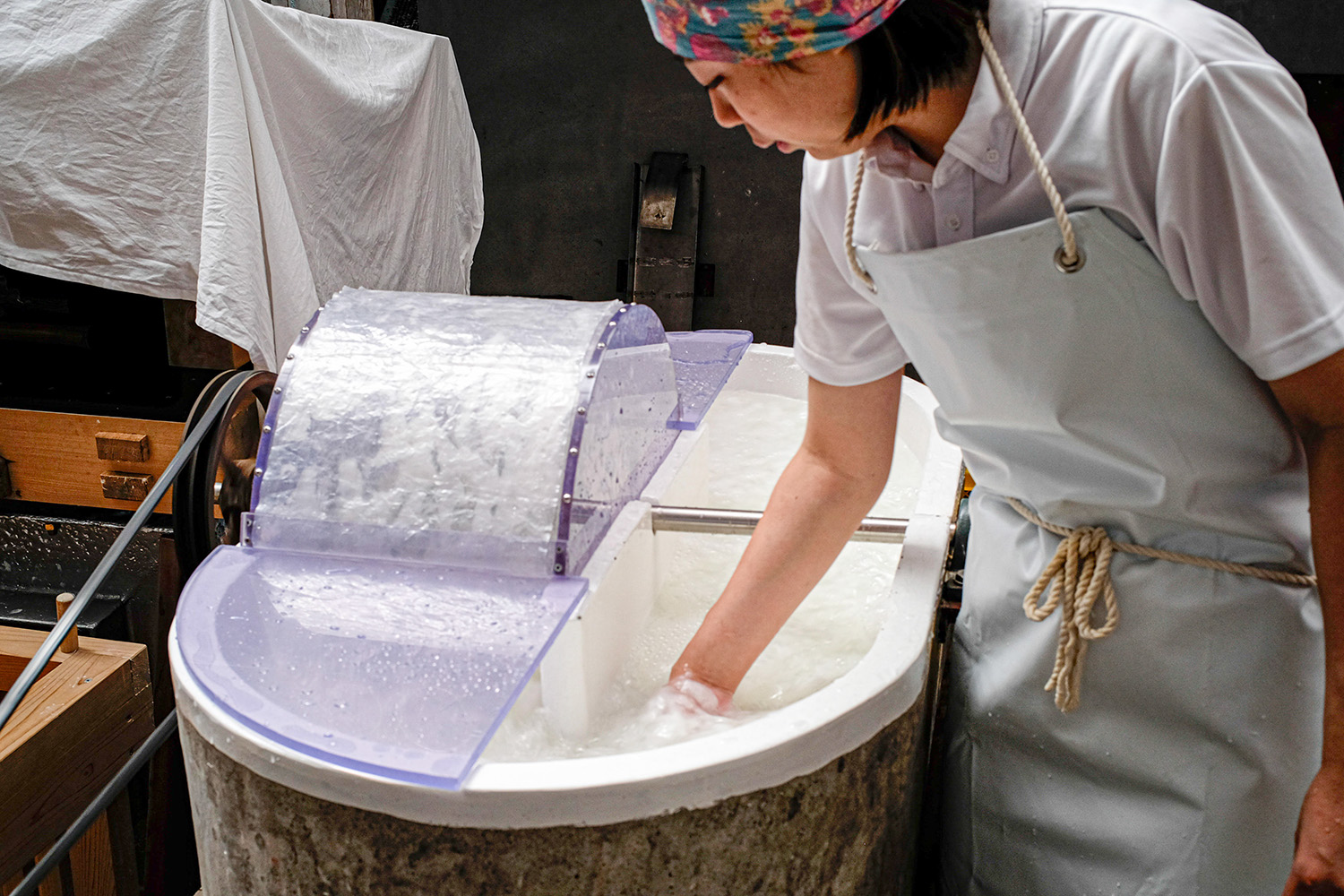
Beating and Dispersing
The softened fibers are placed in a machine (beater) and beaten in water to break them down. How well the fibers are treated determines the texture of the finished paper. The fibers are then poured into a vat of water, stirred thoroughly, and mixed with a natural thickening agent (tororo-aoi) to ensure an even dispersion.
叩解(こうかい)、水中分散
ほぐした原料を器械(ビーター)に入れ、水中で力をかけて叩いて繊維を分解します。繊維のこなれ方が和紙の表面の仕上がりを決める重要な工程です。その後、水を張った漉き舟に原料を入れてよくかき混ぜ、粘剤(トロロアオイ)を加えて紙料を均一に分散させます。
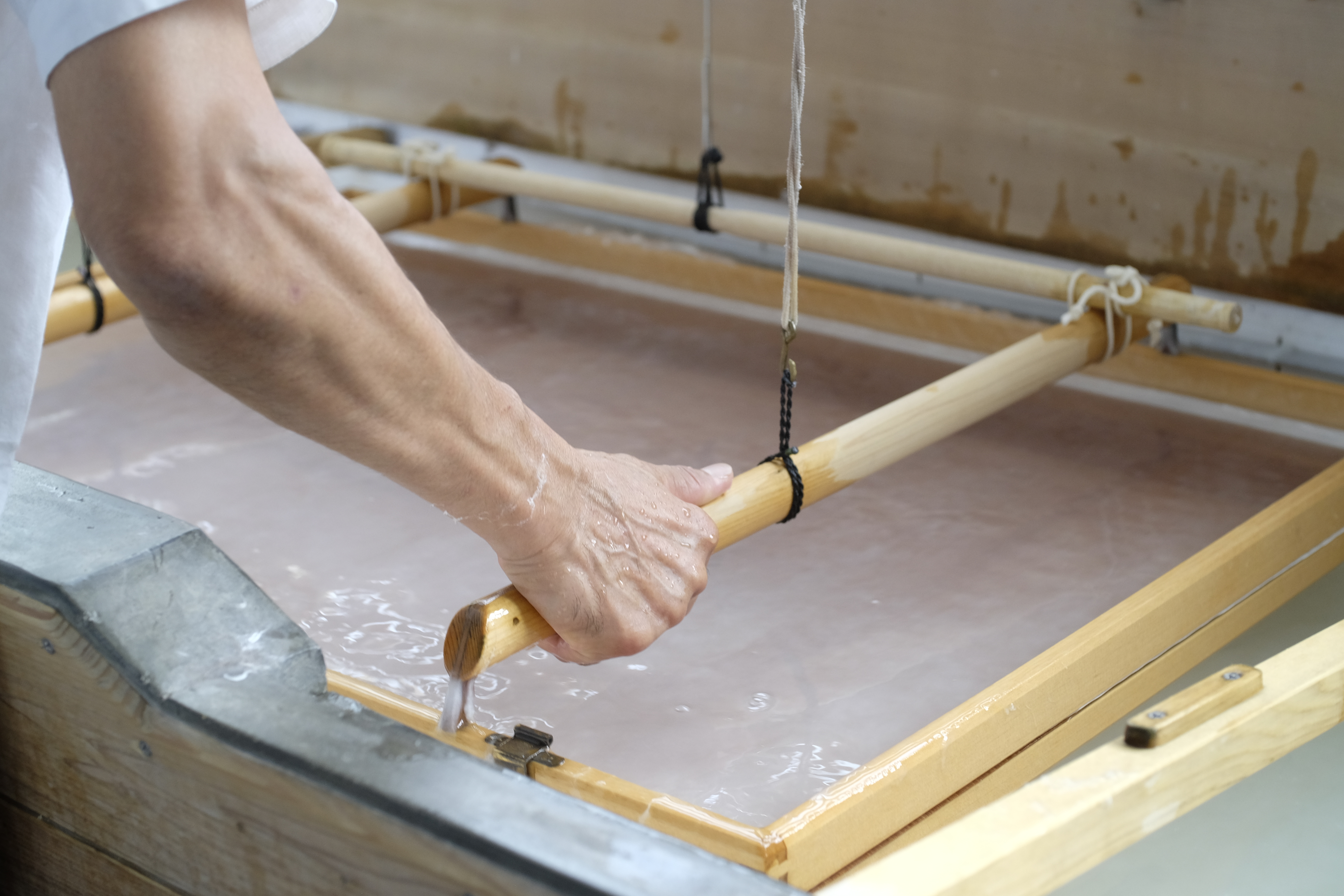
Sheet Formation (Suki)
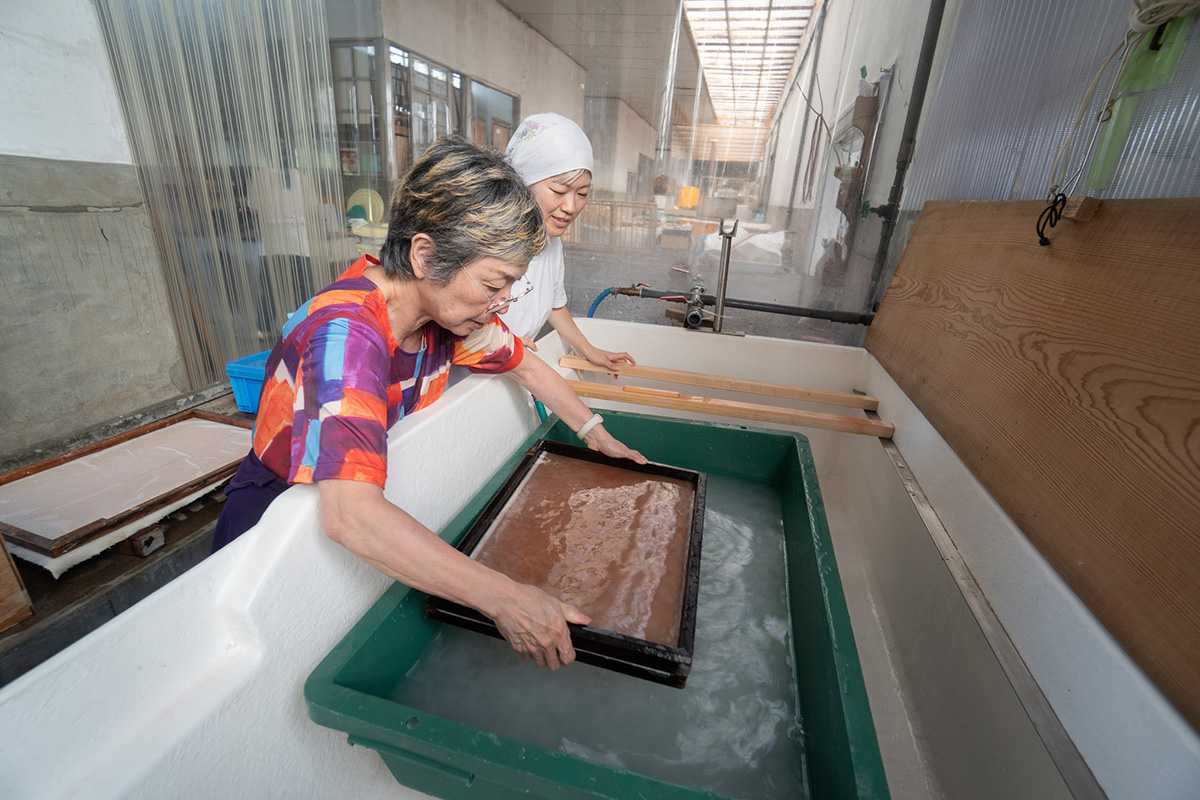
Handling a woven bamboo screen held by wooden frame, the fibers are the screen and gently shaken back and forth to interlace the fibers. This process is repeated several times to build up the paper sheet.
漉き(すき)
細かい竹ひごを編んだ簀(す)と木製の枠を組み合わせた簀桁(すけた)を漉き舟に入れて、必要な量の原料をすくい取り、前後左右に揺りをかけて繊維を絡ませます。これを数回繰り返します。
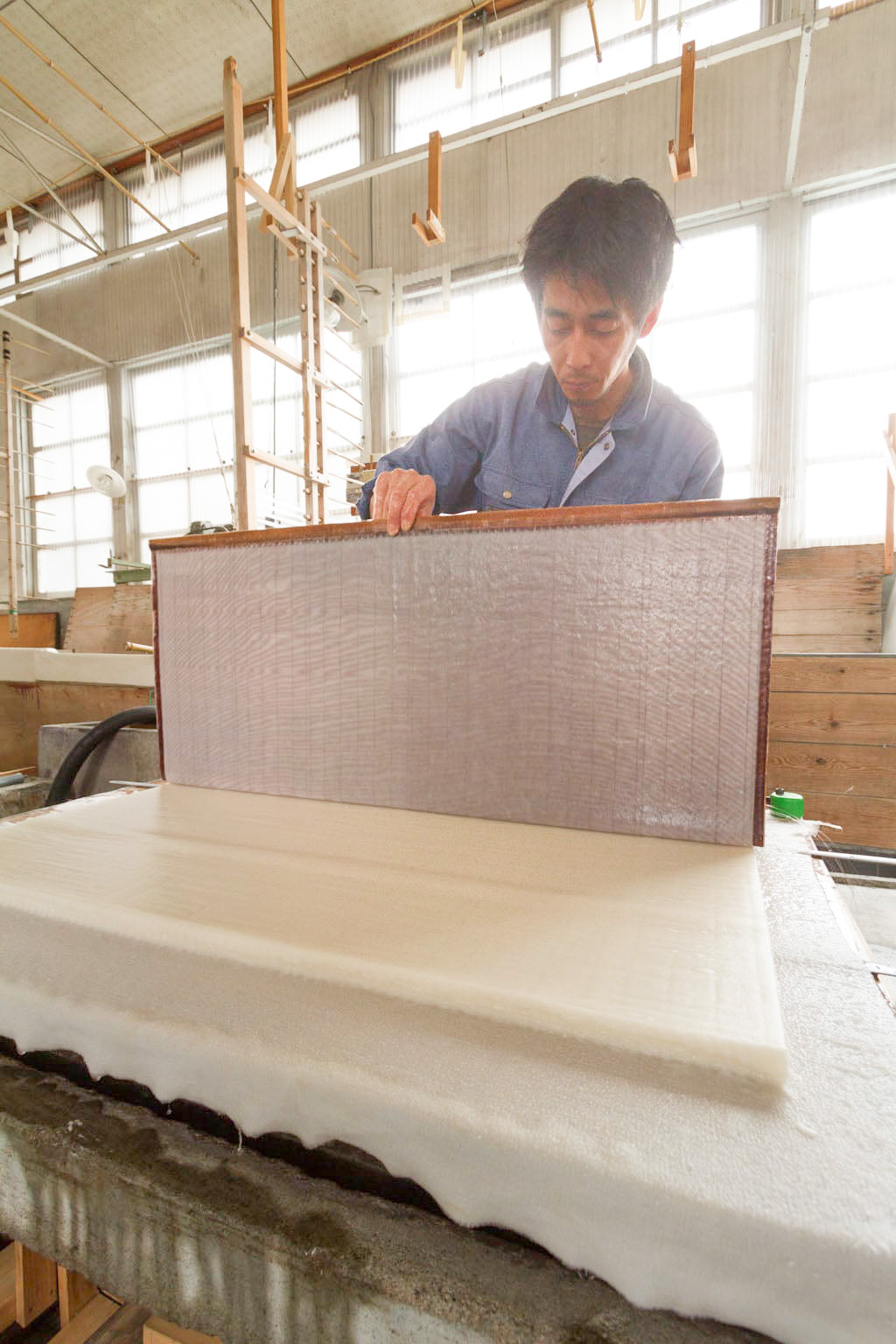
Stacking on the Wet Board (Shitoduke)
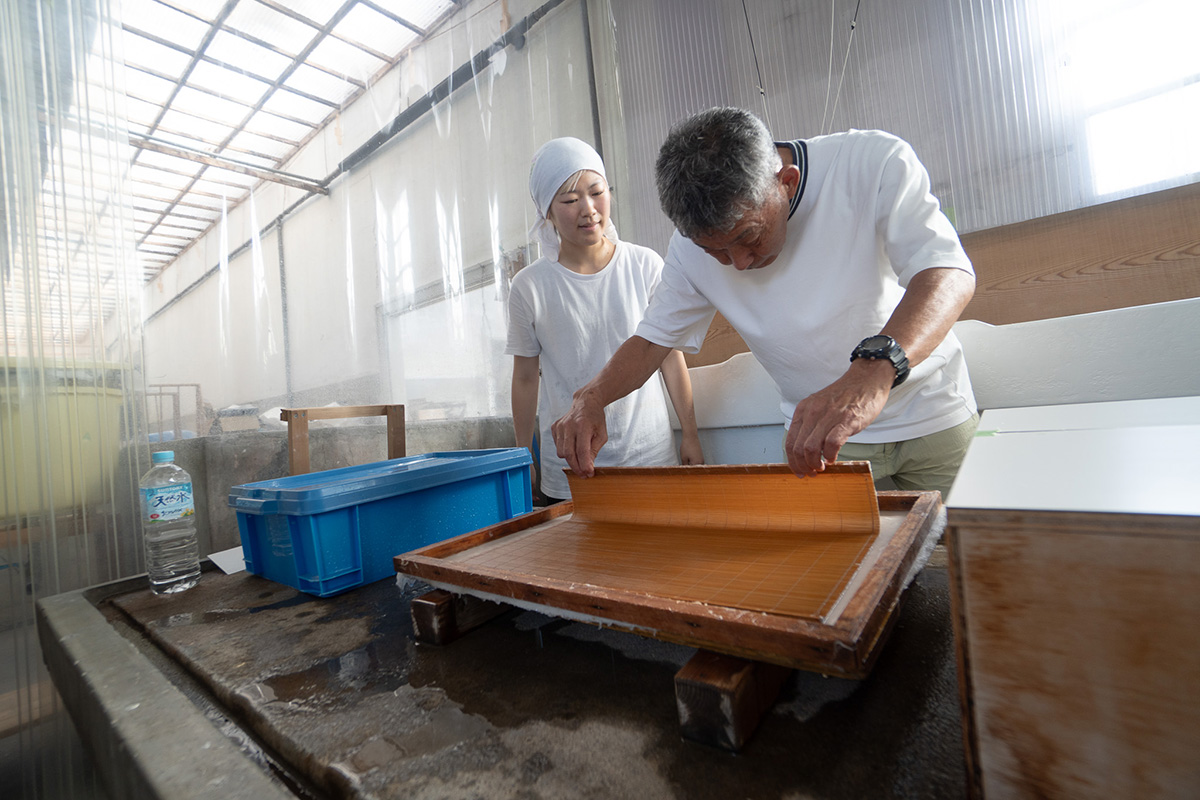
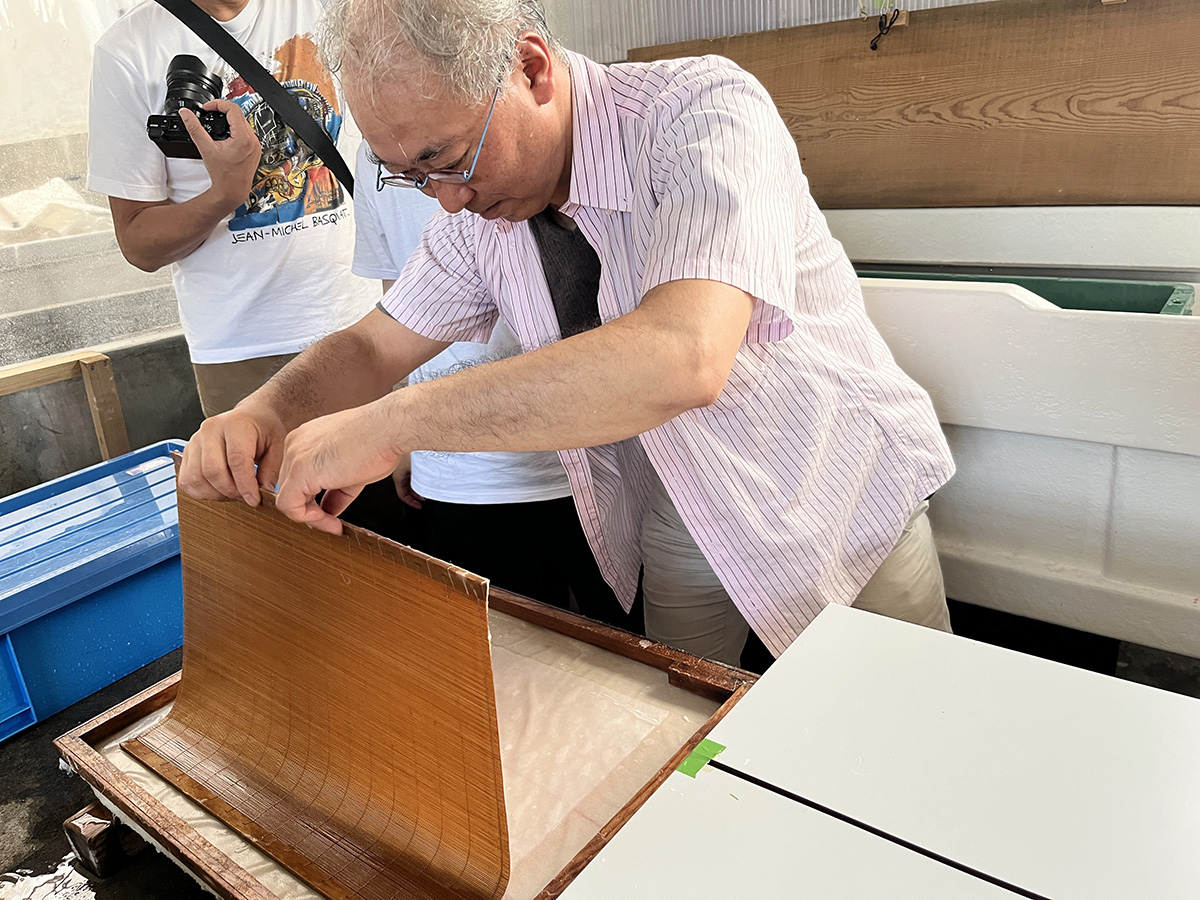
Once the sheet has been formed evenly, it is placed face-down on a wet board (shitoita) and stacked. In this wet state, the paper is very soft. Threads (sube) are placed along the edges of the sheets.
湿床付(しとづけ)
均一の厚さに揃うまで漉きを繰り返し、漉き上がった紙は湿床板(しといた)に伏せて重ねていきます。この状態の紙は水を含んでとても柔らかい状態です。紙の端に糸(すべ)を置きます。
Pressing (Assaku)
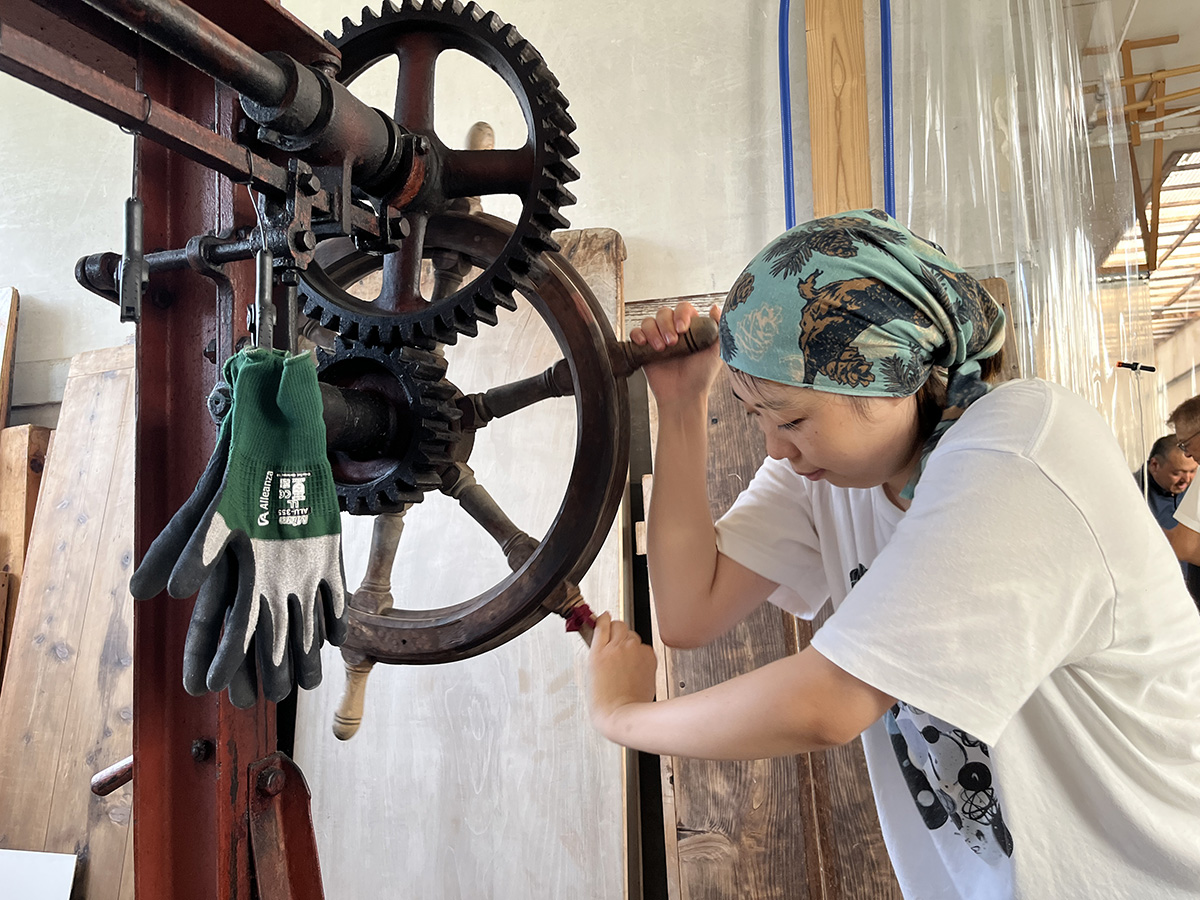
The stacked wet sheets are pressed with a large clamp to evenly remove water. The pressure is gradually increased over one to two days. As the moisture is removed, the paper strengthens and can be separated sheet by sheet.
圧搾(あっさく)
大型の万力で漉き重ねた湿紙を均等に重量をかけて押さえ、水分を絞り出します。1日から2日かけて少しずつ締め上げます。水分を抜くと紙は強くなり、1枚ずつ剥がすことができます。
Drying (Hari)
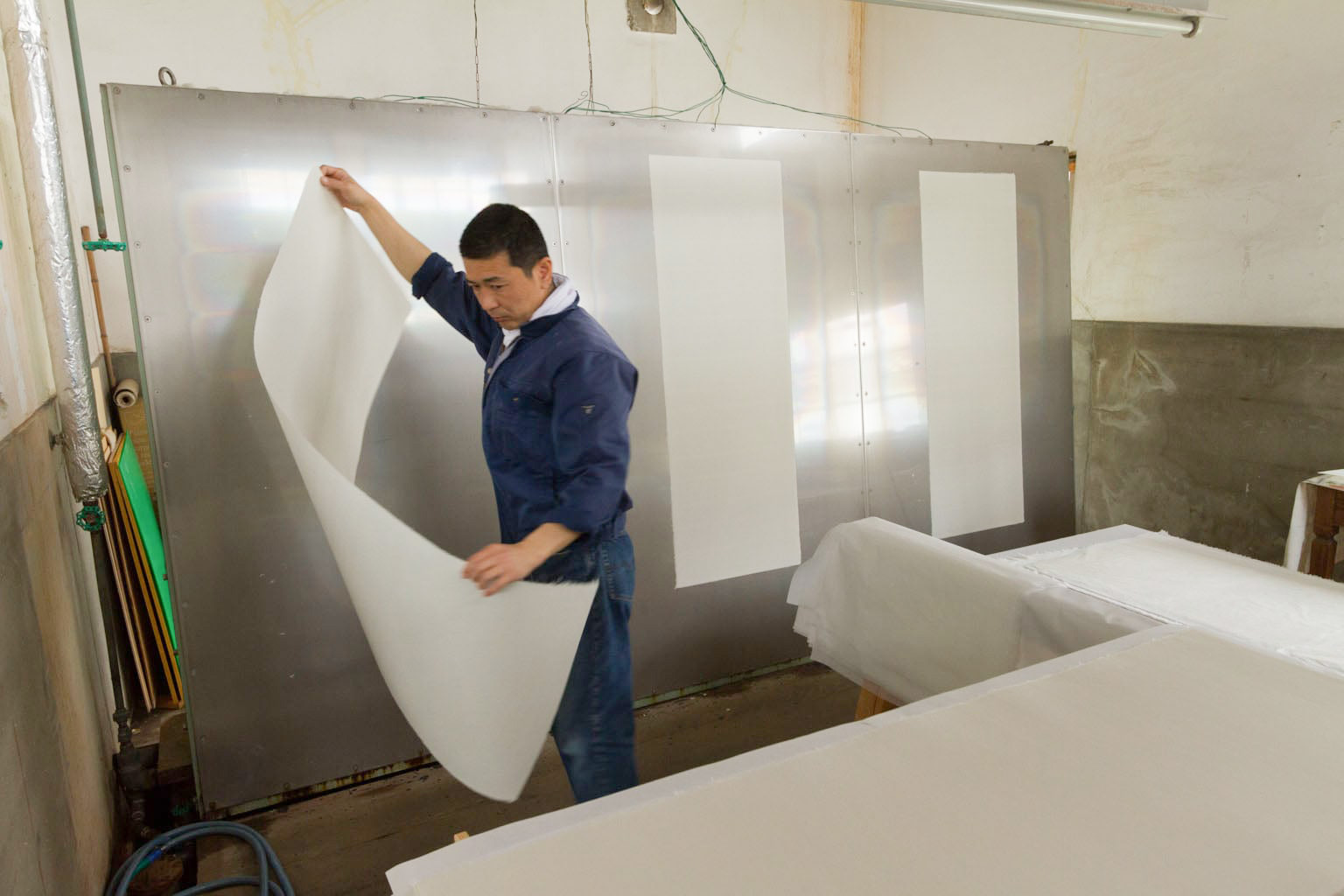
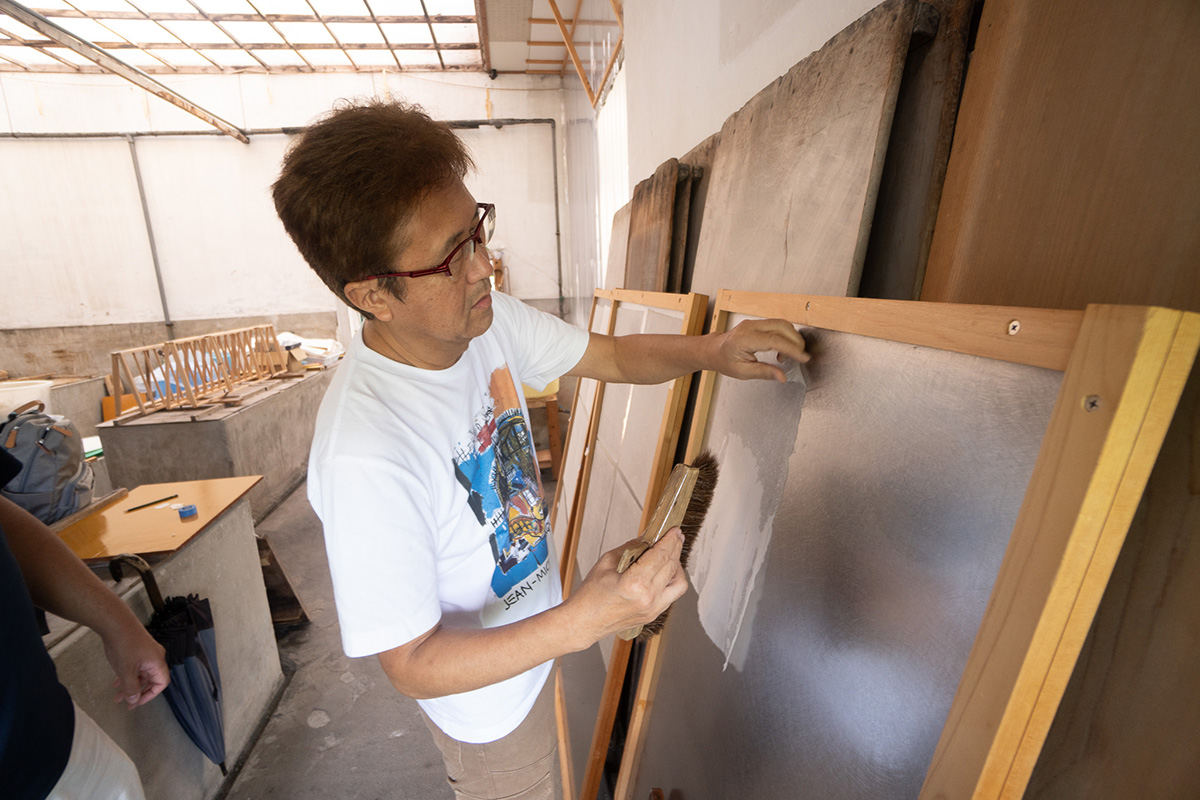
The stacked sheets are carefully separated using the edge threads (sube). Each sheet is brushed onto a board to prevent wrinkles and dried in the sun. Sometimes, sheets are dried on steam-heated stainless steel plates.
張り(はり)
重なっている紙を、糸(すべ)を手がかりにして1枚ずつ剥がし、シワにならないようにハケを使って張り板に張り、天日で乾燥させます。蒸気で熱したステンレス板に張って乾燥させる場合もあります。
Smooth Side (Katsumen) and Textured Side (Somen)
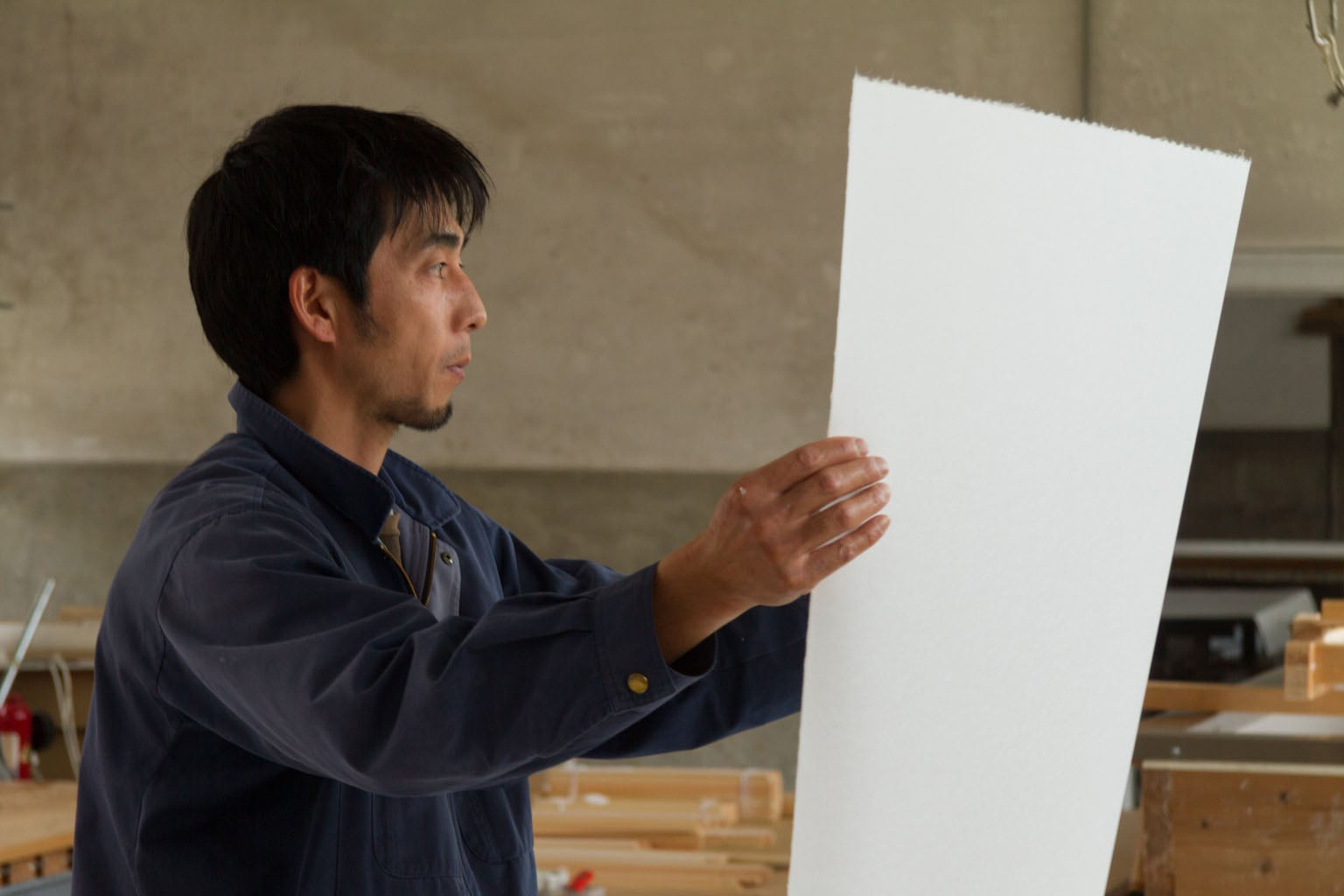
When dried, the side in contact with the board becomes the smooth side (katsumen), while the opposite side is textured (somen). IseWashi can be beautifully printed on either side with an inkjet printer, allowing you to choose your preferred texture.
滑面(かつめん)と粗面(そめん)
乾燥の際に板に密着していた側が滑らかな表面の滑面、その反対側が風合い豊かな粗面と、伊勢和紙は両面どちらにもインクジェットプリンタで美しく出力することができます。お好みのテクスチャーをお選びいただけます。
5 ft × 8 ft IseWashi
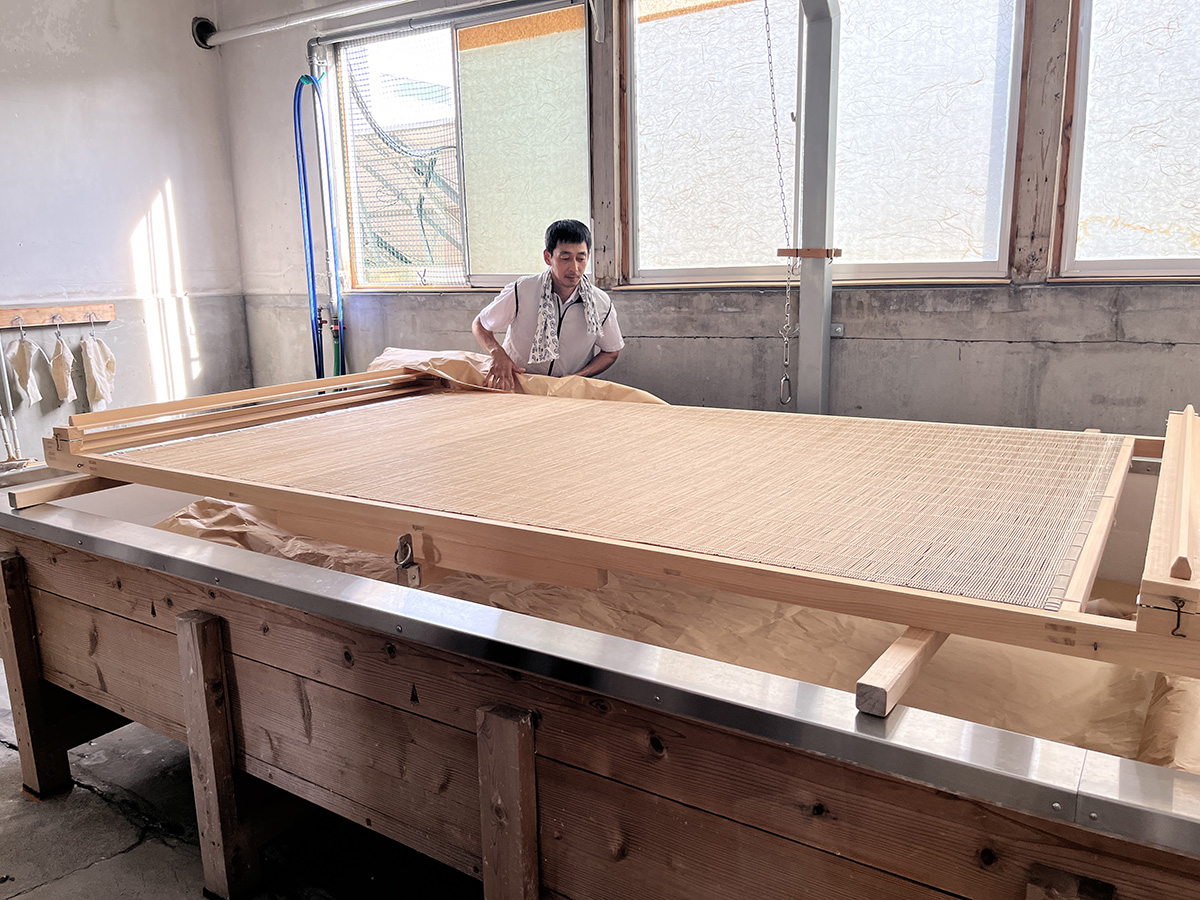
It is possible to make large handmade sheets of IseWashi measuring 5 ft (about 150cm) × 8 ft (240cm). Thanks to the large vat and screen, as well as the pure spring water available on-site, such oversized sheets can be produced. A printer capable of handling these large sheets is also available.
五尺x八尺伊勢和紙
5尺(約150 cm)x8尺(約240cm)という大きなサイズを手漉きでつくることも可能です。大型の漉き舟、簀に加えて清らかな地下水を敷地内からつねに得られる伊勢和紙ならでは。これをプリントするプリンタも常設しています。
The process of machine-made ISEWASHI
機械抄き伊勢和紙の工程
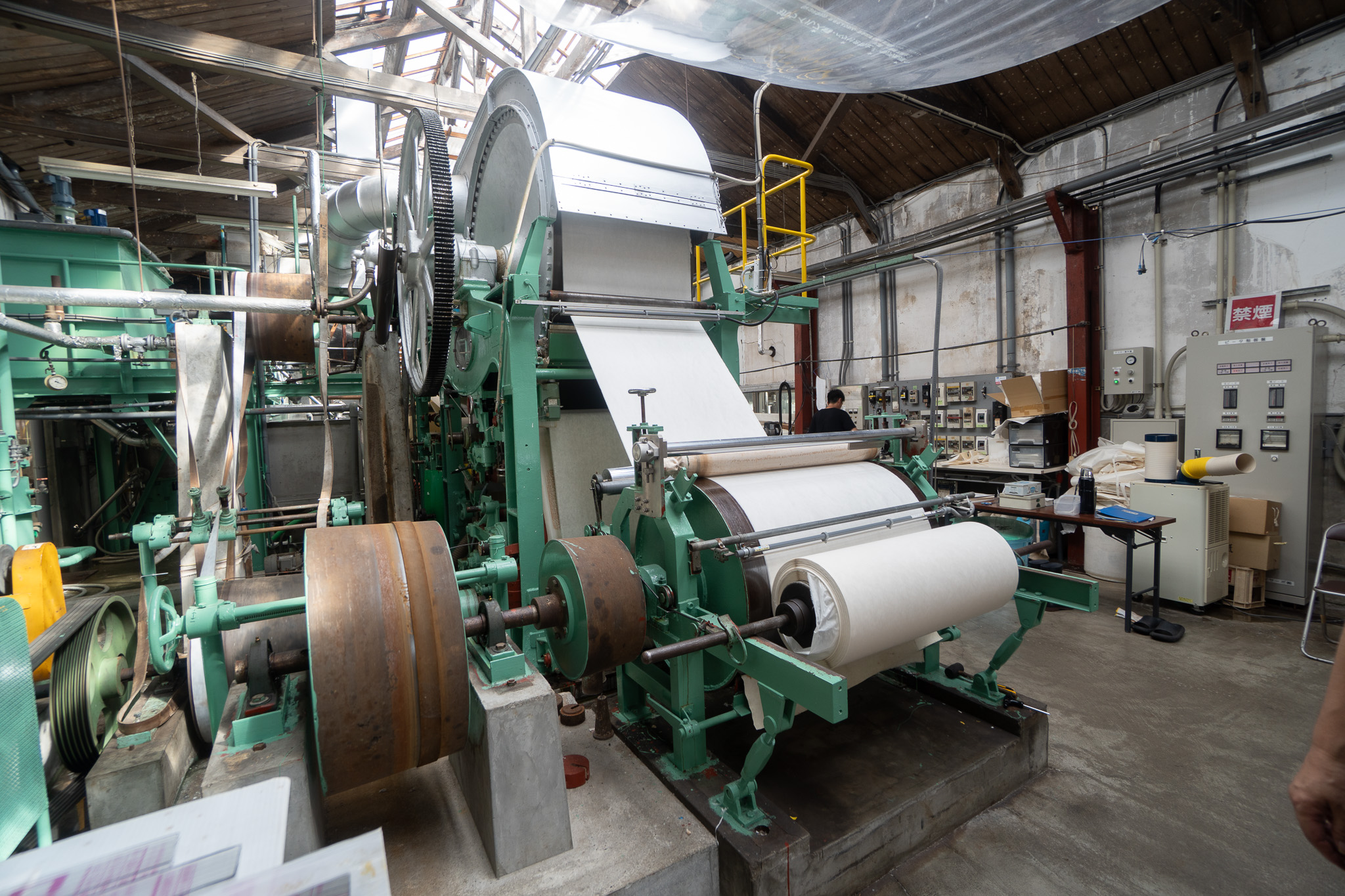
Machine-Made Washi
Machine-made washi allows for mass production, using larger equipment and large amounts of water.
機械抄き和紙は大量生産が可能なので、そのぶん大きい道具(機械)を使い、大量の水を使います。
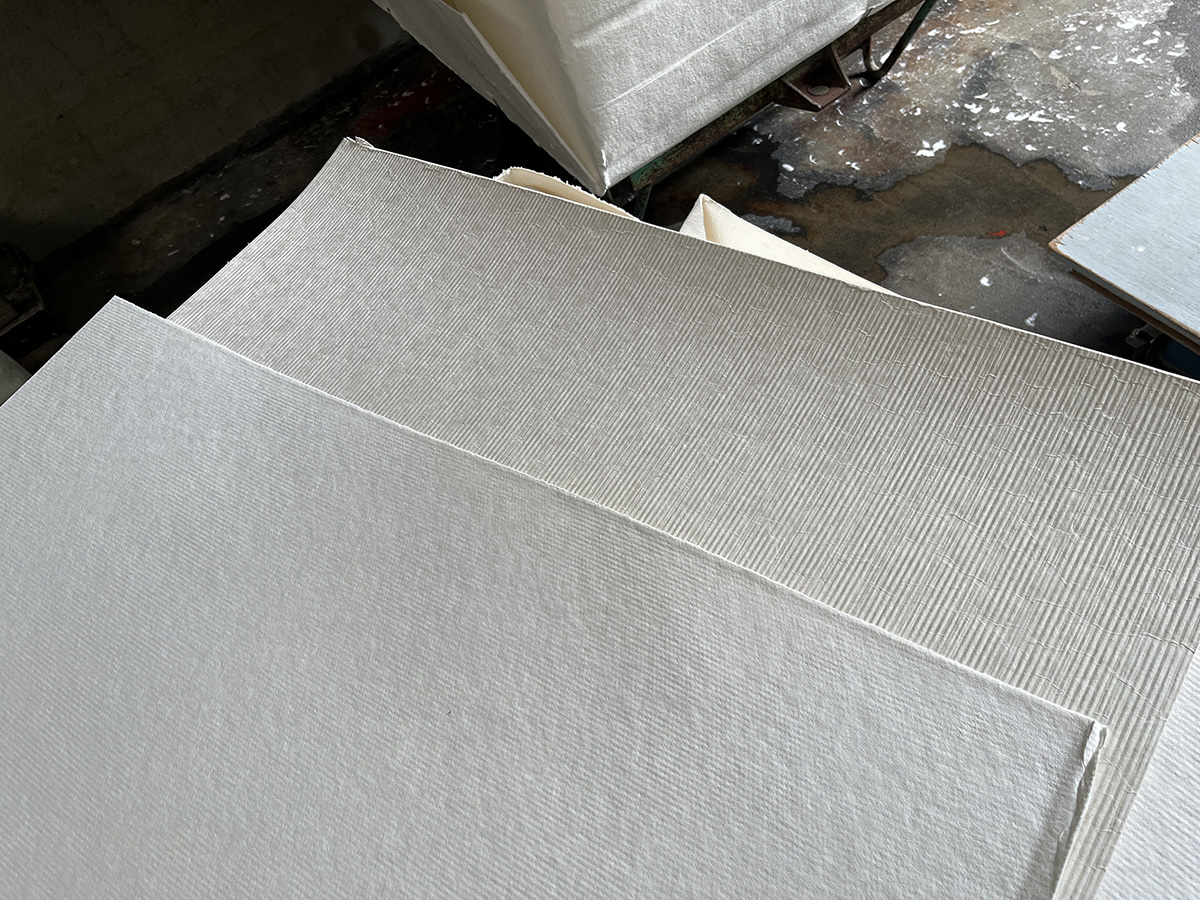
Machine-Made Washi Quality
Balancing high quality with stable supply, machine-made washi uses long-fibered materials such as conifer trees or basho. Shown here is basho pulp.
品質の高さと供給安定性をバランスさせた機械抄き和紙は、繊維の長い針葉樹や芭蕉(バショウ)を原料としています。こちらは芭蕉のパルプ。
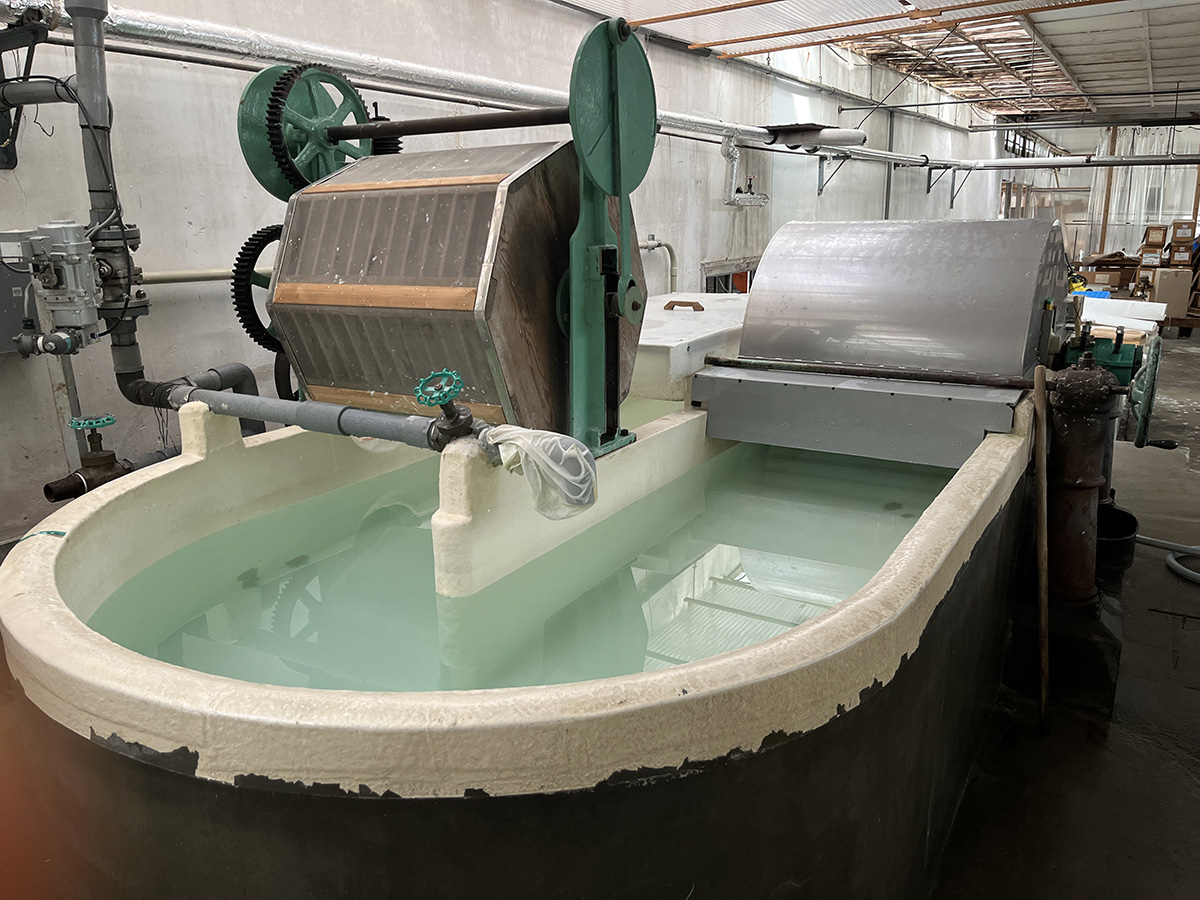
The Beater Machine
Like handmade washi, the fibers are beaten and loosened, but with a much larger machine called a beater. Washing and bleaching can also be done here.
手漉きと同様に原料の繊維を叩いて解す機械「ビーター」も手漉きよりも大きい。ここで洗浄や漂白を行なうこともあります。
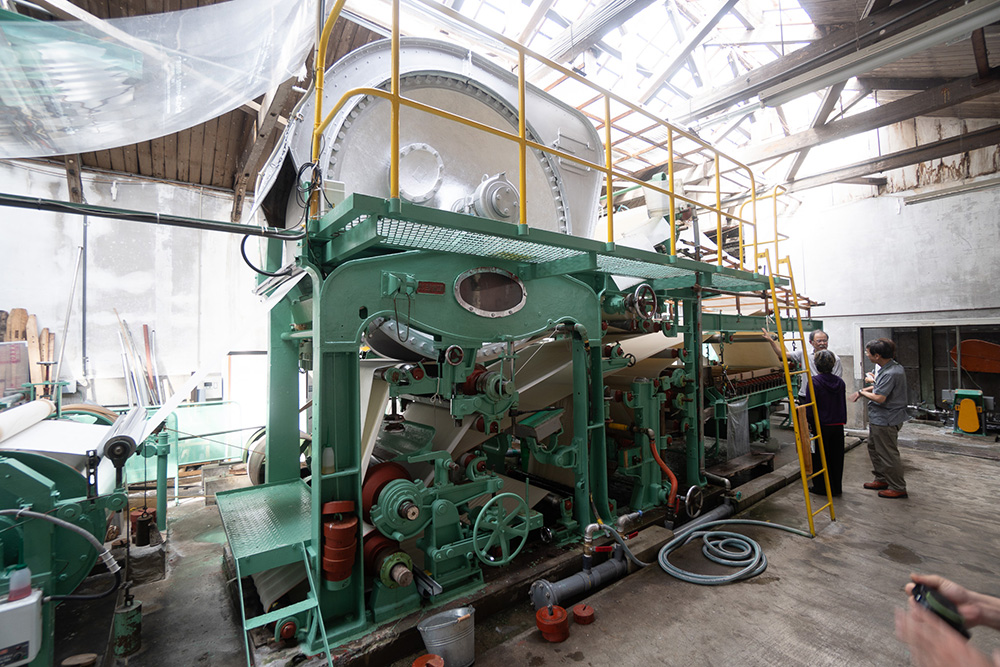
The process of making paper is called shōshi (papermaking), and this machine is known as a Yankee paper machine. The reason it is called “Yankee” is unclear, but it is enormous―about 10 meters long and 6 meters high. It was manufactured in 1970.
紙を漉くことは「抄紙(しょうし)」といわれ、これはヤンキー抄紙機と呼ばれています。なぜ「ヤンキー」なのかは不明ですが、全長は10m、高さは6mくらいと巨大です。1970年製。
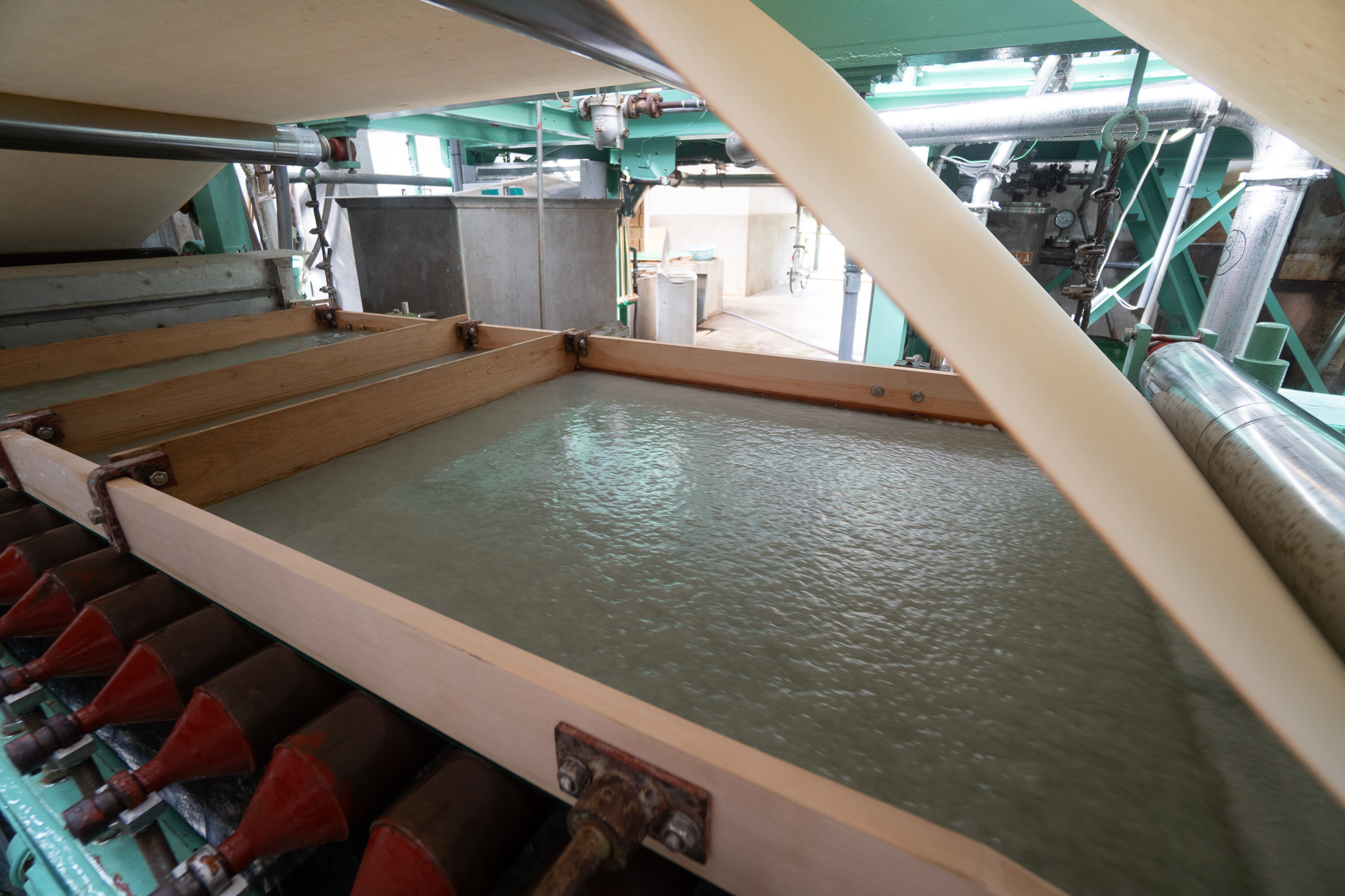
This is the section where the paper is formed. The raw materials are poured in at the far end, and the freshly made paper is carried forward on felt, then dried with a dryer.
ここが紙を漉いている部分。原材料が流し込まれる部分が奥にあり、抄かれた紙はフェルトの上に載って進んで行き、ドライヤーで乾燥されます。
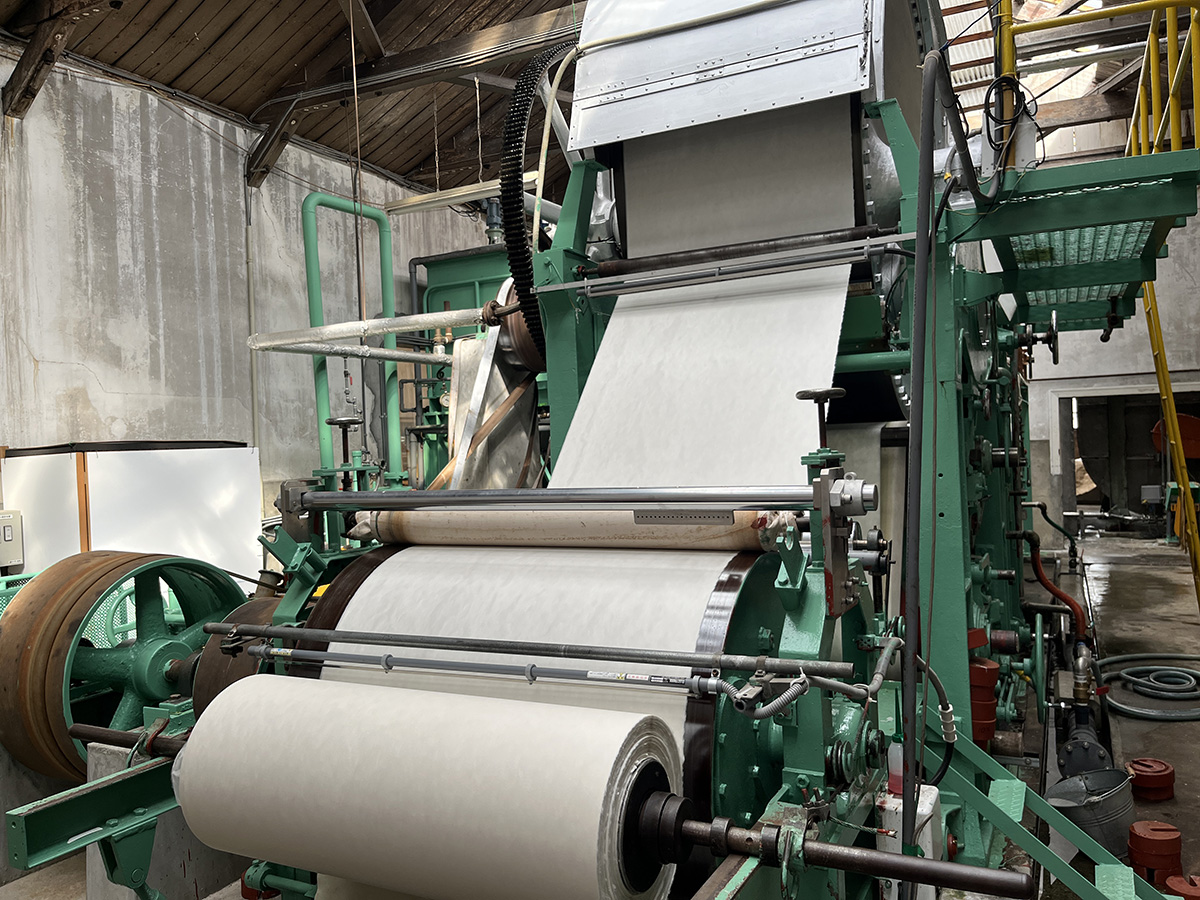
The machine-made IseWashi, completed in large rolls, comes in various thicknesses and eight color variations as its base. New types are also being added.
ロール状になって完成された機械抄き伊勢和紙はさまざまな厚みや8色のバリエーションがベース。さらに新たな種類も加えられています。
Gallery and Print Studio
ギャラリーとプリント工房
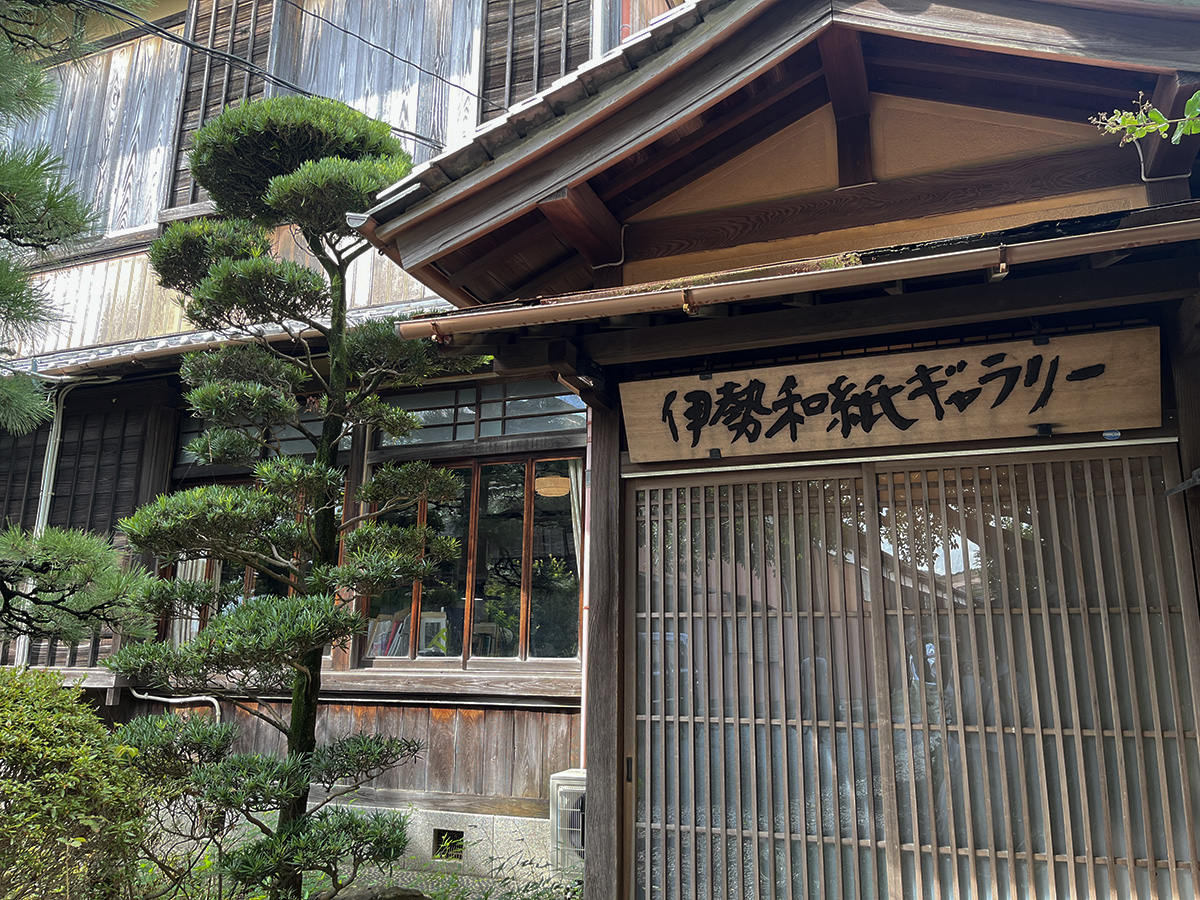
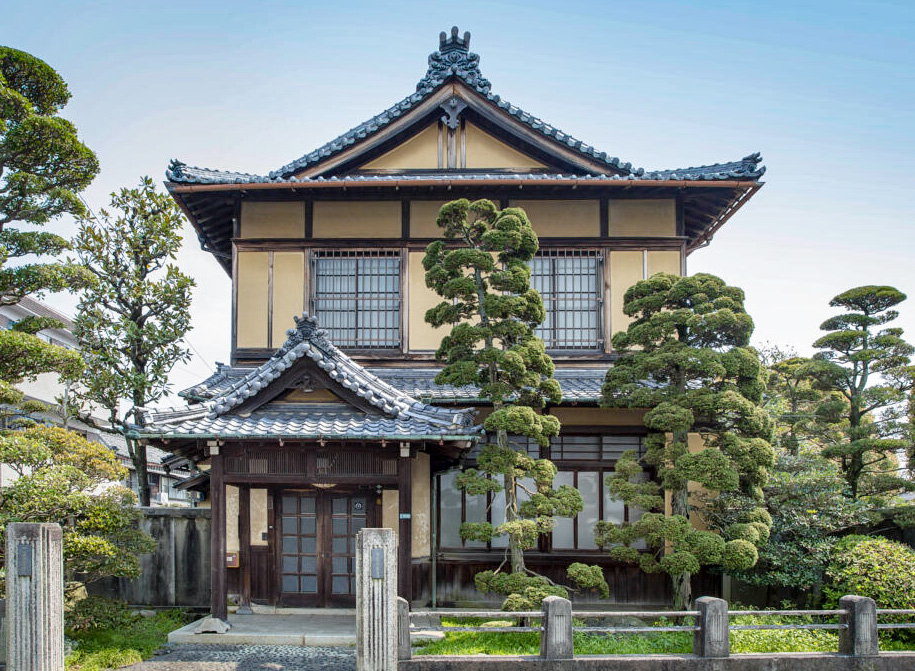
The IseWashi Gallery is located on the second floor of a wooden building with the atmosphere of Taisho modernism. Inside this now-rare Japanese-style residence, works printed on IseWashi are on display.
伊勢和紙ギャラリーがあるのは大正モダニズムの香りが漂う木造建築の2階です。いまでは貴重な和風住宅に、伊勢和紙にプリントされた作品が展示されています。
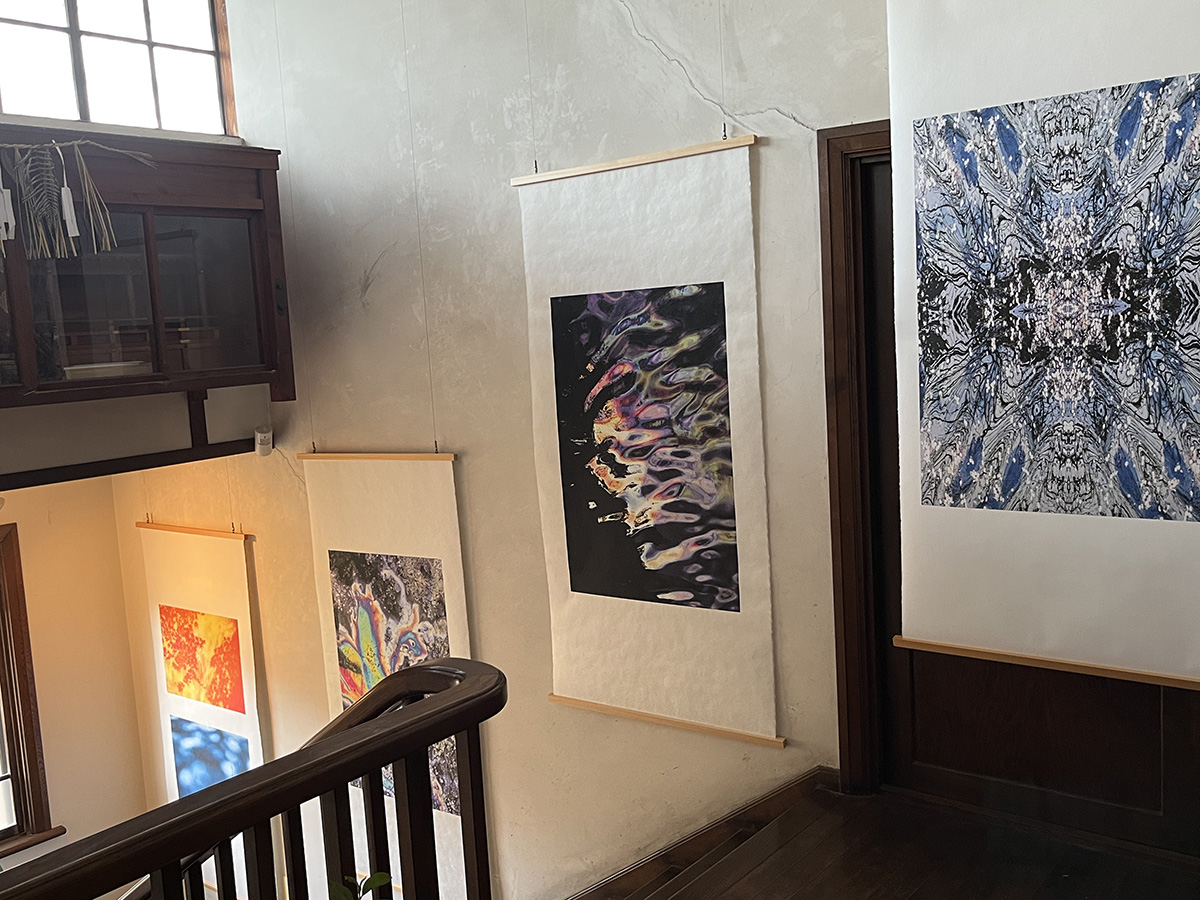
Inside the gallery, you can fully experience the stately presence of a traditional Japanese house from a bygone era. The wooden-framed window glass, dating back nearly 90 years, lets in a gentle natural light.
ギャラリー内部は古き良き日本家屋の重厚な佇まいが存分に感じられます。木枠の窓ガラスも90年近く前のもので、そこから柔らかな自然光が入ってきます。
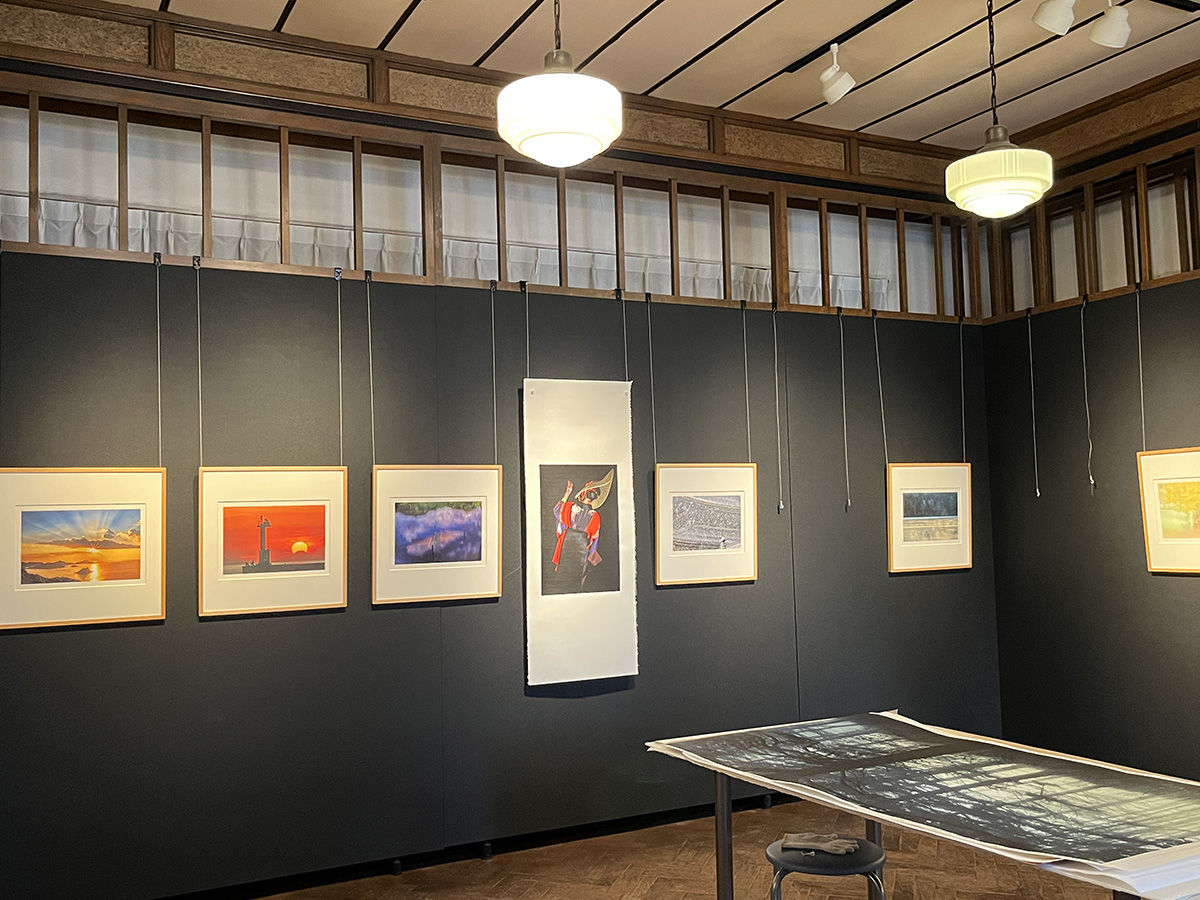
Exhibitions are held frequently throughout the year. The paper itself, crafted for generations near Ise Jingu Shrine as offerings to the deities, can truly be considered a work of art.
展覧会も年間を通して頻繁に開催されています。伊勢神宮のお膝元で神様のためにつくり続けられてきた紙そのものがアート作品といえるでしょう。
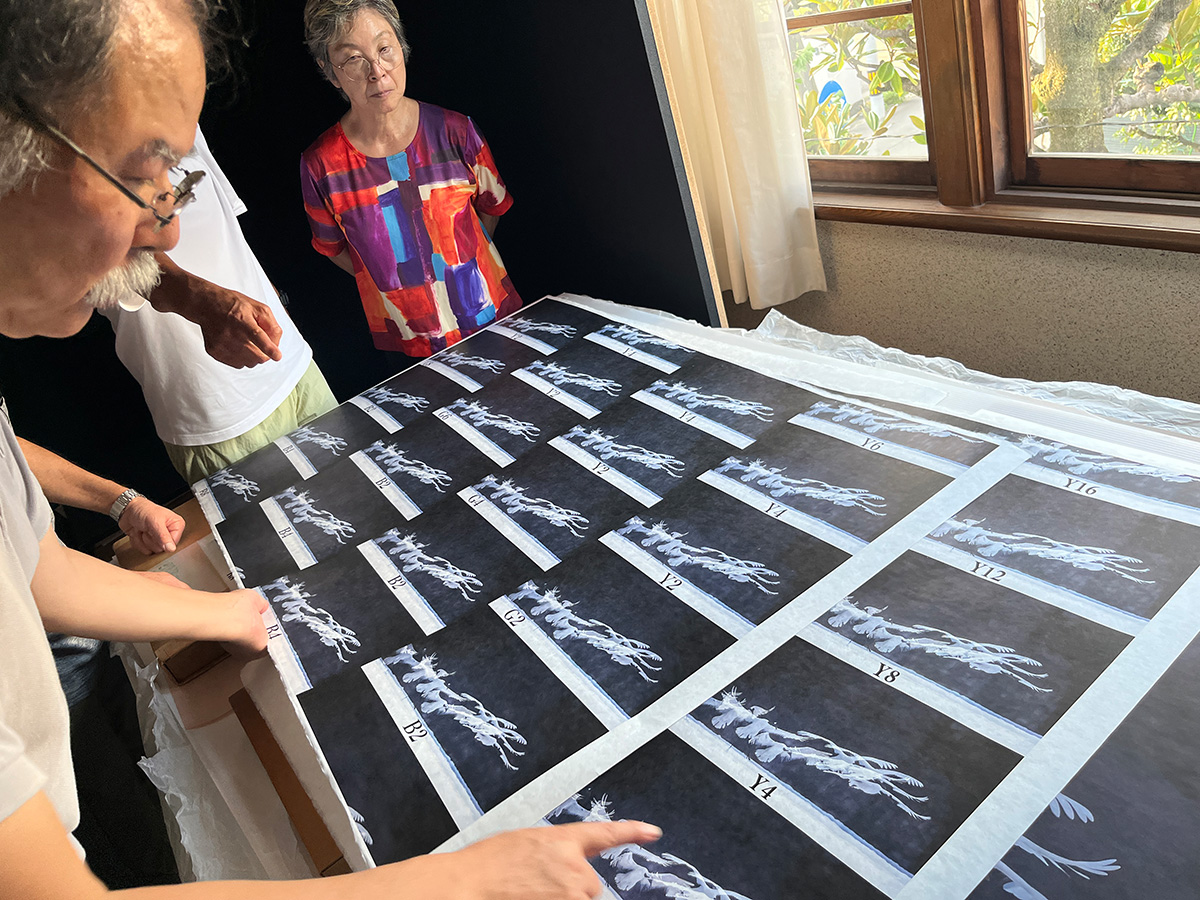
Chairman Nakagita, who developed washi for inkjet printing, is highly skilled both in photography and in printing techniques. We visited to check the prints prepared for the Mexico exhibition, and found that the level of attention to detail went far beyond our expectations.
インクジェット対応の和紙を開発した中北会長は写真の腕前もプリントテクニックも秀逸です。今回はメキシコ展用プリントの仕上がりを確認しに伺いましたが、予想以上に細部に渡ってこだわりが施されていました。
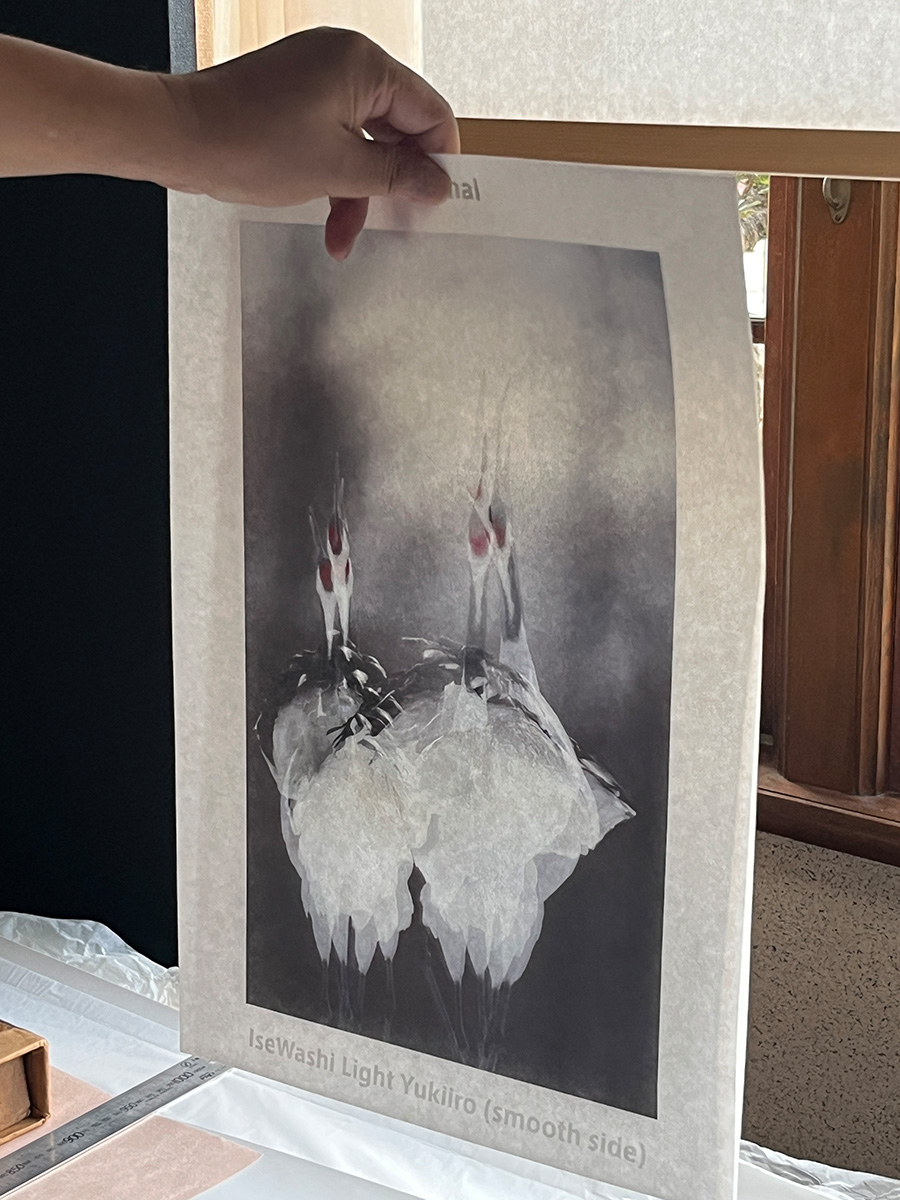
Mr. Hitoshi Sato’s work featuring red-crowned cranes, following a suggestion by curator Ann, is to be hung from above so the cranes appear to be dancing in flight. To allow the piece to be viewed from both sides, two sheets were mounted back-to-back. Moreover, when layered in the same direction and held up to the light, a unique quality inherent to washi was revealed.
佐藤均さんの丹頂鶴の作品はキュレーターのAnnさんの提案で、鶴が舞っているように上から吊るすことになっているためどちらからも見えるように中裏の2枚重ねに…。さらに同じ向きで重ねて陽に透かしてみると和紙ならではの良さを発見しました。
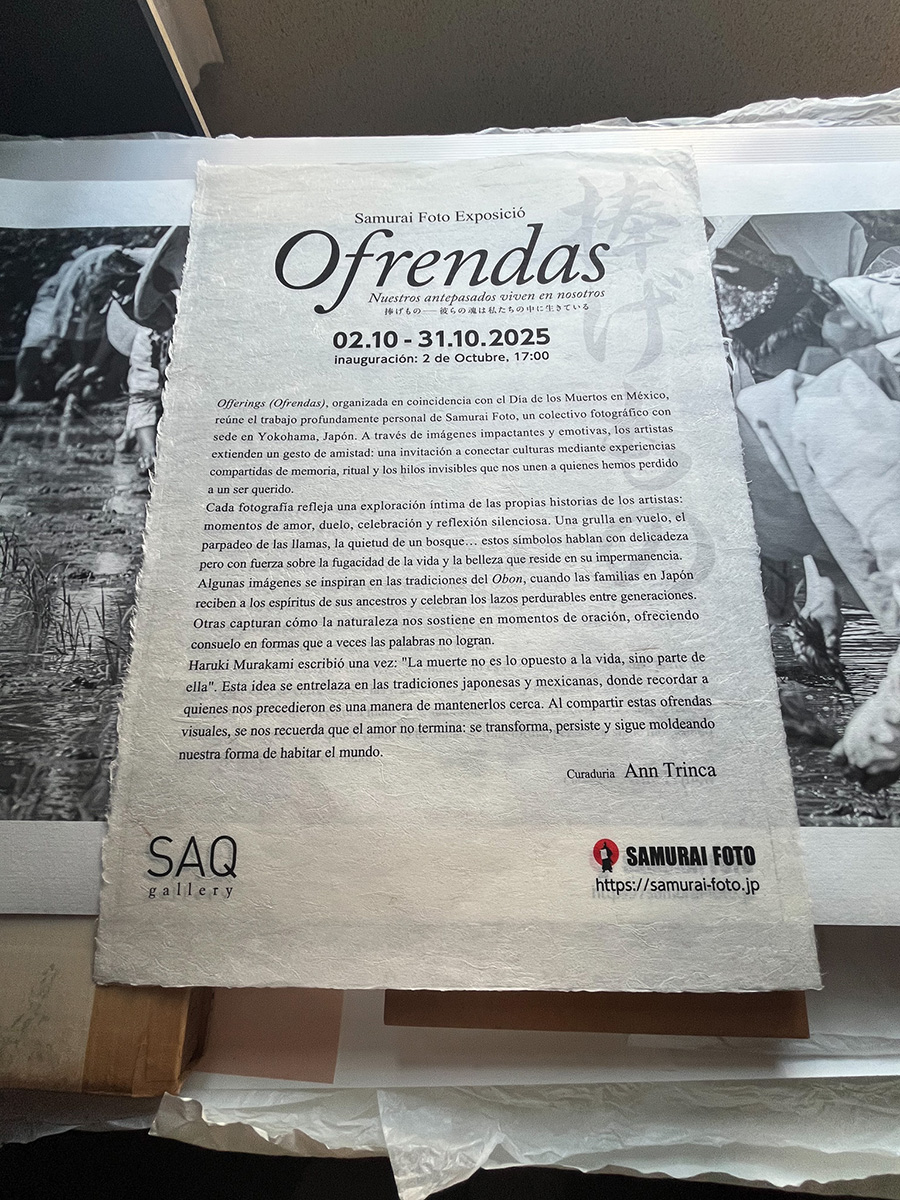
The statement written by Ann regarding the exhibition title “Ofrendas (Offerings)”, which will be displayed at the venue in Mexico, was also printed on long-fibered kozo paper with deckled edges.
メキシコ展の会場に掲示するAnnさんが書いてくださった展覧会のタイトル“Ofrendas(捧げもの)”に関するステートメントも耳付きの長毛楮紙(ちょうもうこうぞし)にプリントしていただきました。

On the first floor of the gallery is the print studio “Light Studio for Photo Art”, equipped with a CANON Pro-6100 printer. In addition to printing large-format photographs and posters, you can also seek advice on ICC profiles and color correction.
ギャラリーの1階にあるプリント工房 “Light Studio for Photo Art”にはCANONプリンタPro-6100を装備。大判写真やポスターのプリントはもちろん、ICCプロファイルや色補正の相談もできます。

We were subtly adjusting the color tones of one print that had been completed the day before and had particularly caught our attention, among the prints made by SAMURAI FOTO members. It was an intense but enjoyable session, shared among people who are all very particular about their prints.
前日に出来上がっていたSAMURAI FOTOメンバーのプリントのうち、どうしても気になった1枚を全員で色調などを微妙に補正しているところ。プリントにこだわりが強いもの同士の白熱した楽しい時間でした。
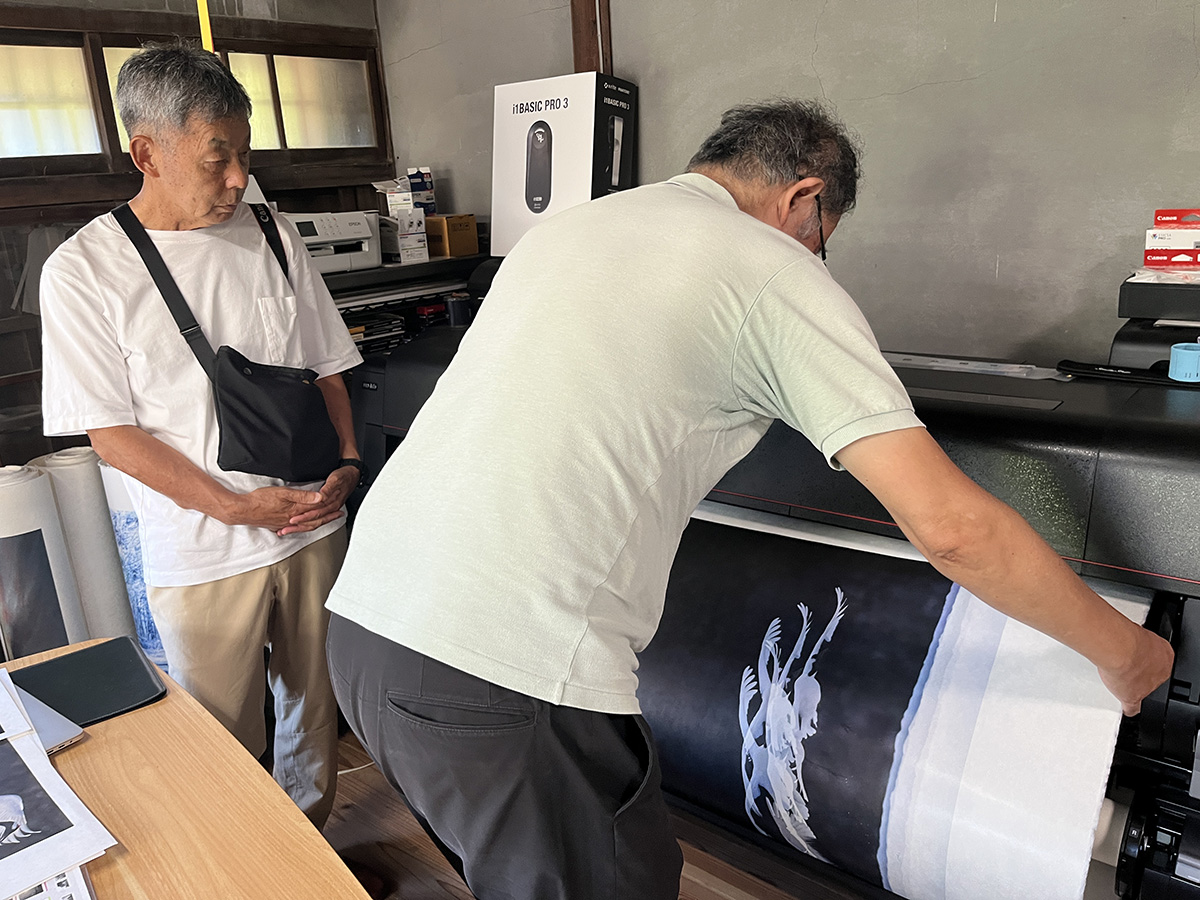
The focus of our adjustments was on the white areas of the snow. Depending on the base color of the paper, we tried several variations to fine-tune the tonal transition between the snow and the paper, finally arriving at a result we were satisfied with. Even printing just a single sheet took about 30 minutes.
こだわったのは雪の白い部分。使う紙の地色にも寄りますが、雪と紙色の境目の色調の調節を何通りか試して、やっと納得のいく仕上がりに辿り着きました。1枚プリントするだけでも30分かかりました。
Checking the wooden hanging bar.
木製のハンギングバーをチェック
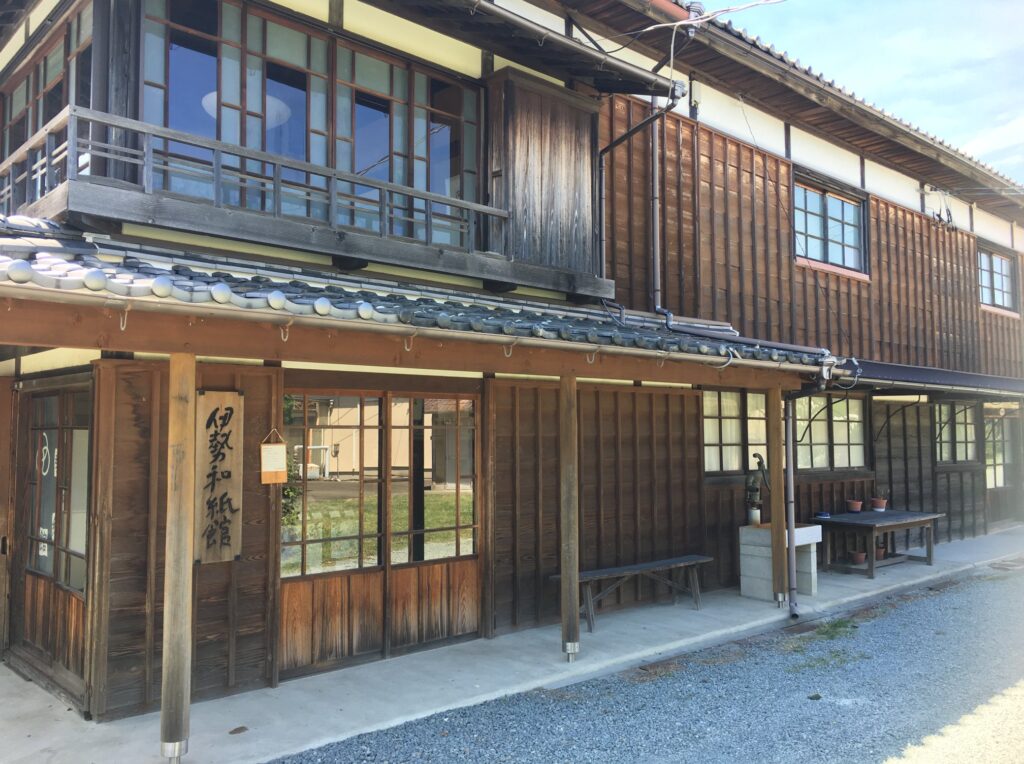
This 100-year-old wooden building, located just inside the gate of Taihou wasi kougyou K.K., was originally constructed during the Taishō era as an inspection and finishing factory.
大豐和紙工業の門を入ってすぐにある築100年の木造建築は元々は大正時代に検査仕上工場として建てられたものだそうです。
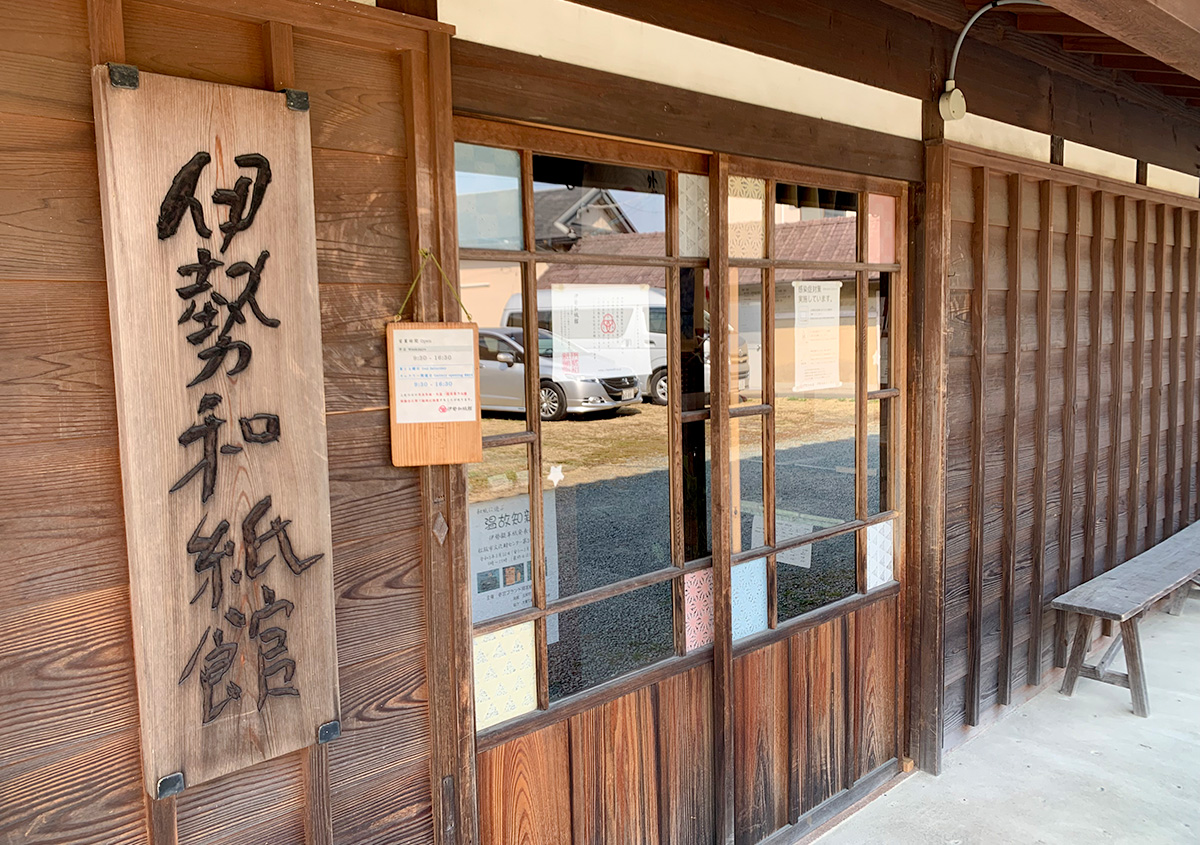
Currently, it houses a reference room where you can view papermaking tools, panels detailing the history of Taihou wasi kougyou K.K. and the papermaking process, as well as materials and books related to paper.
現在は、紙漉きの道具や大豐和紙工業の歴史、紙漉きの工程のパネル展示などと、紙に関する資料や本も収蔵していて閲覧可能な資料室があります。
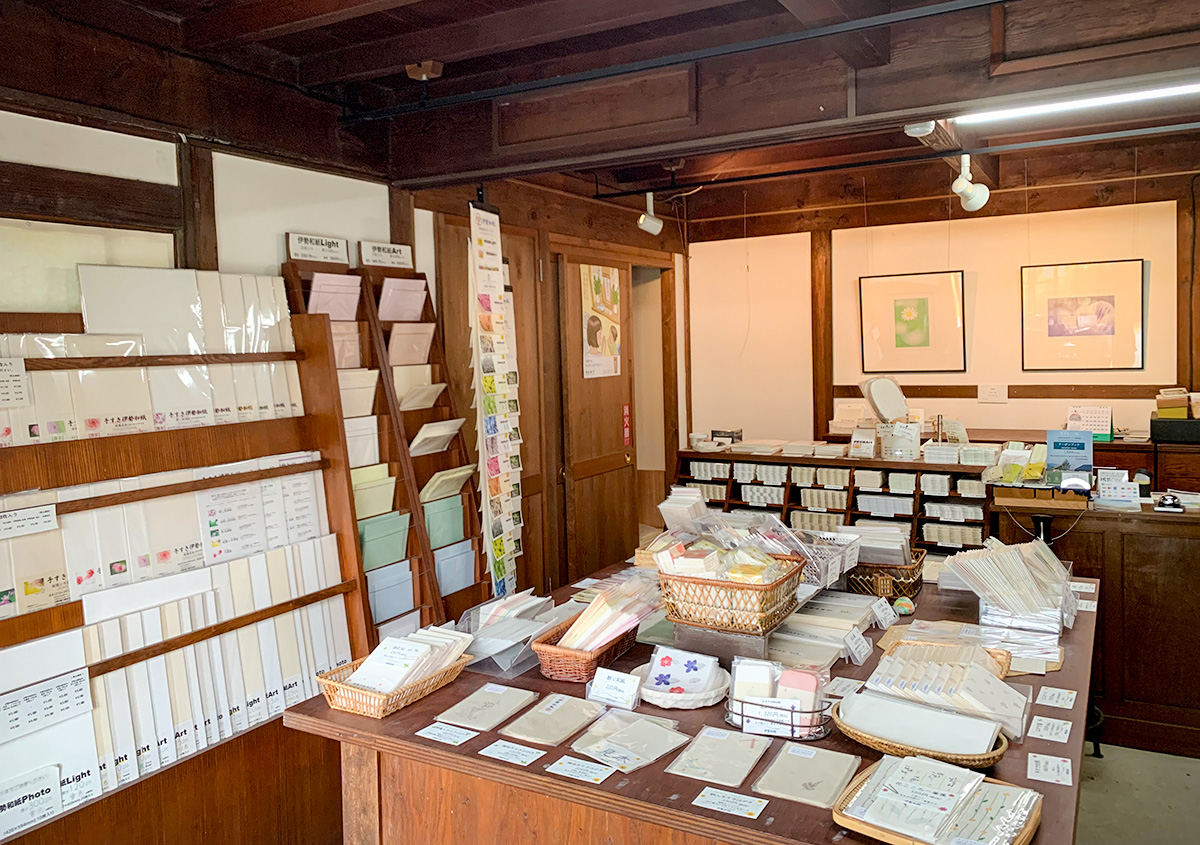
There is also an attached shop selling both handmade and machine-made IseWashi. In addition to specialty craft papers and photo papers, they offer casual stationery such as letter paper, envelopes, and notepads.
手漉き伊勢和紙、機械抄き伊勢和紙を販売しているショップも併設。工芸紙や写真用紙はもちろん、気軽な便箋や封筒、メモ帳なども販売されています。
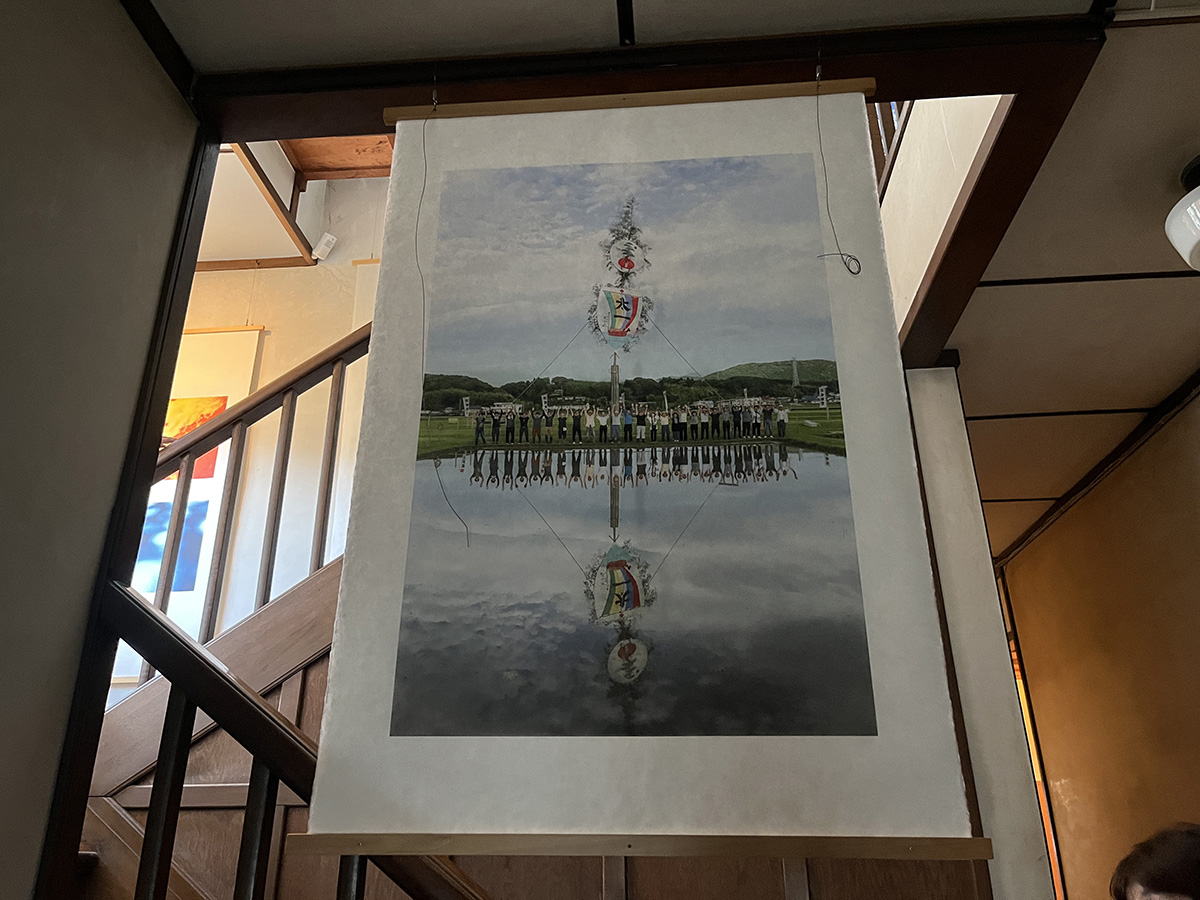
For this exhibition in Mexico, all works will be displayed using wooden bars like these instead of frames. We thought they would complement the traditional Japanese washi paper prints (the works shown here are by another artist currently on display).
今回のメキシコ展では全作品にフレームではなく、このような木製バーを使います。日本の伝統的な和紙のプリントにマッチすると考えました(作品は現在展示中の別の方の作品)。
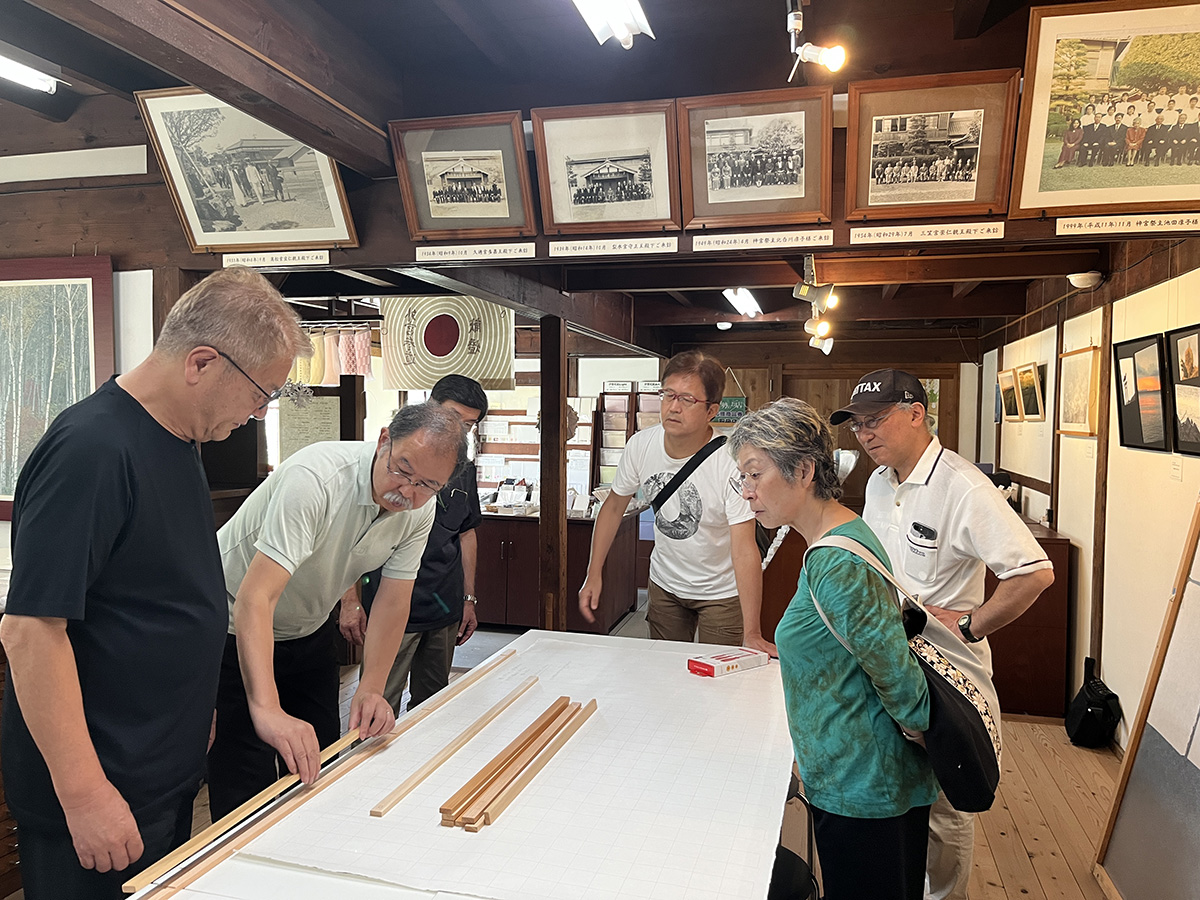
In fact, these wooden bars were devised by Chairman Nakagita. The prints are sandwiched between the fragrant cypress wood and its elegant pale finish, with bars used at both the top and bottom.
じつはこの木製バーは中北会長の考案。檜(ひのき)の芳しい香りと上品な白木でプリントを挟み、それを上下に使います。
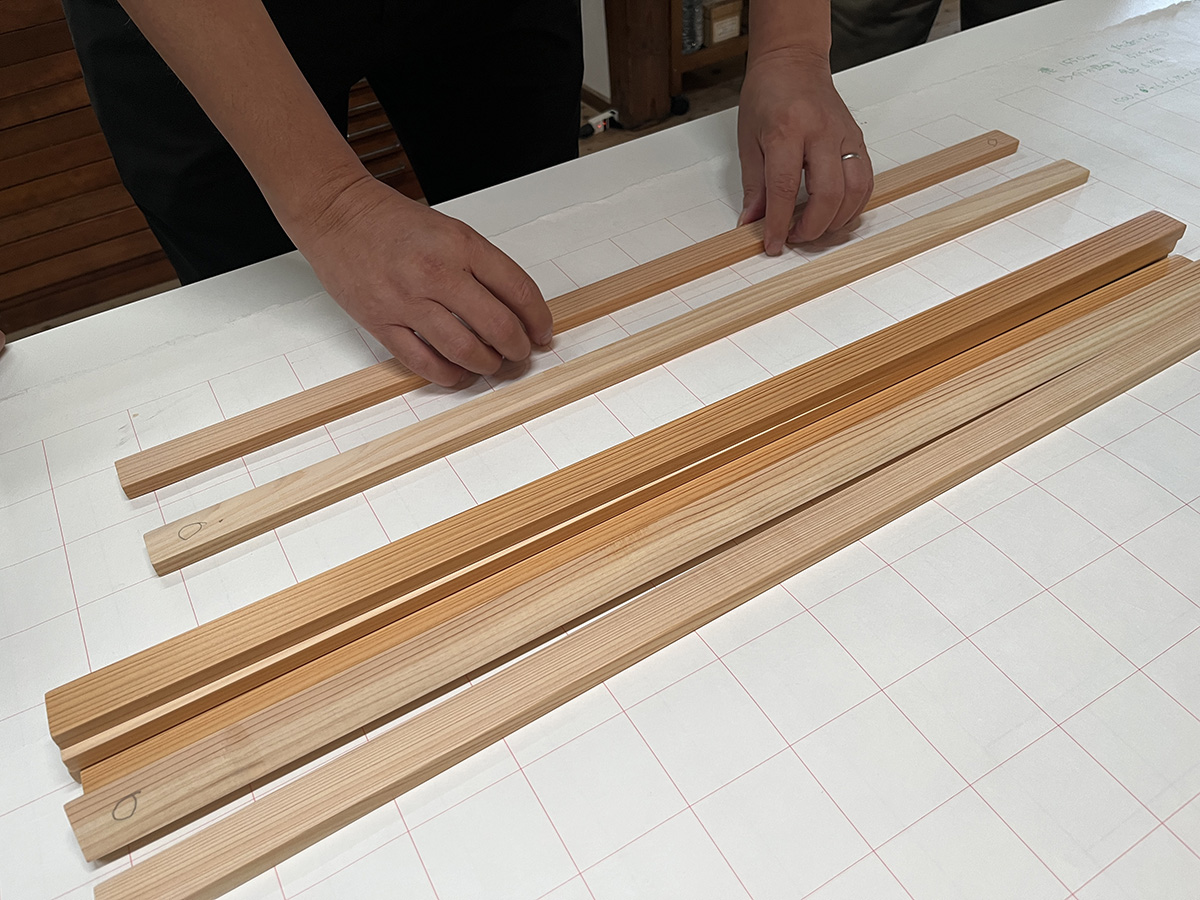
The maximum width of the prints is 160 cm. Since they couldn’t be shipped to Mexico at that size, we divided them into two sections for shipping and planned to join them with screws at the venue.
プリントの最大幅は160cm。そのままではメキシコまで送れないため、2分割の長さにして送り、会場でネジで連結することにしました。
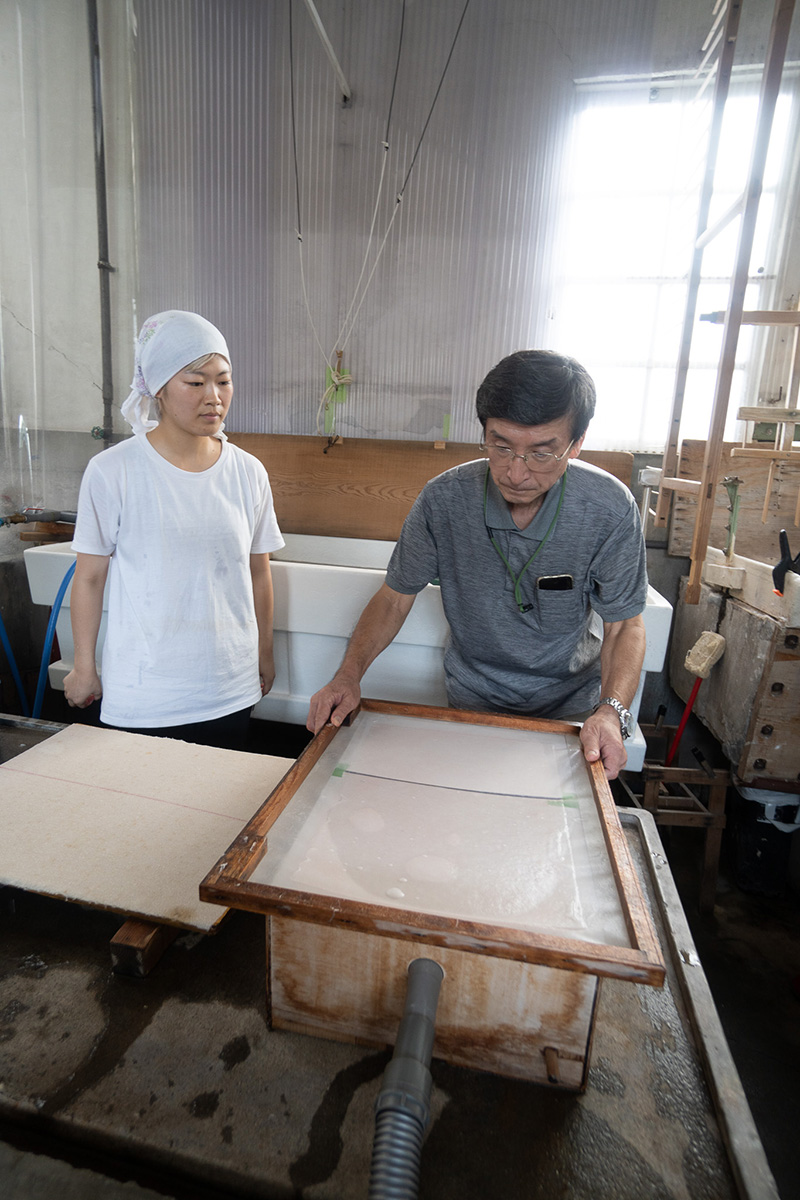
We also had the opportunity to experience traditional papermaking
紙漉き体験もさせていただきました
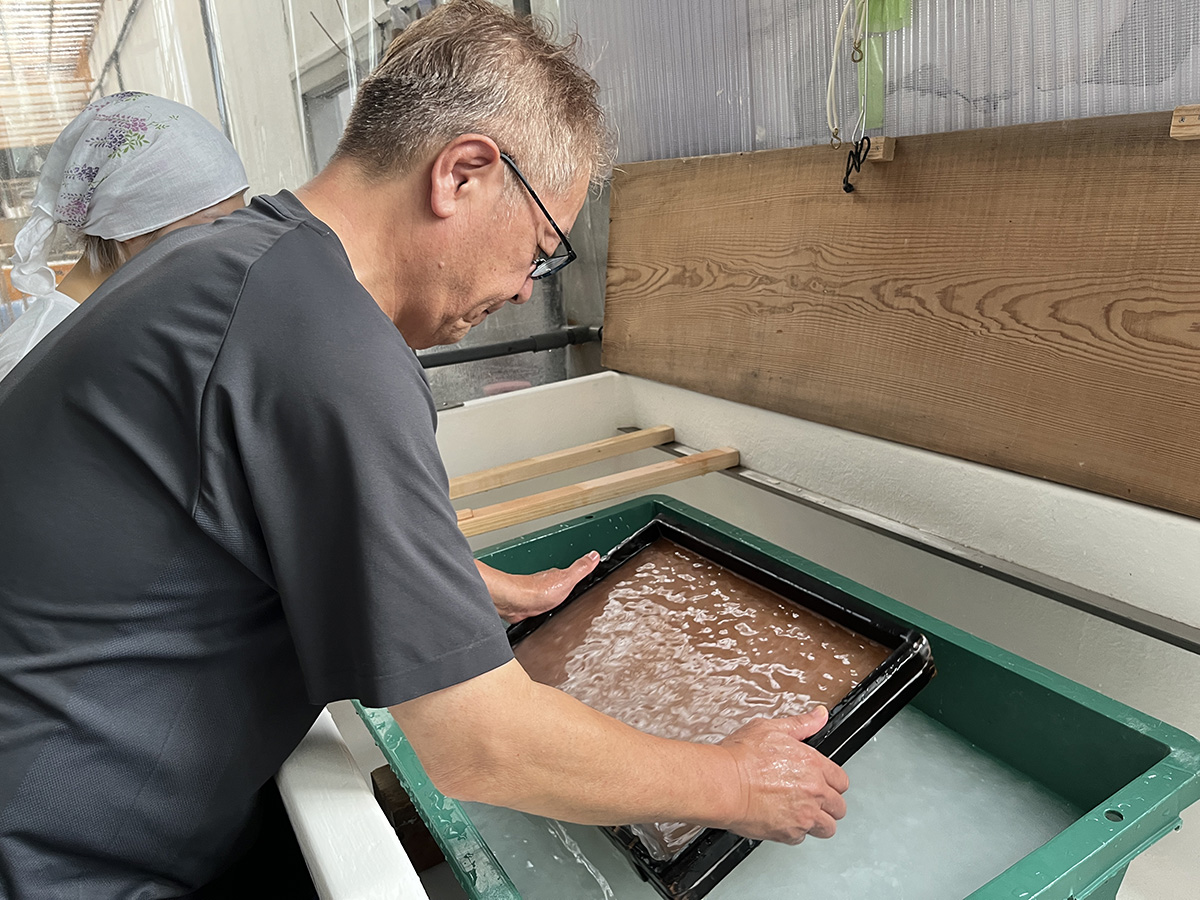
Over the course of two days, we received tremendous support from everyone at IseWashi. Thank you to Chairman Nakagita, President Nakagita, the craftsmen, and all the staff.
2日間に亘って、伊勢和紙さんには大変お世話になりました。中北会長、中北社長、職人や従業員の皆さん、ありがとうございました。
Feel free to contact us.
Nothing will make us happier than having visitors share their thoughts.