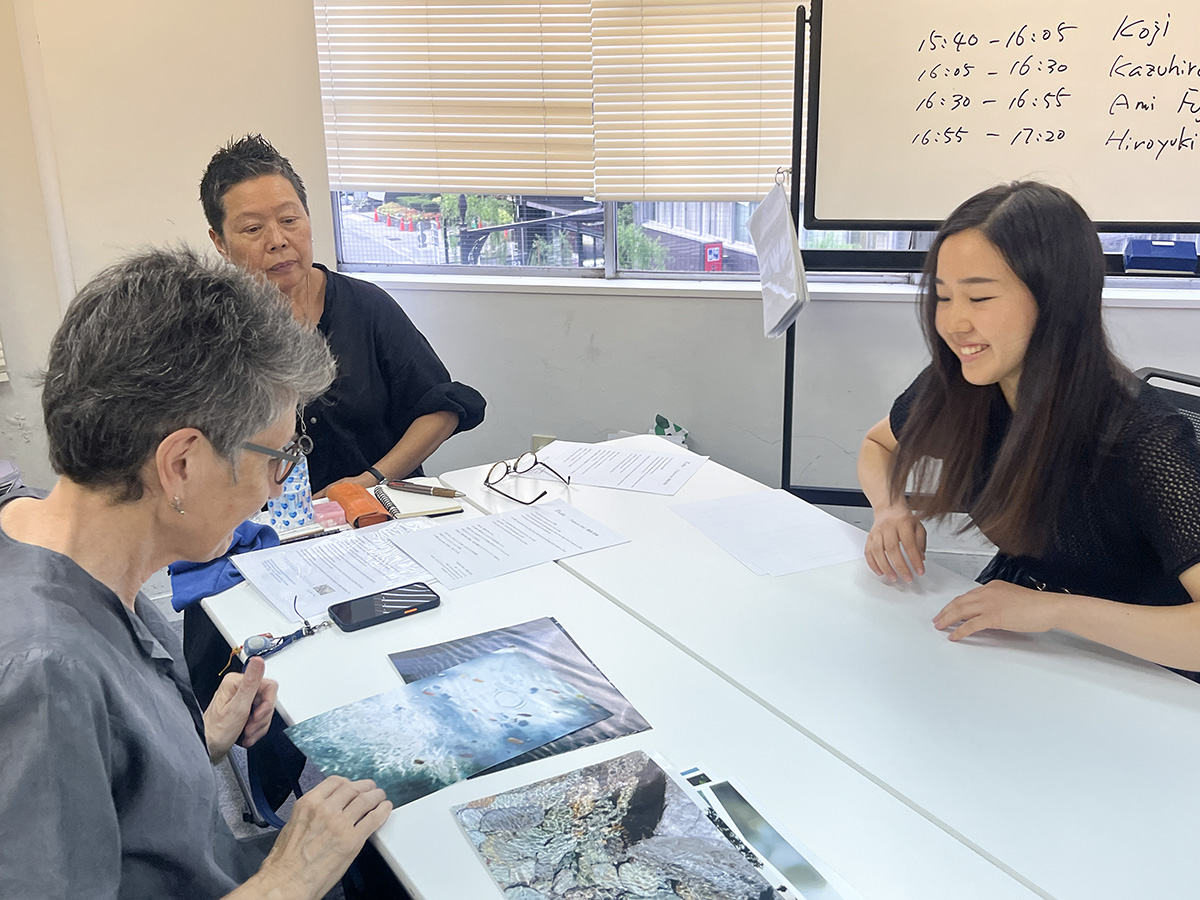
Showed our works for the group exhibition during KYOTOGRAPHIE 2026 to Deborah Klochko.
KYOTOGRAPHIE 2026期間中のグループ展用の作品をデボラさんに見ていただきました
September 16th, 2025 / 2025年9月16日
This year, SAMURAI FOTO participated in KG+ for the first time. Our exhibition was held at Gallery Dōjidai, located in the heart of Kyoto’s cultural and art scene. The curator was Deborah Klochko, Honorary Director of the Museum of Photographic Arts (MOPA), who has long provided valuable portfolio reviews for our members.
Unlike our previous group exhibitions in Tokyo, this show—set in Kyoto, a city deeply rooted in tradition, and as part of the KYOTOGRAPHIE satellite program—offered us a truly inspiring experience. Deborah’s expert curation in art photography added even greater depth to the project, making the two weeks unforgettable.
We aim to continue this collaboration through 2029, presenting new exhibitions each year.
On this day, we received Deborah’s feedback on our works for KG+ 2026.
私たちSAMURAI FOTOは今年初めてKG+に参加しました。展覧会場は京都の文化とアートシーンの中心部に位置する同時代ギャラリー。キュレーターは長年、私たちの作品の講評をしていただいてきたMOPA(Museum of Photographic Art)の名誉館長テボラ・クロチコさんです。
昨年までの東京で開催してきたグループ展とは異なり、京都という土地柄、さらにはKYOTOGRAPHIEのサテライトイベントということ、そして、アートフォトのスペシャリストであるデボラさんによるキュレーション、それらすべてが私たちにとってはとても刺激的な2週間でした。
それを来年、再来年と少なくとも2029年までは継続することを目標としています。
ということでこの日は2026年のKG+出展作品についてデボラさんからアドバイスをいただきました。
Selection from the perspective of presentation
「見せる」という観点からのセレクト
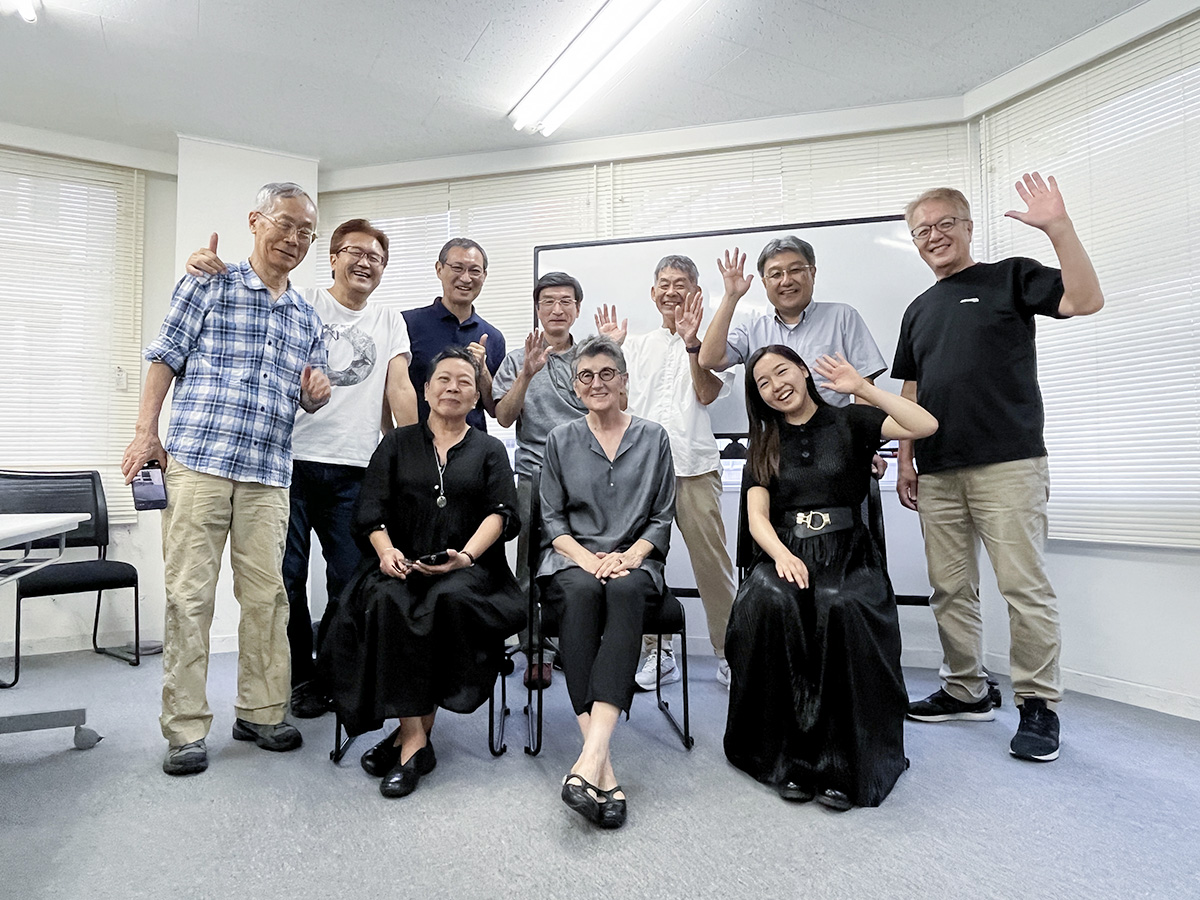
Held a portfolio review focusing on each SAMURAI FOTO member’s project for next year’s KG+ group exhibition. It was a valuable opportunity to have our works reviewed directly by Deborah Klochko during her stay in Japan.
SAMURAI FOTOメンバーそれぞれの来年のKG+グループ展用のプロジェクトについてのポートフォレオレビューを開催。日本滞在中のデボラさんに直接、見てもらえる貴重な機会でした。
After this year’s exhibition, Deborah Klochko had already begun considering the title and concept for our 2026 group exhibition. Each member is now in the process of developing their project in alignment with that vision.
デボラさんには今年の展覧会終了後にすでに、2026年のグループ展のタイトルとコンセプトについて考えていただいていて、各人がそれに合わせたプロジェクトをまとめつつある段階にあります。
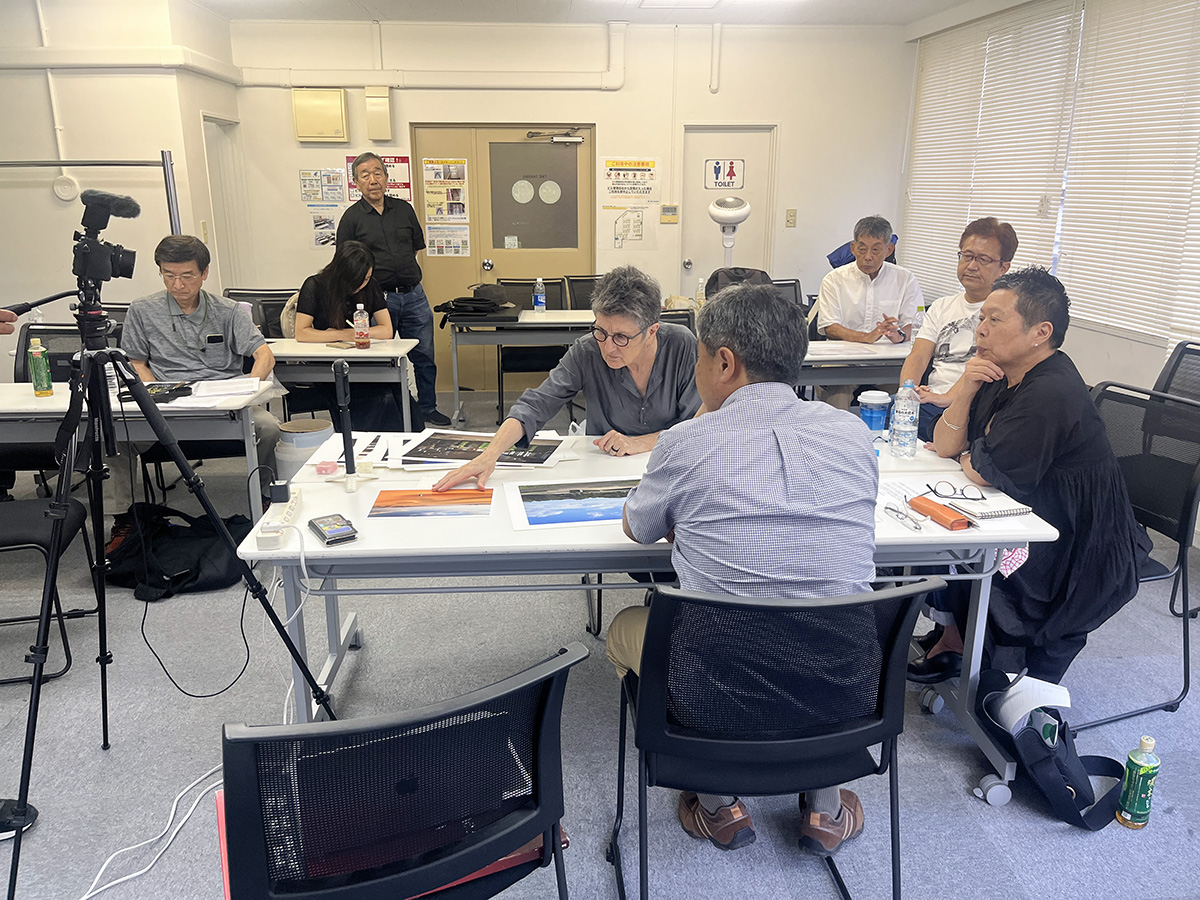
What never ceases to amaze us about Deborah is her ability to select and advise with a clear vision of the exhibition flow, her vast knowledge of art, photography, and photographic history, and her remarkable memory of each of our works.
デボラさんにいつも驚かされるのは展示の流れを考えてのセレクトやアドバイス。写真史や写真家などアートと写真に関する膨大な情報量。私たちの作品についてもすべてよく覚えていてくださることです。
Hiroyasu Sato / 佐藤 裕保
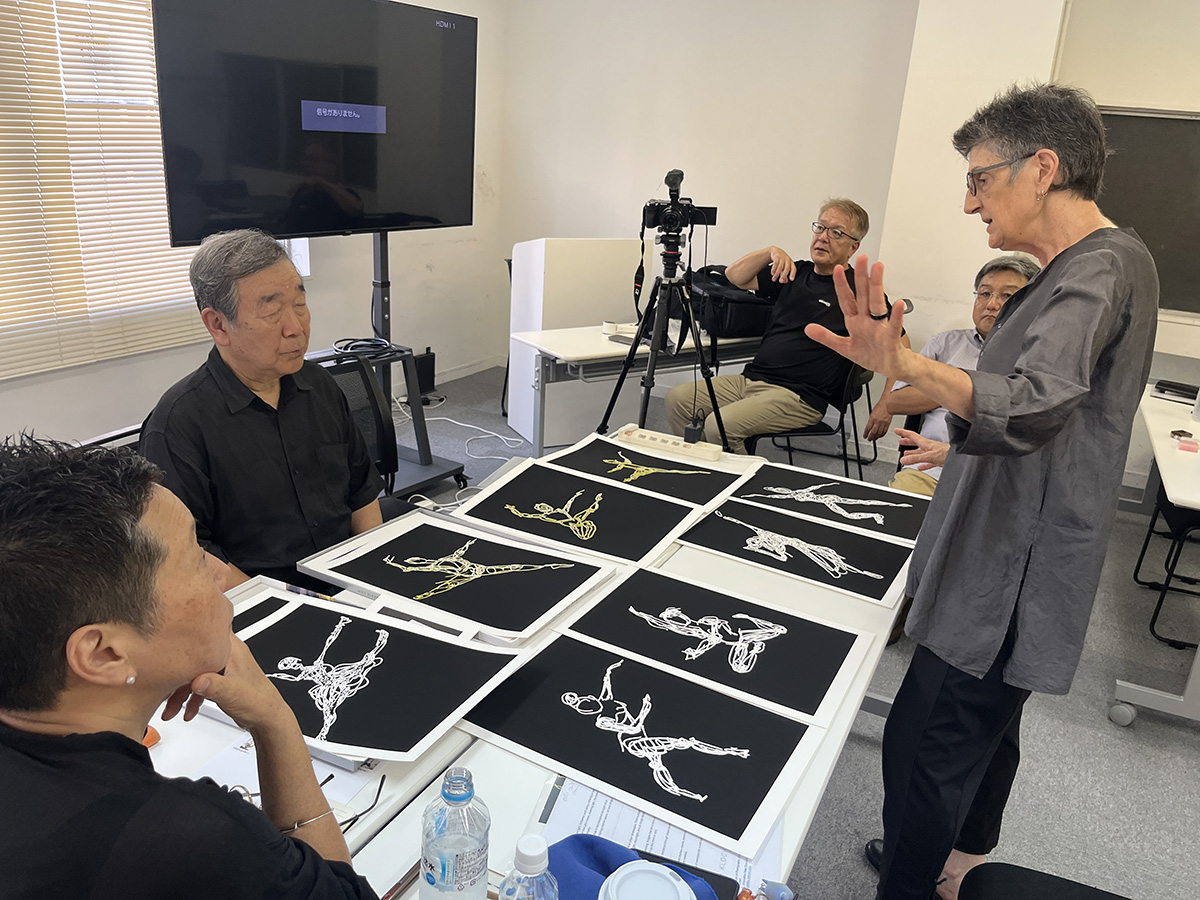
Hiroyasu Sato’s work is based on sketches left by his late daughter, who loved watching ballet and enjoyed depicting it dynamically. He sought advice on whether to make the lines bolder and more defined.
佐藤裕保さんの作品は、バレエ鑑賞が趣味でそれをダイナミックに描くことが好きだったお嬢さんが残したスケッチを元にしたもの。線をはっきり太くさせるようにすべきかを相談していました。
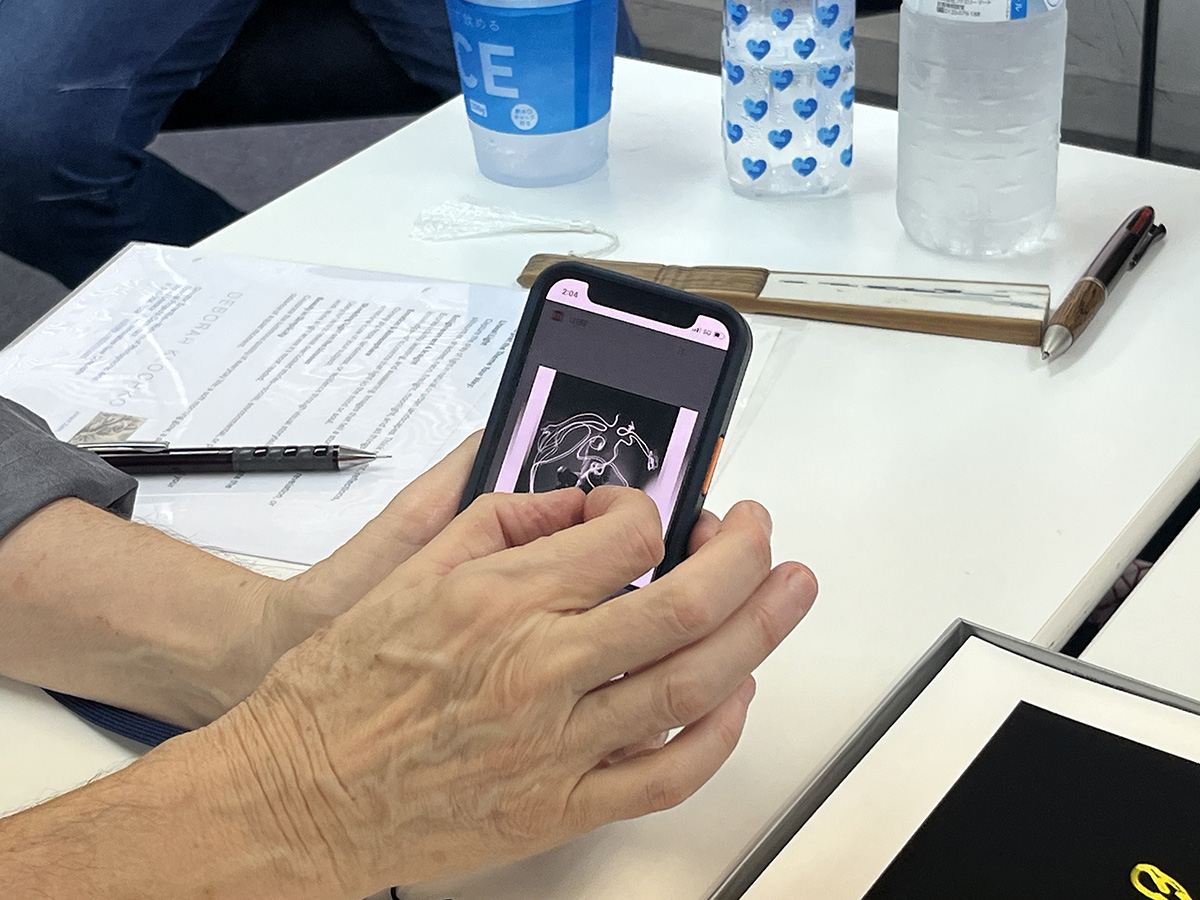
After reviewing Sato’s project, Deborah first introduced him to sketches by Picasso drawn in a similar style. Sato was surprised to see his work compared to that of a master artist.
佐藤さんのこのプロジェクトをひと通り見終わったあと、デボラさんがまず教えてくださったのは似たタッチで描かれたピカソのスケッチです。一流のアーティストと比較されて佐藤さんもびっくりでした。
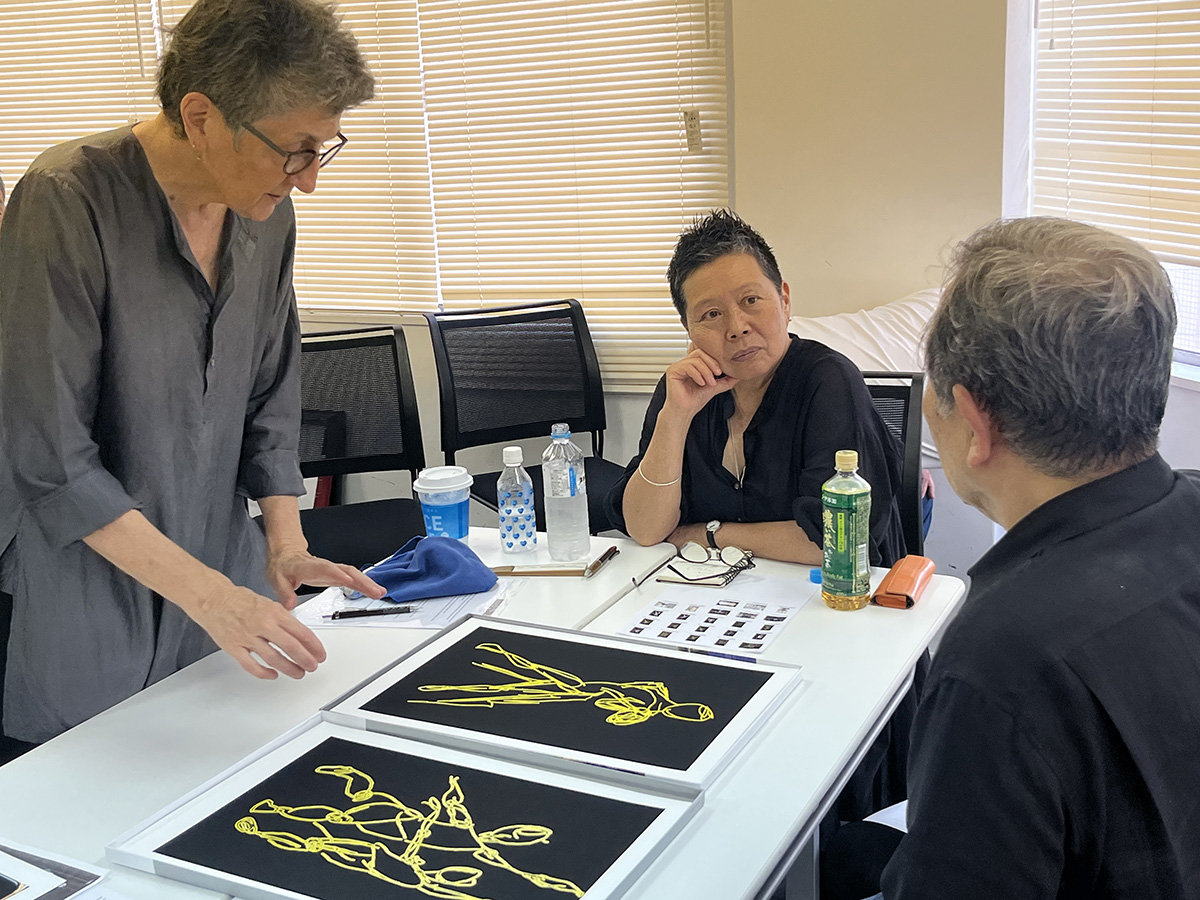
Hearing about Picasso gave Sato the confidence to move forward with his project, bringing a smile to his face. Deborah’s ability to immediately reference similar renowned works also reflects her extensive knowledge of art.
ピカソの話が出たことで、佐藤さんは自信が持ってプロジェクトを進められると笑顔に……。似ている有名作品をすぐに披露してくれるのもデボラさんのアートに関する知識の豊富さを物語っています。
Shigeru Yoshida / 吉田 繁
Among SAMURAI FOTO members, Shigeru Yoshida has had his works reviewed by Deborah for the longest time. His latest work is the final installment of a three-part series inspired by the Great East Japan Earthquake, marking what he describes as his fourth project in this series.
SAMURAI FOTOの中では最も古くからデボラさんに作品を見てもらっているのが吉田先生です。今回の新作は東日本大震災をモチーフにした3部作の総まとめになる完結編。4プロジェクト目に当たるそうです。
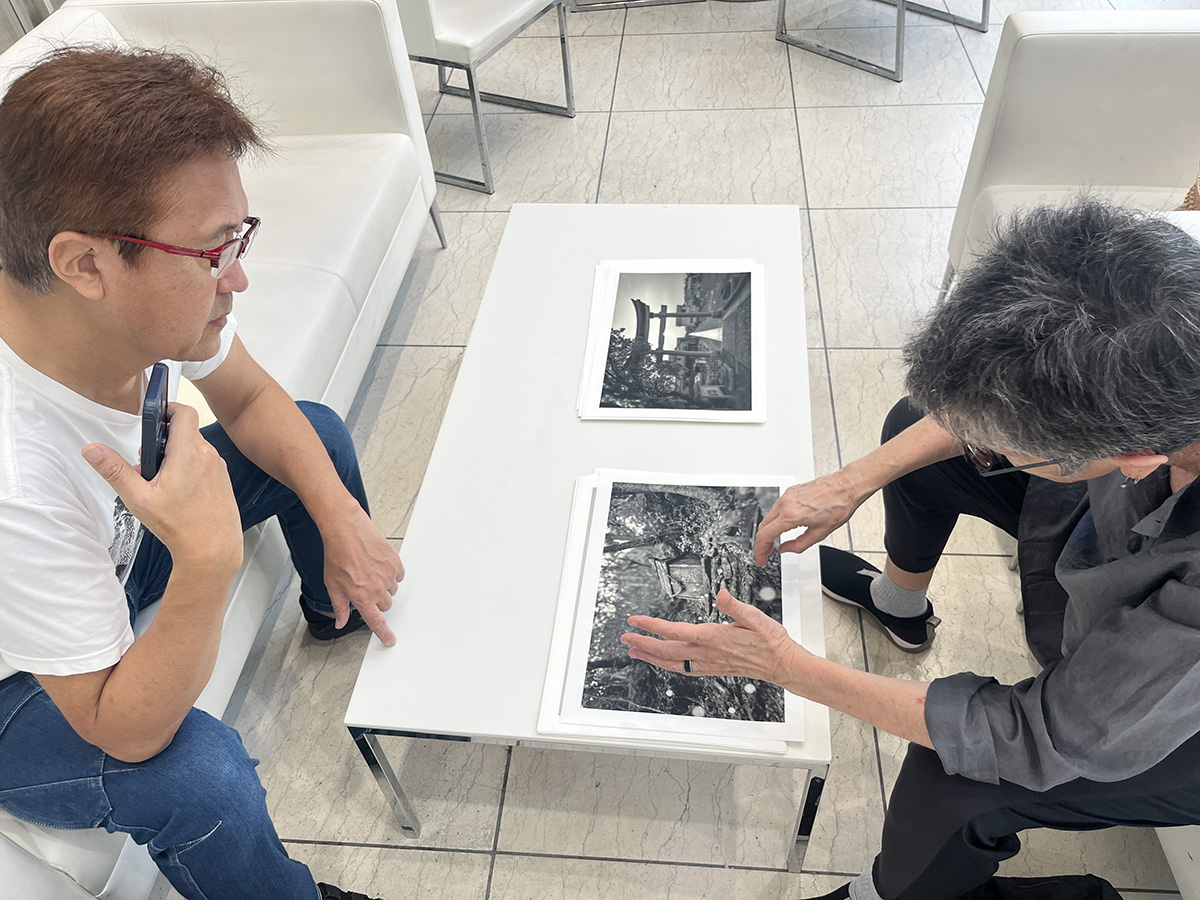
When starting a new project, the beginning is always the hardest—questioning whether the direction is right or if the work aligns with the project’s concept. Deborah’s guidance helps dispel those doubts.
新しいプロジェクトと向き合うとき、誰もが出だしがいちばん辛いところ。この方向で合っているのか、プロジェクトのコンセプトから外れていないか。そういう迷いをデボラさんの言葉が払拭してくださいます。
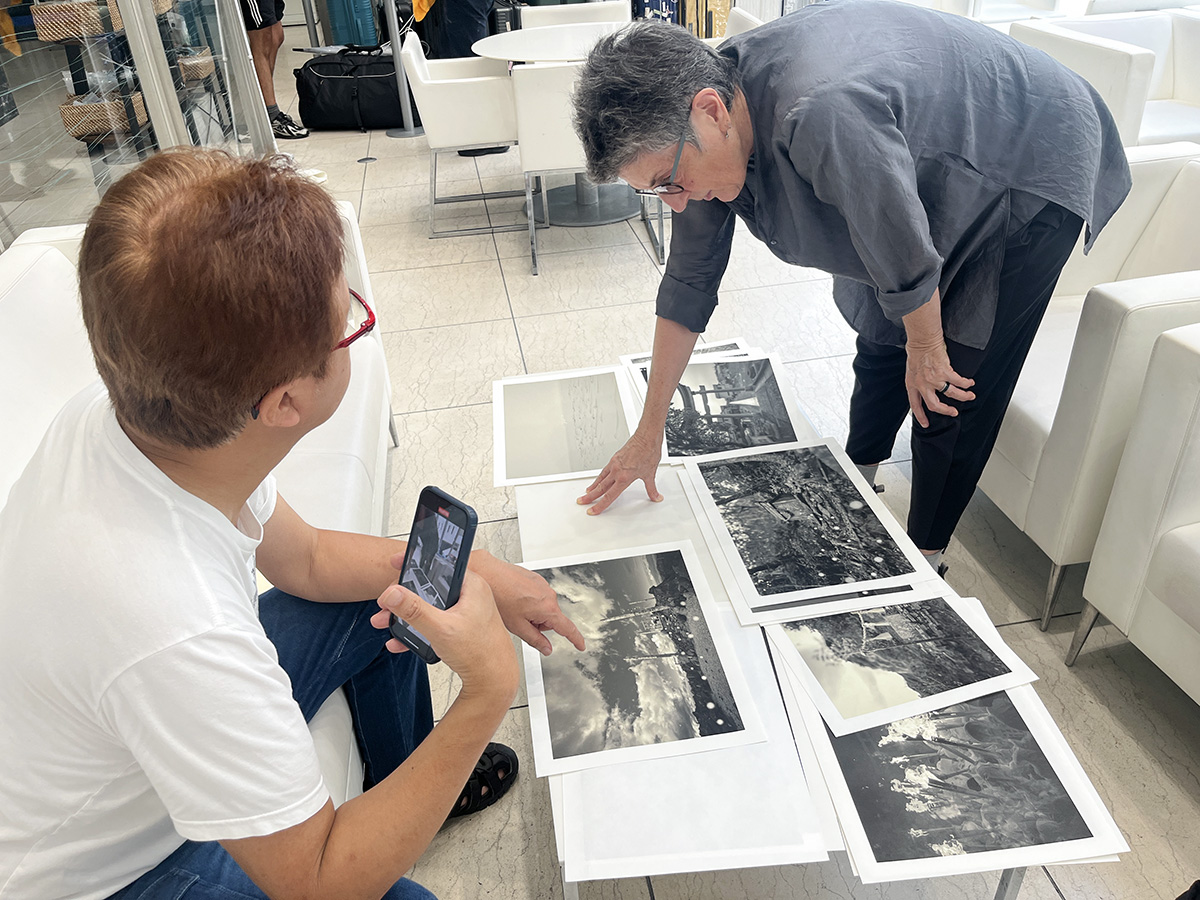
Having curated exhibitions for many years, Deborah can apparently determine almost instantly which works should be excluded and which should be placed at the beginning, just by reviewing the project once.
長年、展覧会のキュレーションをしてきたデボラさんだけに、ひと通りプロジェクトを見ただけで、外すべき作品や冒頭に持ってくるべき作品などが瞬時に見えてくるらしい。
Hiroaki Hasumi / 蓮見 浩明
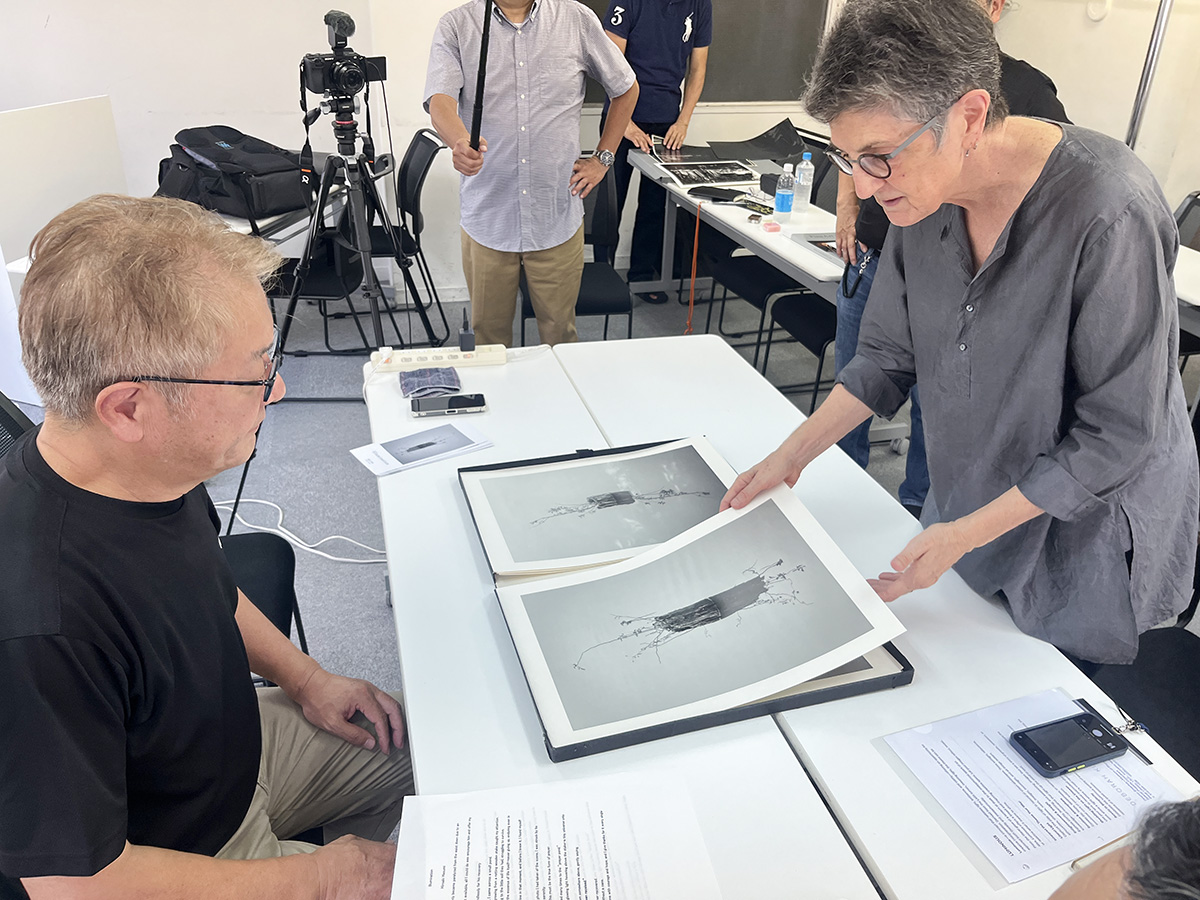
Hasumi’s new work was reviewed by Deborah during this year’s KG+ exhibition portfolio review, and at that time, she even suggested a title for the project.
蓮見さんは今年のKG+展覧会中に開催されたテボラさんによるポートフォリオレビューでこの新作を見ていただいて、その際にプロジェクトのタイトルまでご提案いただいていました。
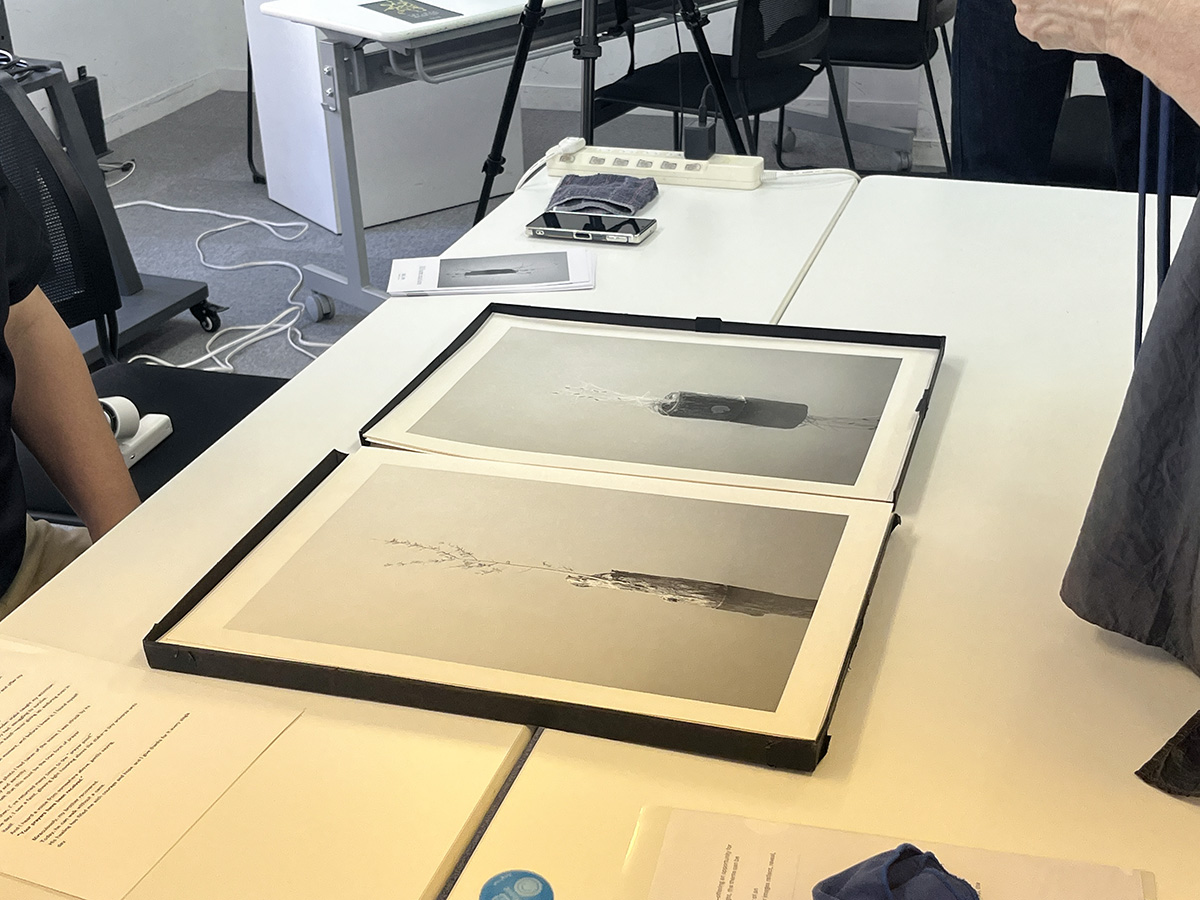
This time, following Deborah’s advice, Hasumi brought works with simplified backgrounds. Hasumi was satisfied with the results, and Deborah also gave them high praise.
今回はその際のアドバイスに従って、背景をシンプルにしたものを持参。蓮見さん本人も納得の仕上がりでしたが、デボラさんにももちろん好評価をいただきました。
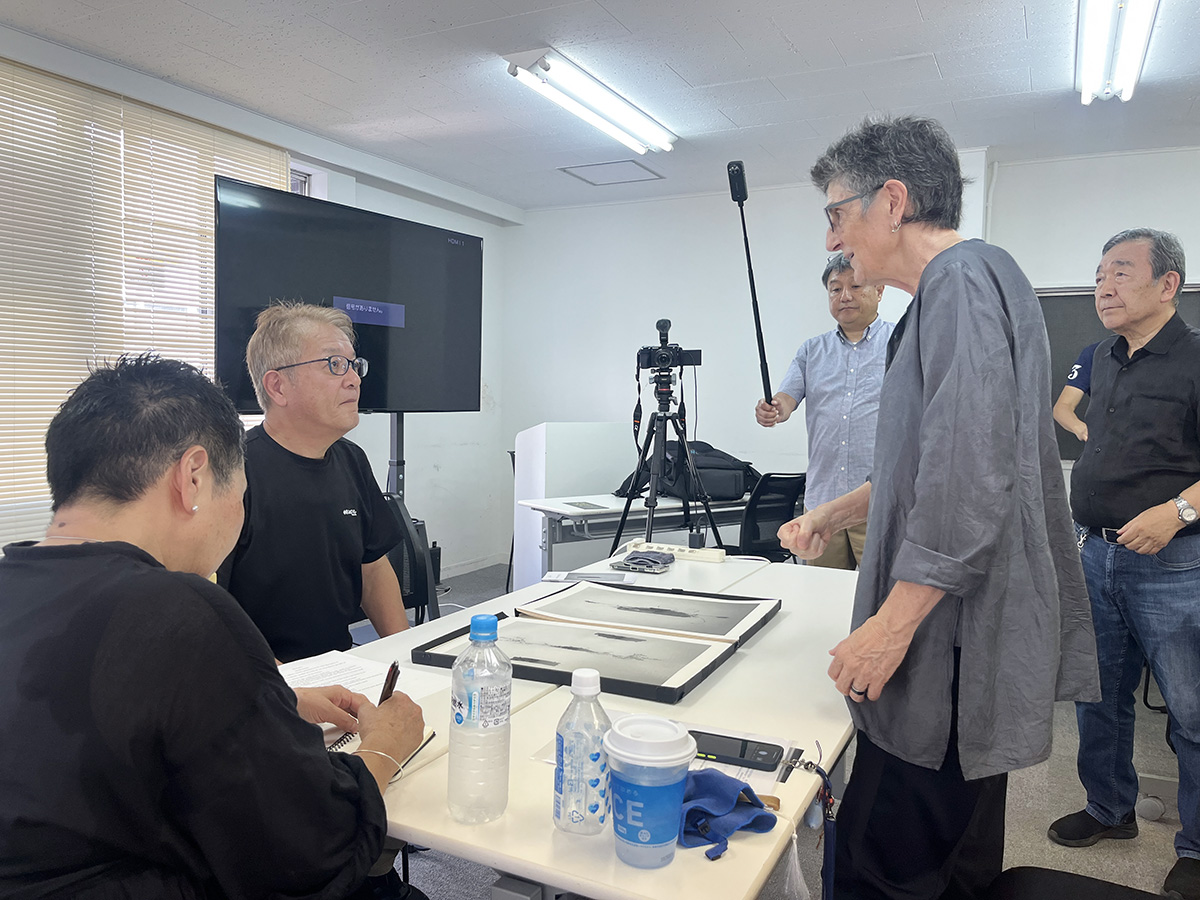
Deborah even said, “Encountering your project helped me come up with the title for next year’s SAMURAI FOTO group exhibition. Thank you.”
デボラさんからは「あなたのこのプロジェクトに出会うことで、SAMURAI FOTOの来年のグループ展のタイトルが浮かびました。ありがとう」とも言われていました。
Hitoshi Sato / 佐藤 均
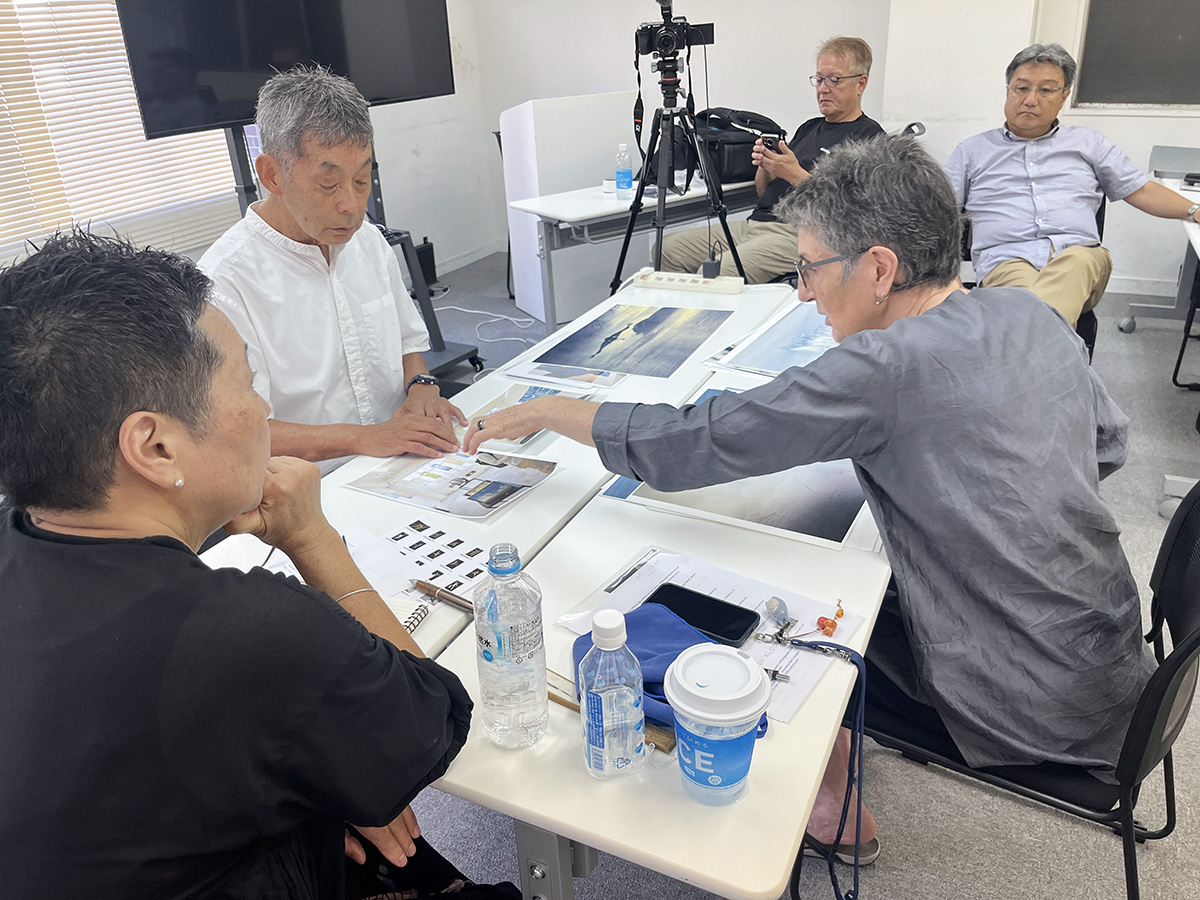
This year, Sato joined SAMURAI FOTO, and it was his first time meeting Deborah and receiving a portfolio review. He was a bit nervous, but with the help of an interpreter, communication went smoothly.
今年、SAMURAI FOTOに入会した佐藤さんはデボラんにお会いするのも、レビューを受けるのも初めてです。緊張気味でしたが、通訳さんもいたので上手く意思の疎通が図れました。
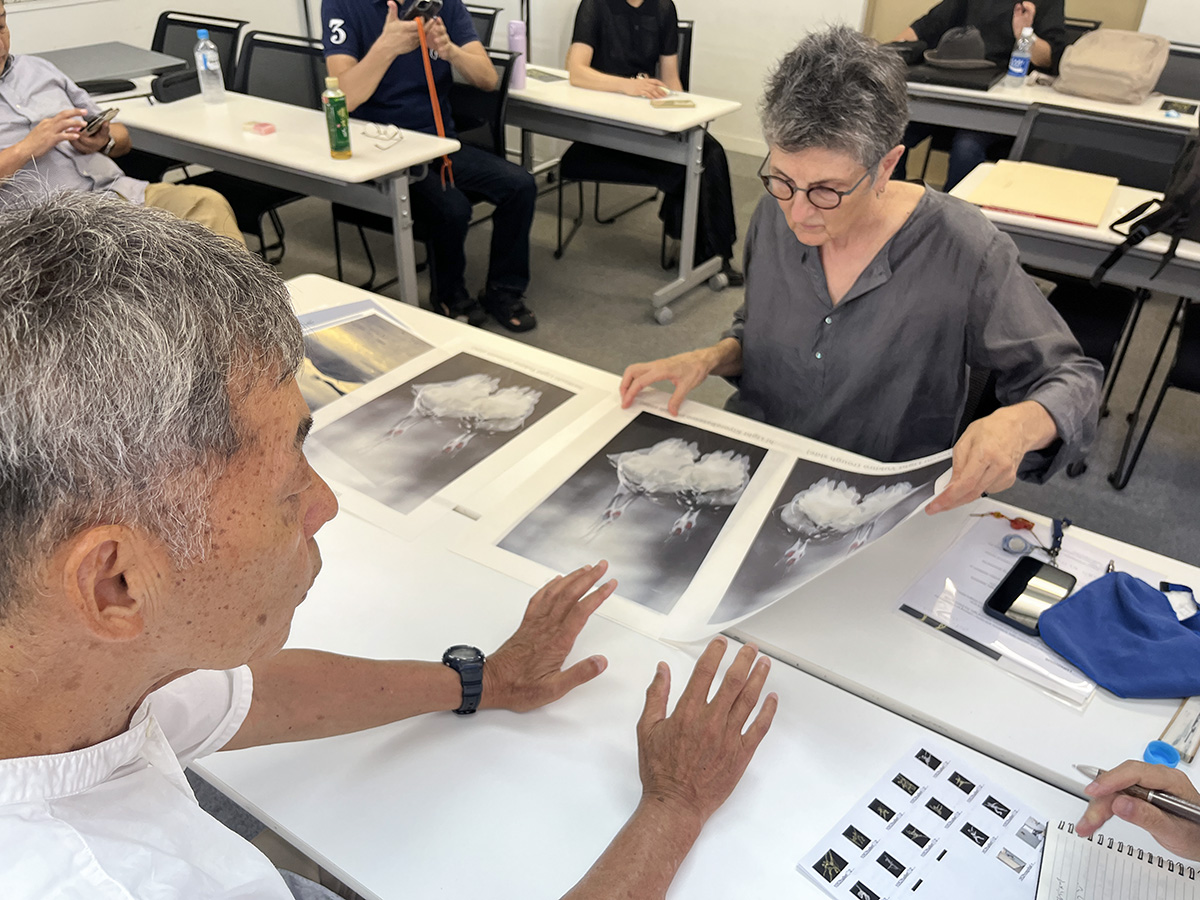
He brought works printed on Ise washi and consulted Deborah about presenting them in a double-layered format. This approach reflects Sato’s spirit of embracing new ideas and constantly experimenting.
伊勢和紙にプリントした作品を持参して、2枚重ねで見せることについてデボラさんに相談していました。さまざまな意見を取り入れて、どんどん新しいものに挑戦していく佐藤さんならのアイディアです。
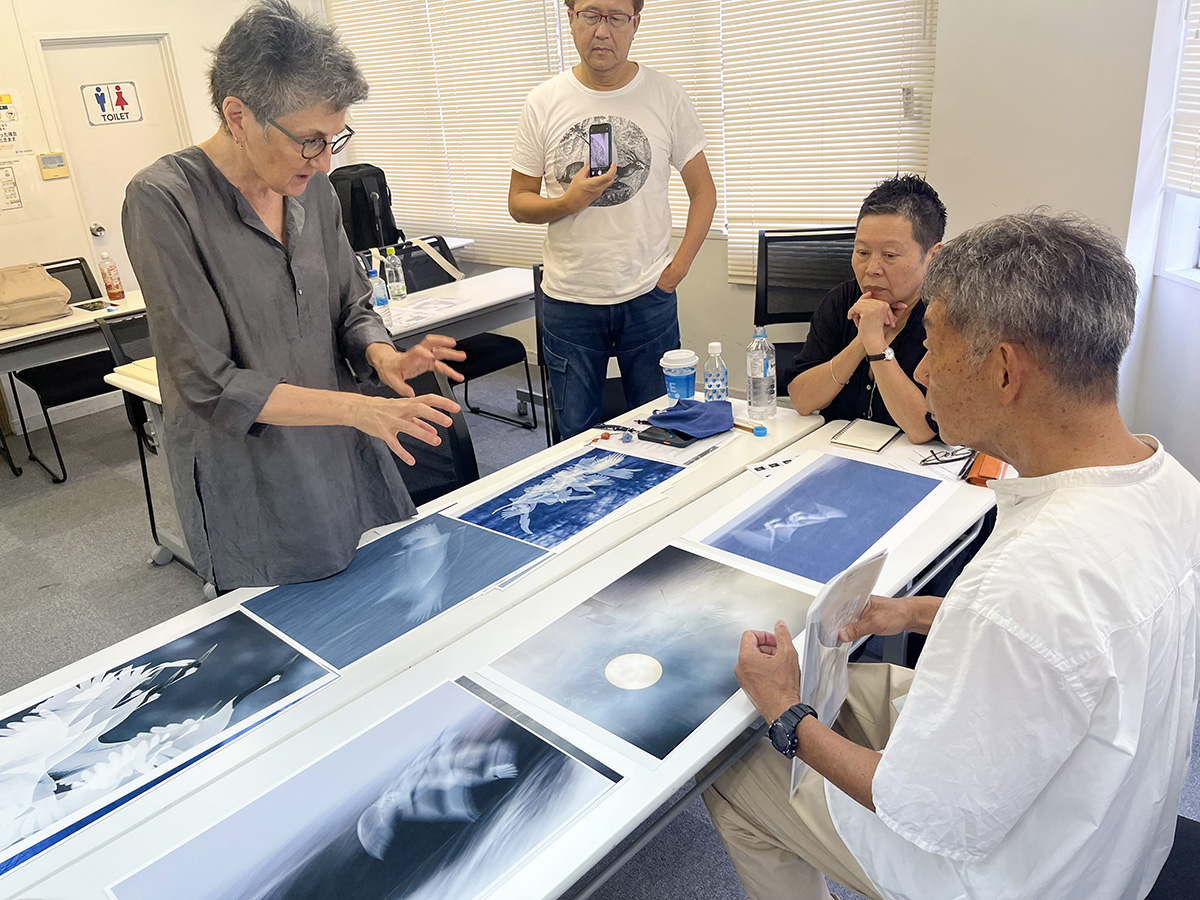
Deborah explained the flow of the exhibition, suggesting the sequence in which the works should be displayed. She clearly explained the reasons behind her choices and even provided concrete examples from renowned photographers with a similar approach.
展示していくときの流れを説明してくれるデボラさん。作品の並べ方の順番を提案してくれて、なぜそのようにすべきか、そして、それに似た著名な写真家の具体例など、わかりやすく教えてくださいました。
Kazuhiro Sasaki / 佐々木 一弘
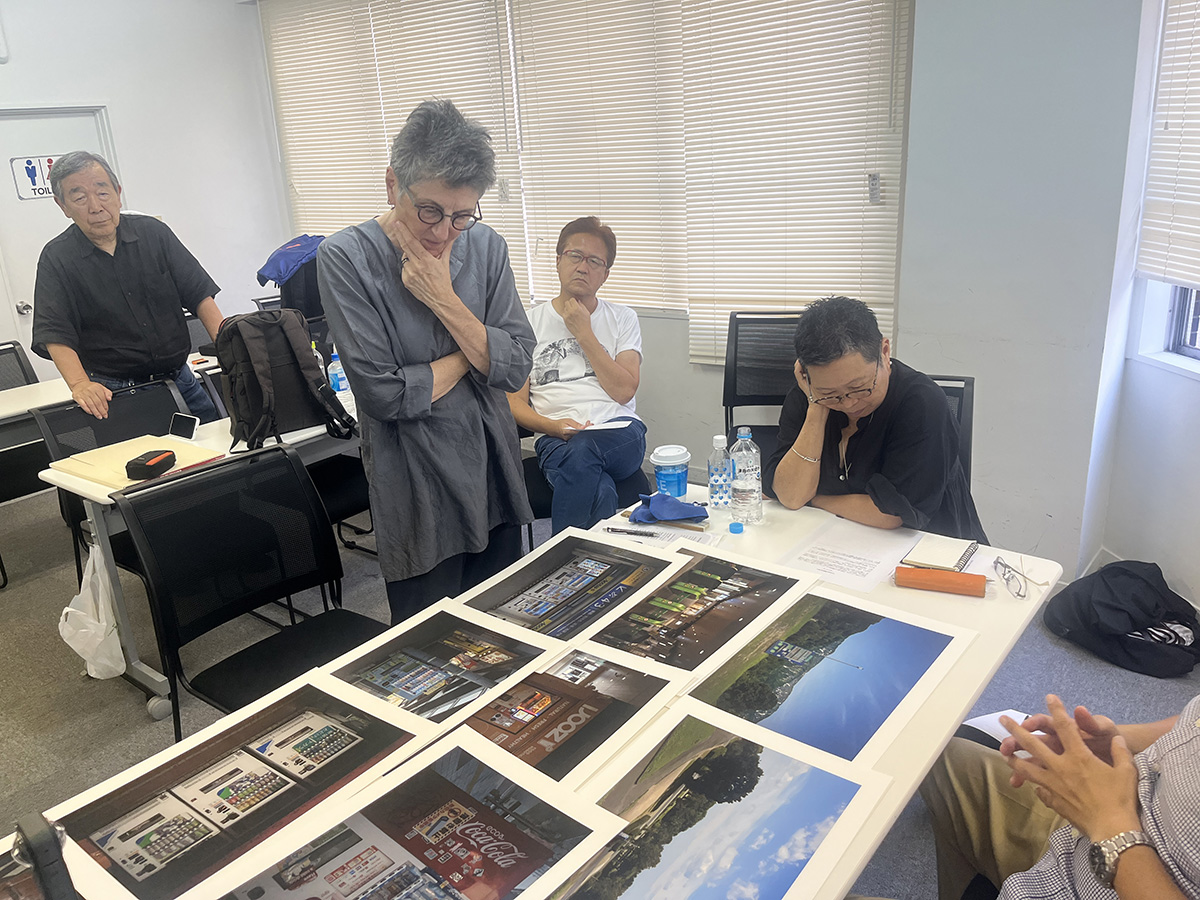
Sasaki’s new project was shown for the first time. It expresses an imagined, fictional future. Deborah advised that even if the work depicts a dangerous future dominated by robots, the images were too dark and should be adjusted.
佐々木さんは今回初公開の新プロジェクトです。想像した架空の未来を表現しています。デボラさんからはロボットに駆逐されていく危険な未来を表現していたとしても画面が暗いので直したほうがいいとのことでした。
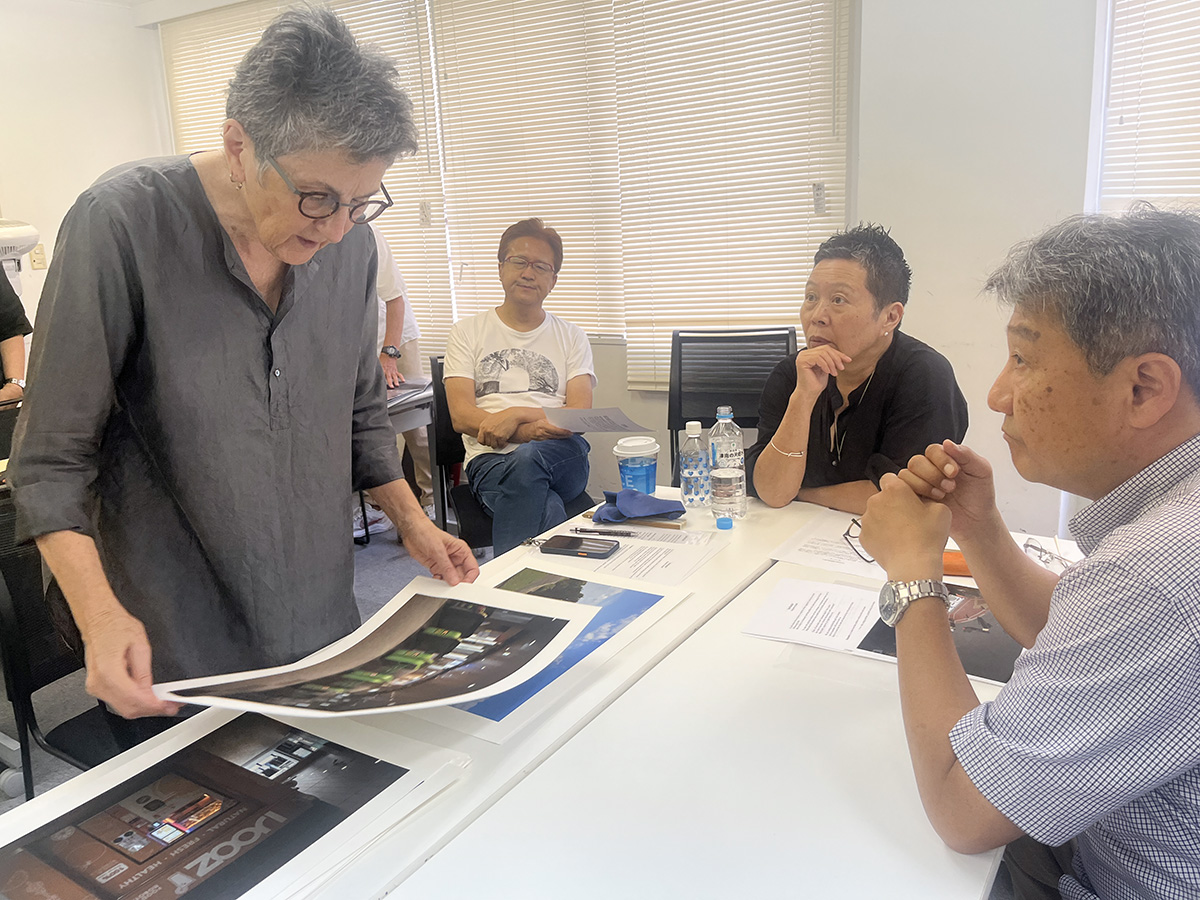
Since the project had just started and the statement was not yet finalized, she presented several variations, considering both the concept and different visual arrangements for the exhibition.
スタートしたばかりプロジェクトでステートメントが定まっていないため、コンセプトと共に、ビジュアル上での展示のバリエーションを考えながら、いくつかのパターンを示してくださいました。
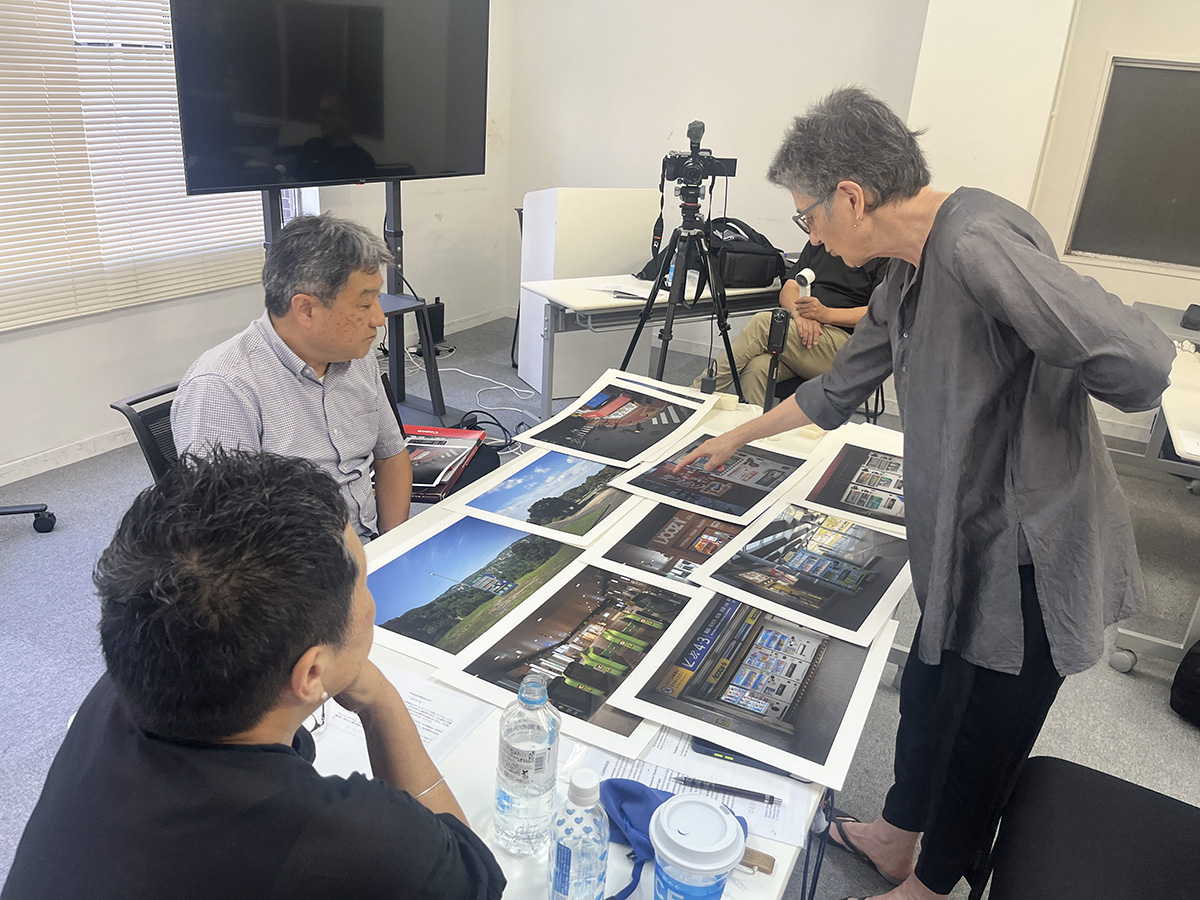
He showed several possible visual sequences: how the work might unfold with an archaeological approach, and how it could develop based on the sci-fi concept Sasaki had arrived at.
考古学的なアプローチをするとしたら、ビジュアルの展開はどうなるのか。佐々木さんがたどり着いたSF的なコンセプトだとどうなるのか。何通りかの流れのビジュアル展開を見せてくれました。
Koji Murata / 村田 光司
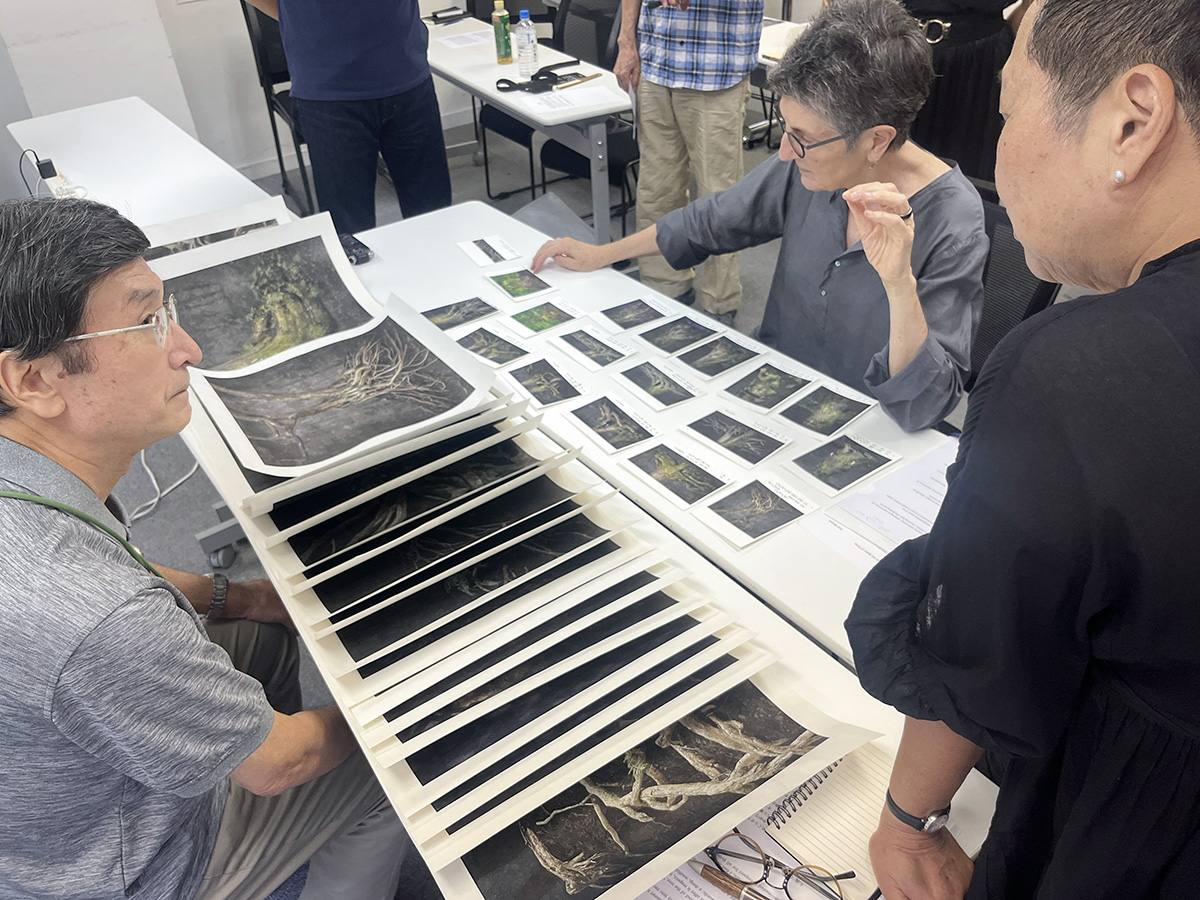
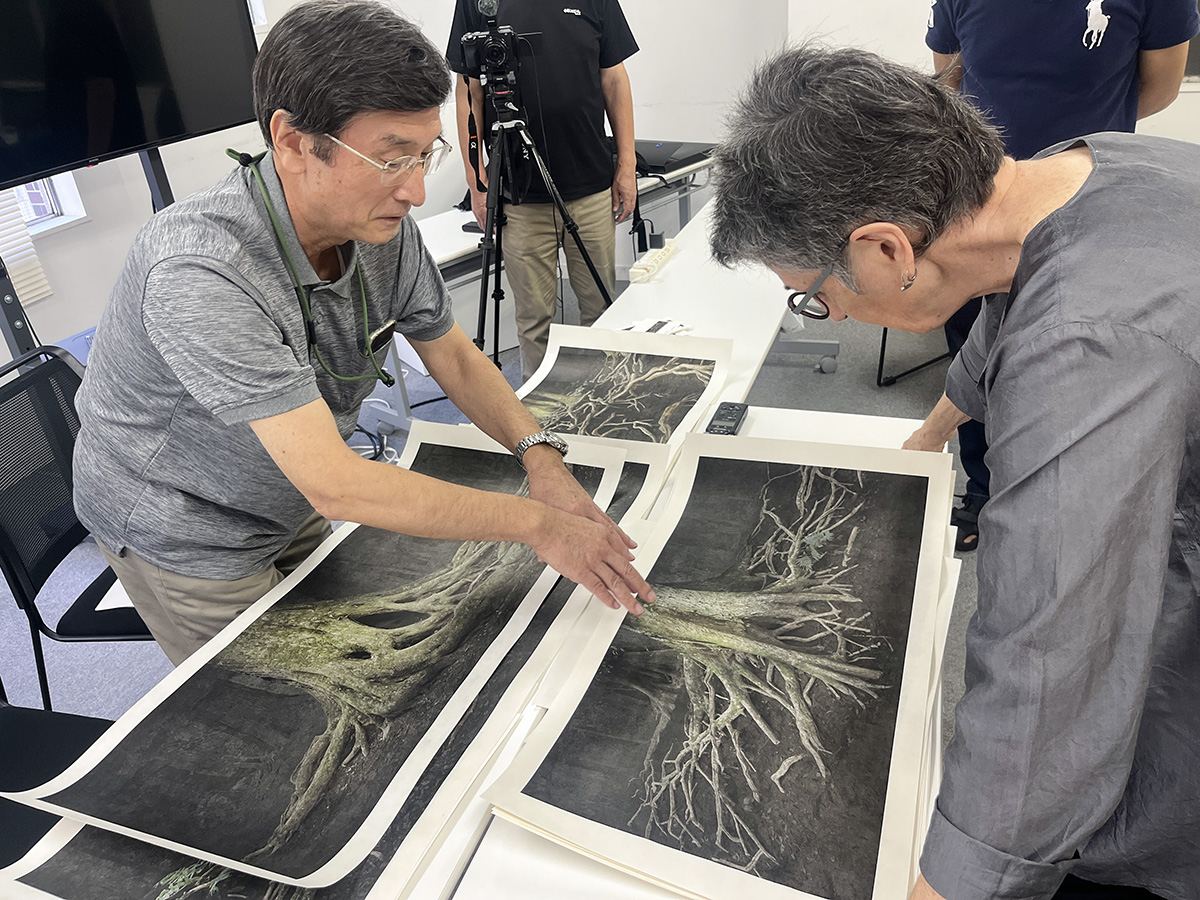
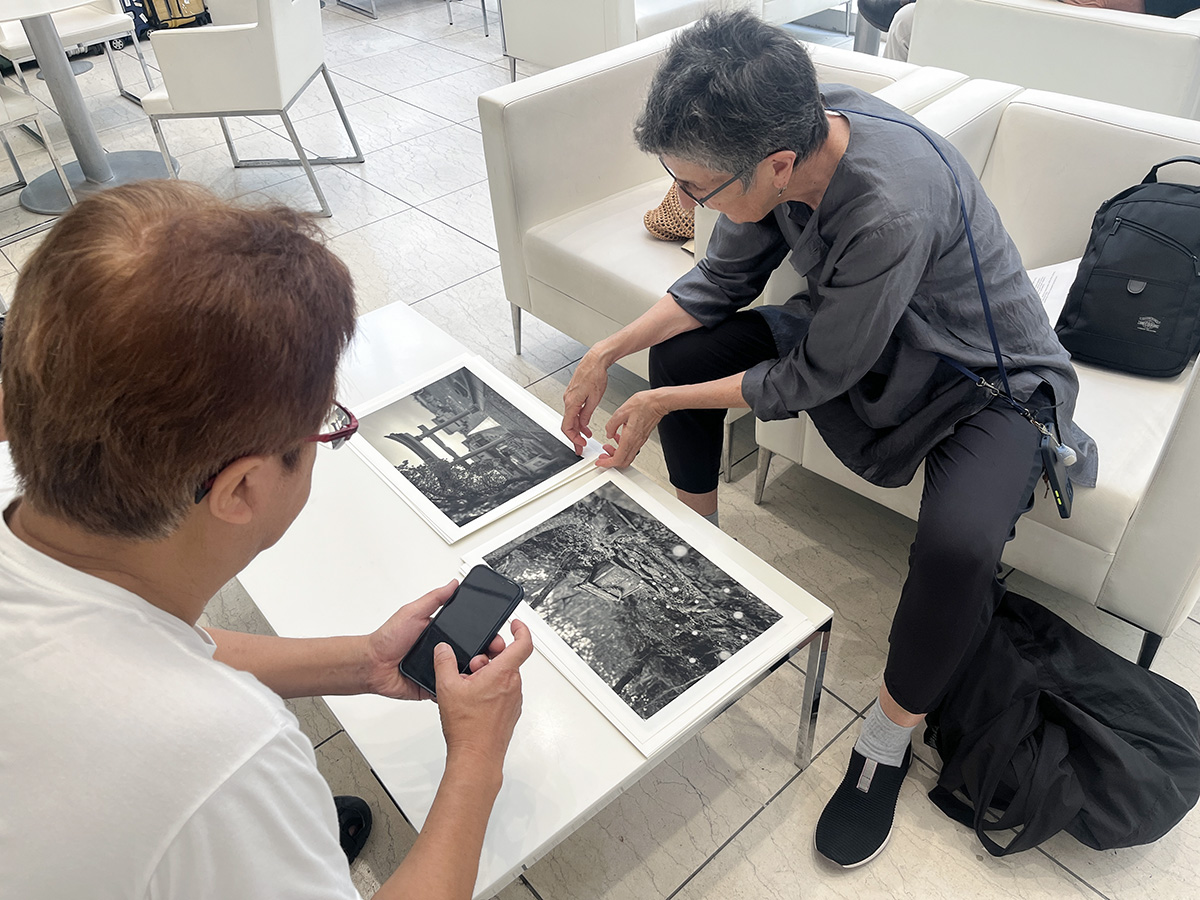
Murata, who usually works in a nihonga-style, focused his new project on the base of a giant tree. Since many of the works are large and landscape-oriented, he also prepared smaller, hand-sized prints so the entire composition could be viewed at once.
いつも日本画風の表現をする村田さんのニュー・プロジェクトのモチーフは巨木の根元です。横長の大きい作品が多いので、全体を一度で見られるように手札サイズのプリントも用意していました。
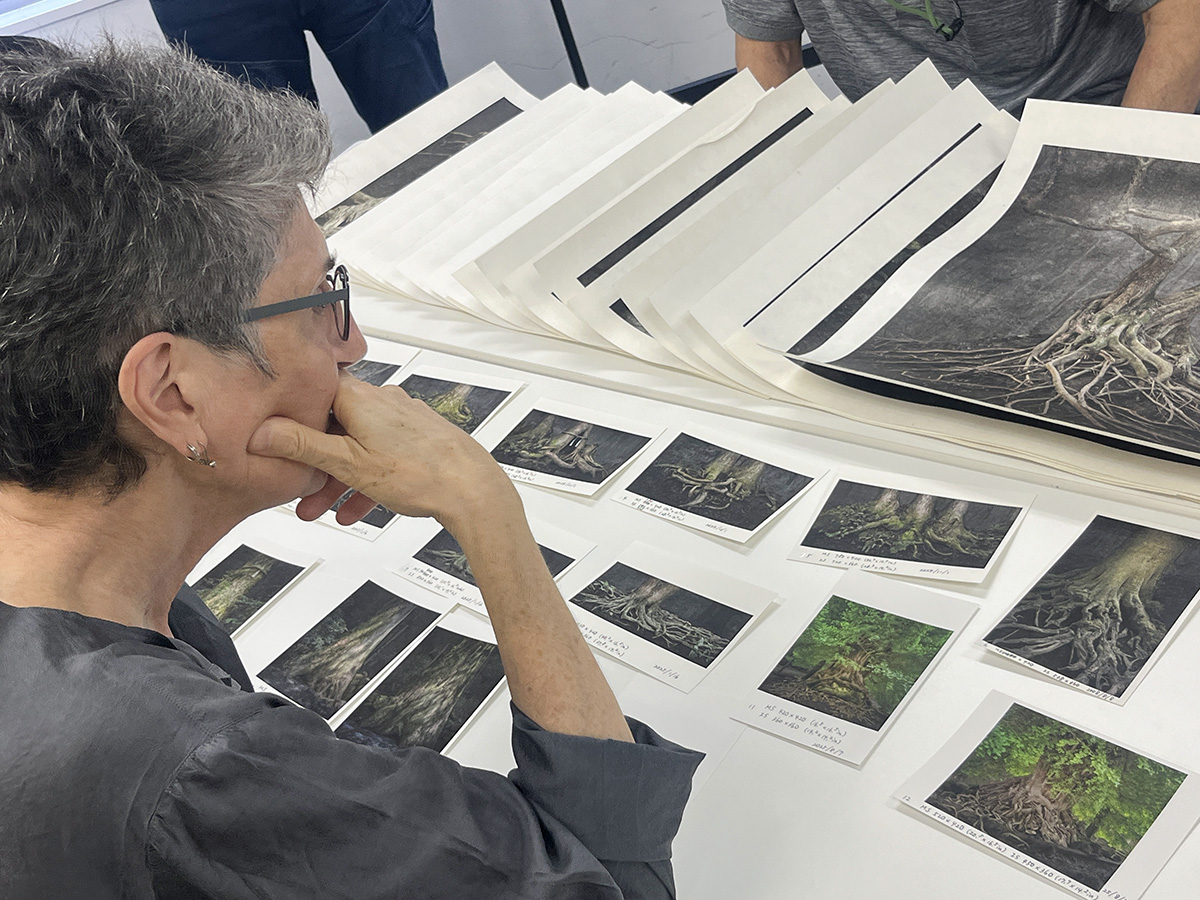
Starting with the smaller prints, Deborah suggested, “It might be interesting to make an accordion-style book from these.” It was an idea Murata had never considered, and he decided to try it immediately.
小さいサイズから見始めたデボラさんから「これで蛇腹式のブックをつくってみたら面白いのでは」という提案を……。村田さんが考えたことのないアイディアだったのですぐに試してみることになりました。
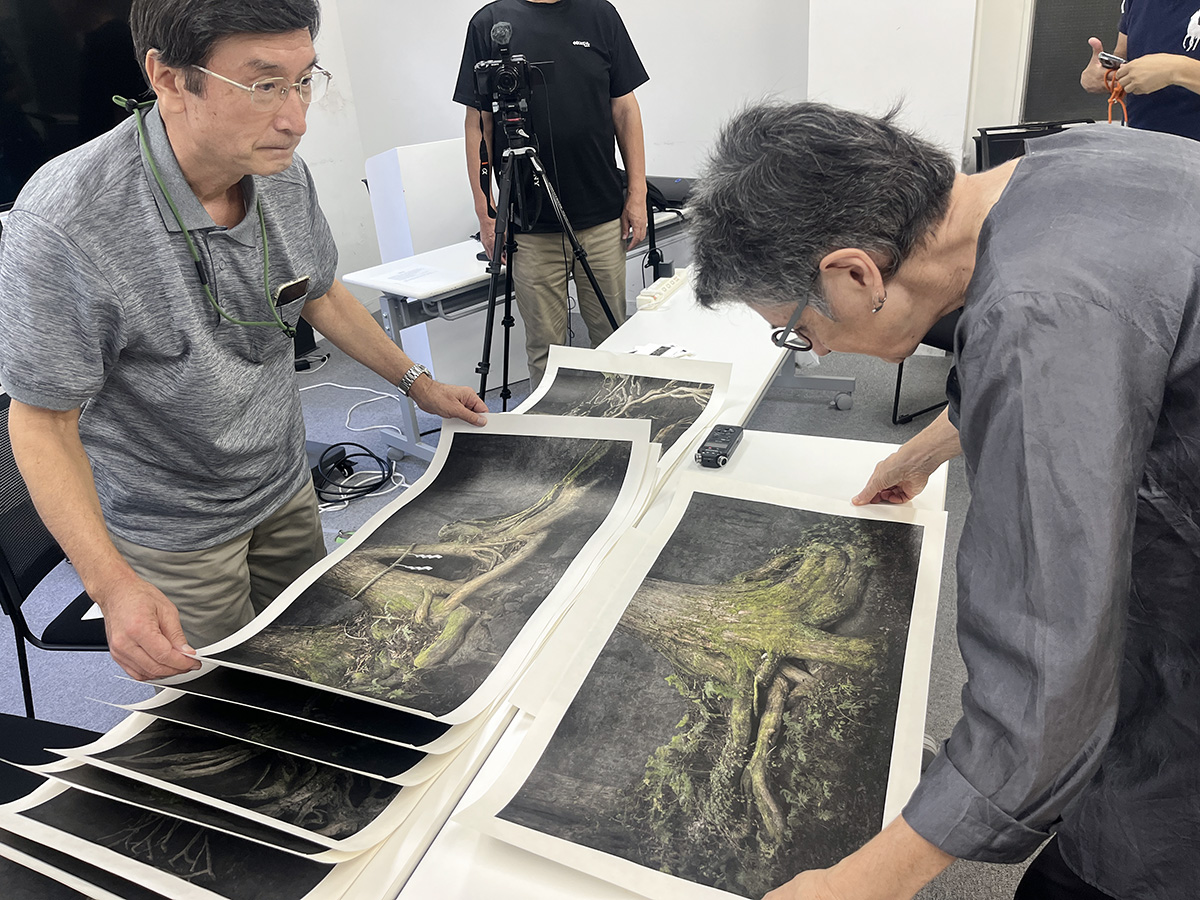
The larger original prints use a printing method unique to Murata. Metal powder is sprayed onto the washi paper before printing the image. Deborah praised these works as the most powerful of all Murata’s projects to date.
大きい方の本物のプリントは村田さんしかやっていないプリント方式。プリントする前の和紙に金属の粉を吹いて、その上にプリントするというものです。デボラさんも村田さんの今までのプロジェクトで最も力強いと絶賛されていました。
Kouji Sasaki / 佐々木 浩二
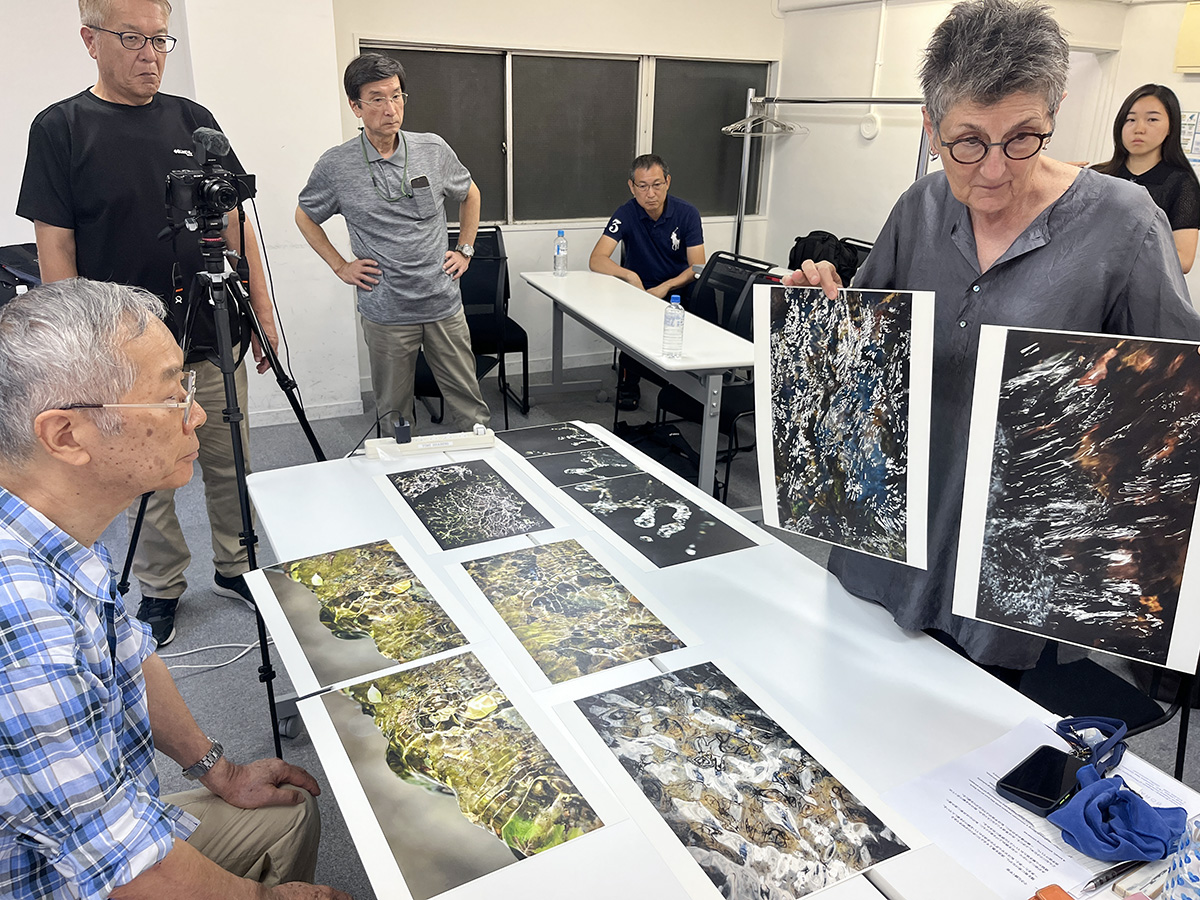
Sasaki’s project abstractly expresses water droplets. Deborah suggested selecting works in which the water itself isn’t visible and experimenting with display methods—such as presenting them vertically or upside down—to create a more engaging exhibition.
佐々木さんの作品は水滴を抽象的に表現したプロジェクトです。あえてモチーフの水が見えない作品を選んで、縦位置にしたり、逆さまにしたり、展示の仕方を工夫してみると面白いと提案されました。
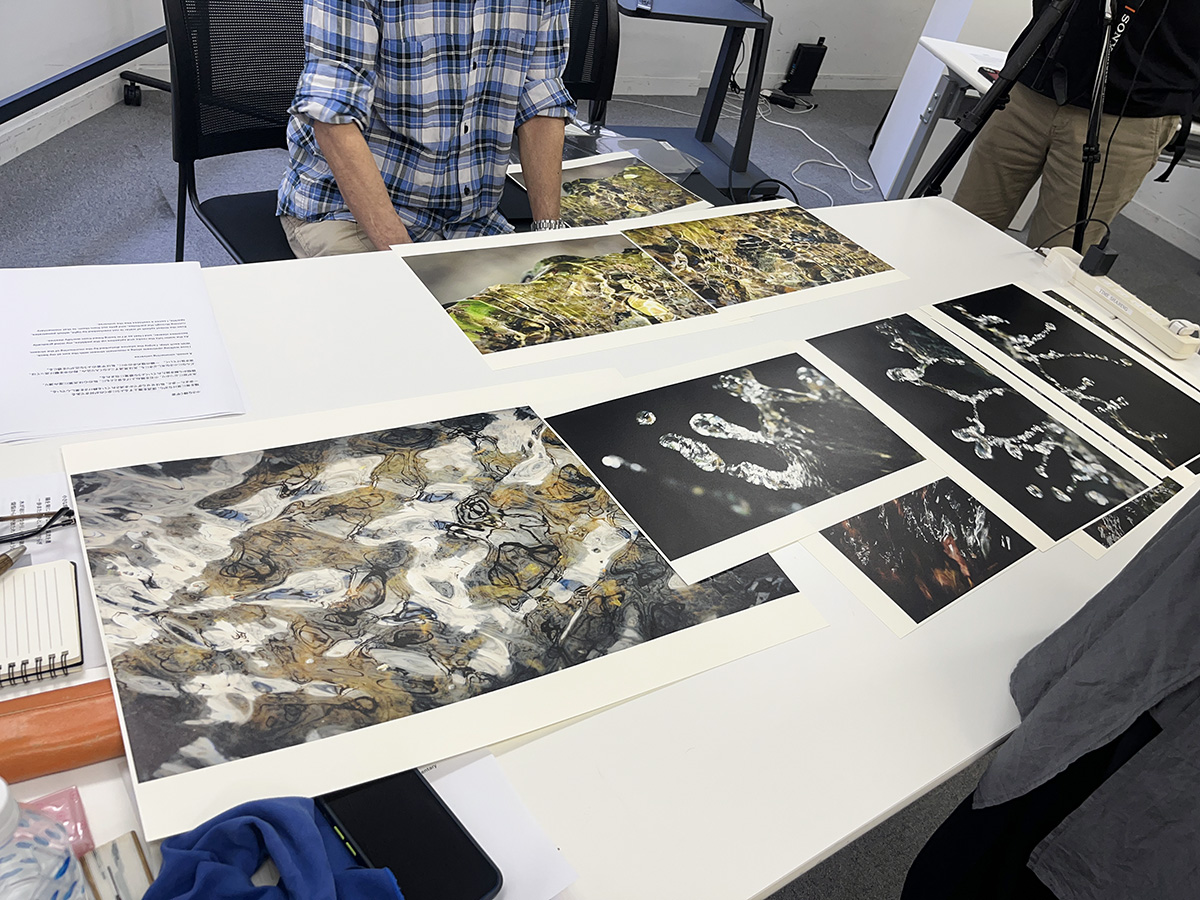
She also suggested printing the piece that least resembles a water droplet at the largest size. Learning how varying sizes can influence the flow of the exhibition intrigued Sasaki.
いちばん水滴に見えない作品をもっとも大きくプリントするのがいいとの提案もいただきました。サイズの違いによって、作品の流れを変える効果があることを知り、佐々木さんも興味深く聞き入っていました。
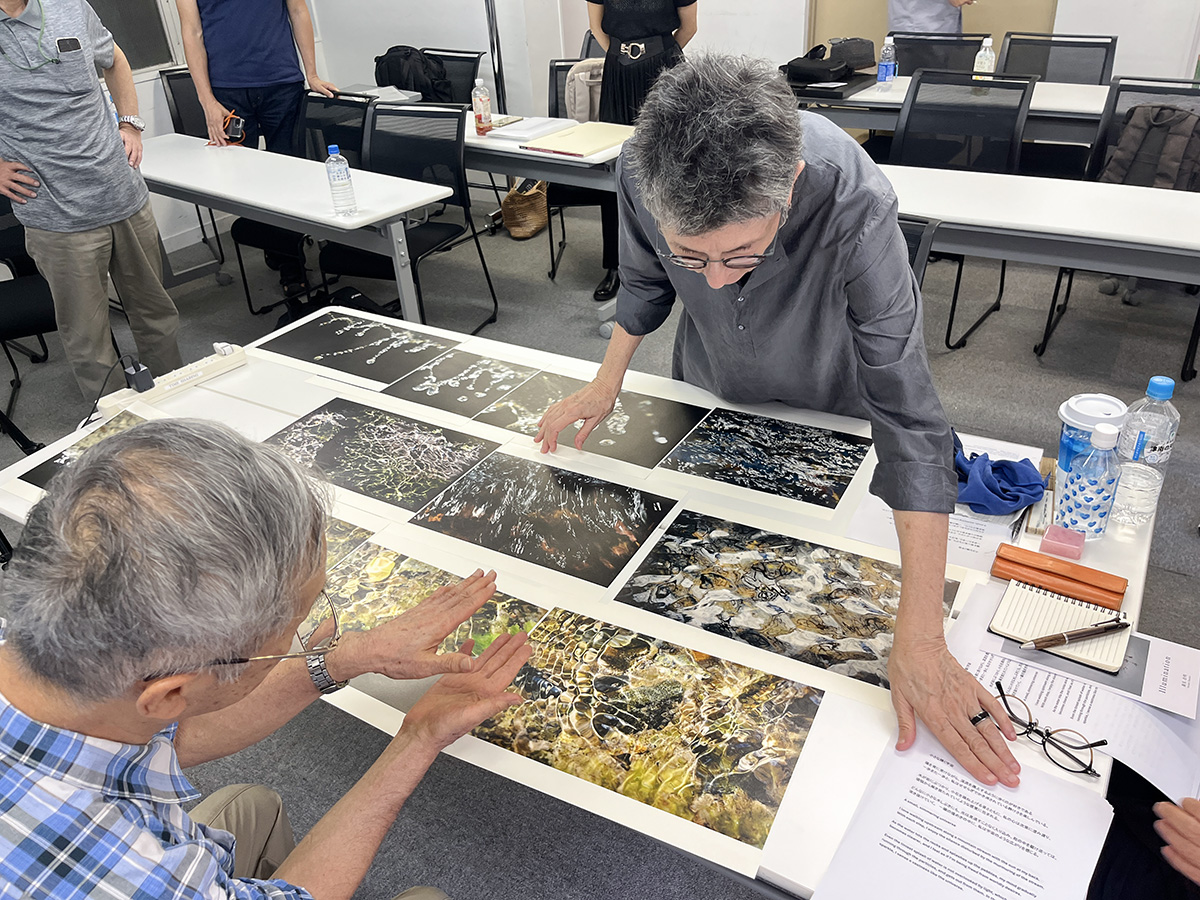
Sasaki was deeply inspired by Deborah’s curatorial skill—how she determines the sequence of works, decides their sizes, and, like music, builds crescendos and pauses to create a smooth, engaging flow for the project.
作品を並べる順番、サイズの決め方、音楽のように盛り上げたり、区切りをつけたり、プロジェクトを心地よい流れにするデボラさんのキュレーションの力に佐々木さんはかなりインスパイアされていました。
Ami Fujimori / 藤森 彩海
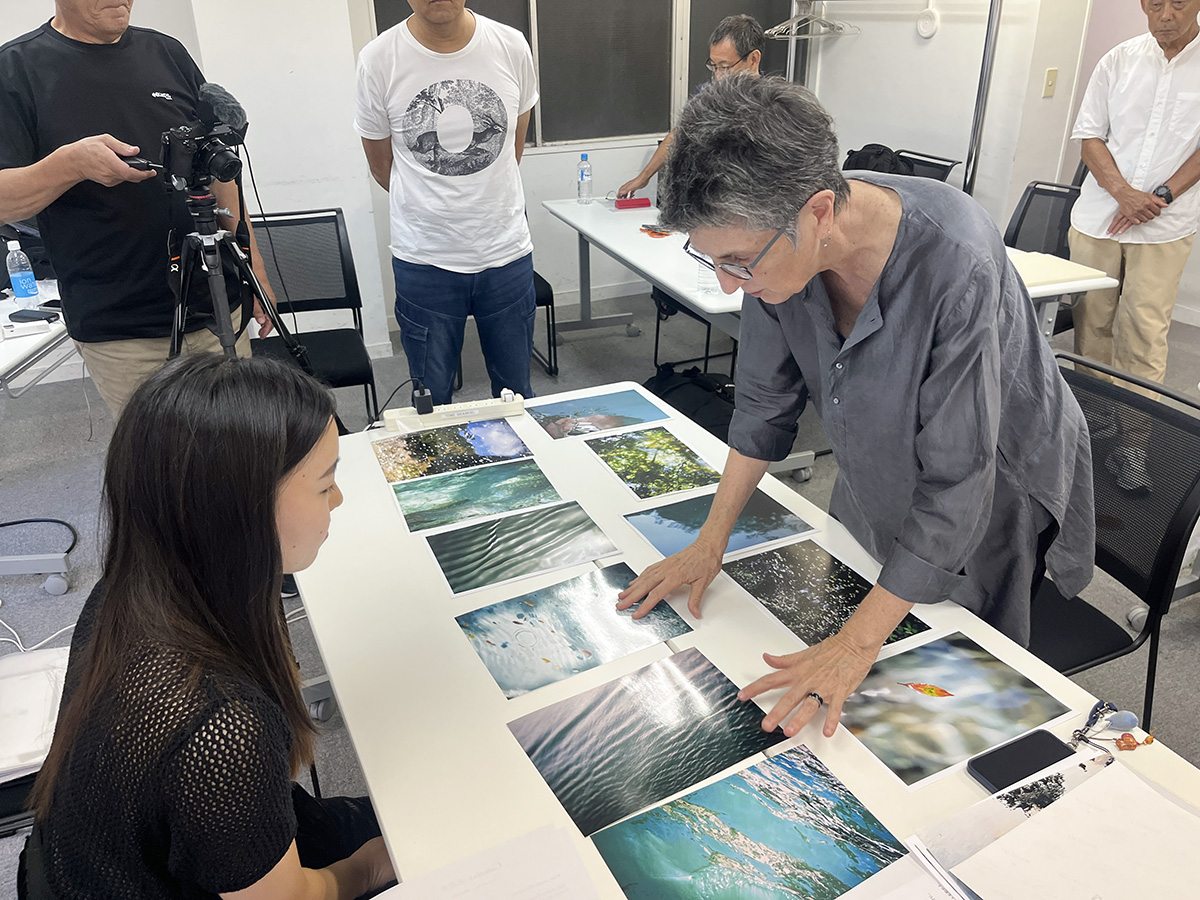
Fujimori, who joined in April this year, is tackling a project as his first personal body of work. He seemed to feel fortunate to have the opportunity to have his work reviewed and receive suggestions from a top curator like Deborah.
今年4月に入会した藤森さんは初めて自分の作品としてのプロジェクトに挑戦中。それをデボラさんのような一流のキュレーターに見てもらえ、サジェスチョンをもらえる幸運を感じているようでした。
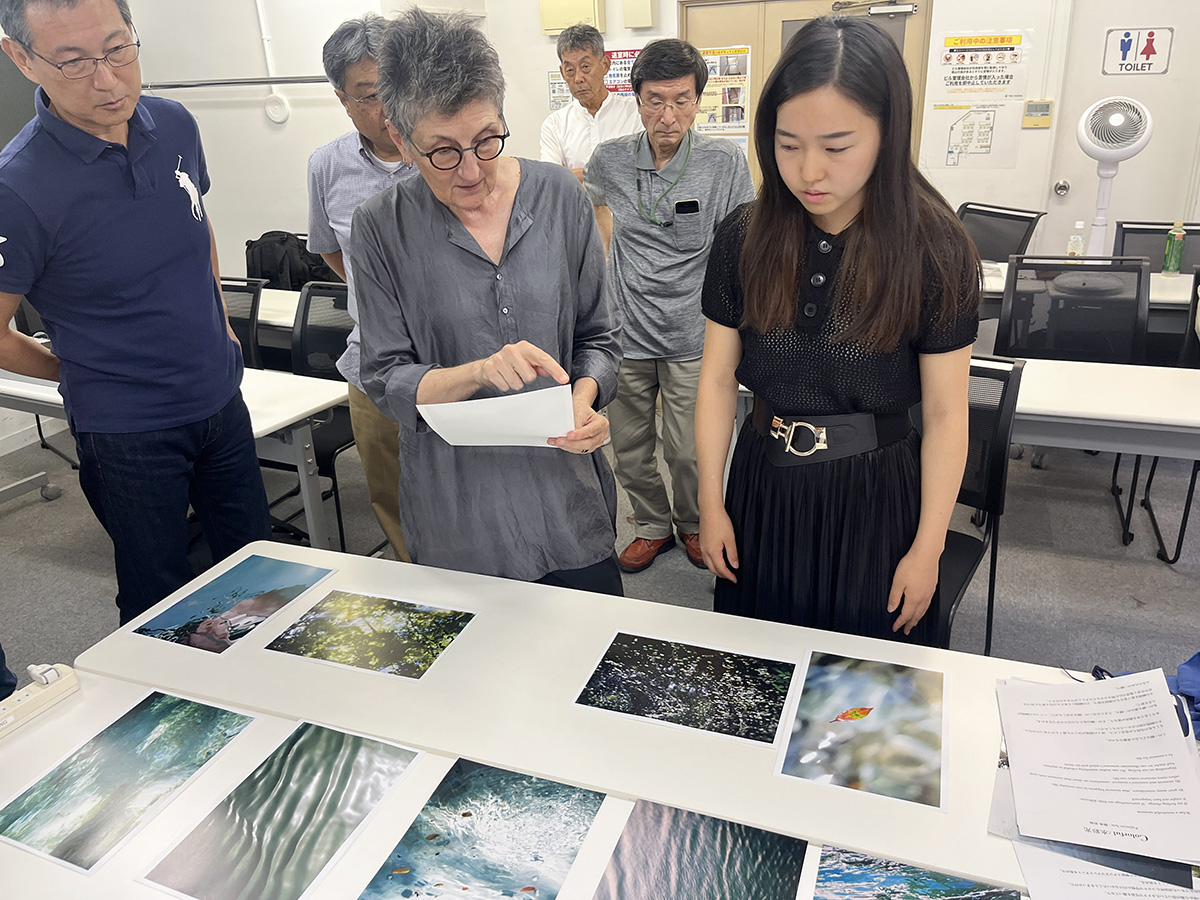
Deborah carefully and thoughtfully reviews the work of anyone, whether a photography student or a beginner amateur. She offered Fujimori ideas and suggestions from multiple perspectives on his project.
写真学校の学生でもアマチュアの写真初心者でもどんな人の作品でも真剣かつ丁寧に見てくれるデボラさん。藤森さんの作品にもさまざまな角度からのアイディアを伝えてくれていました。
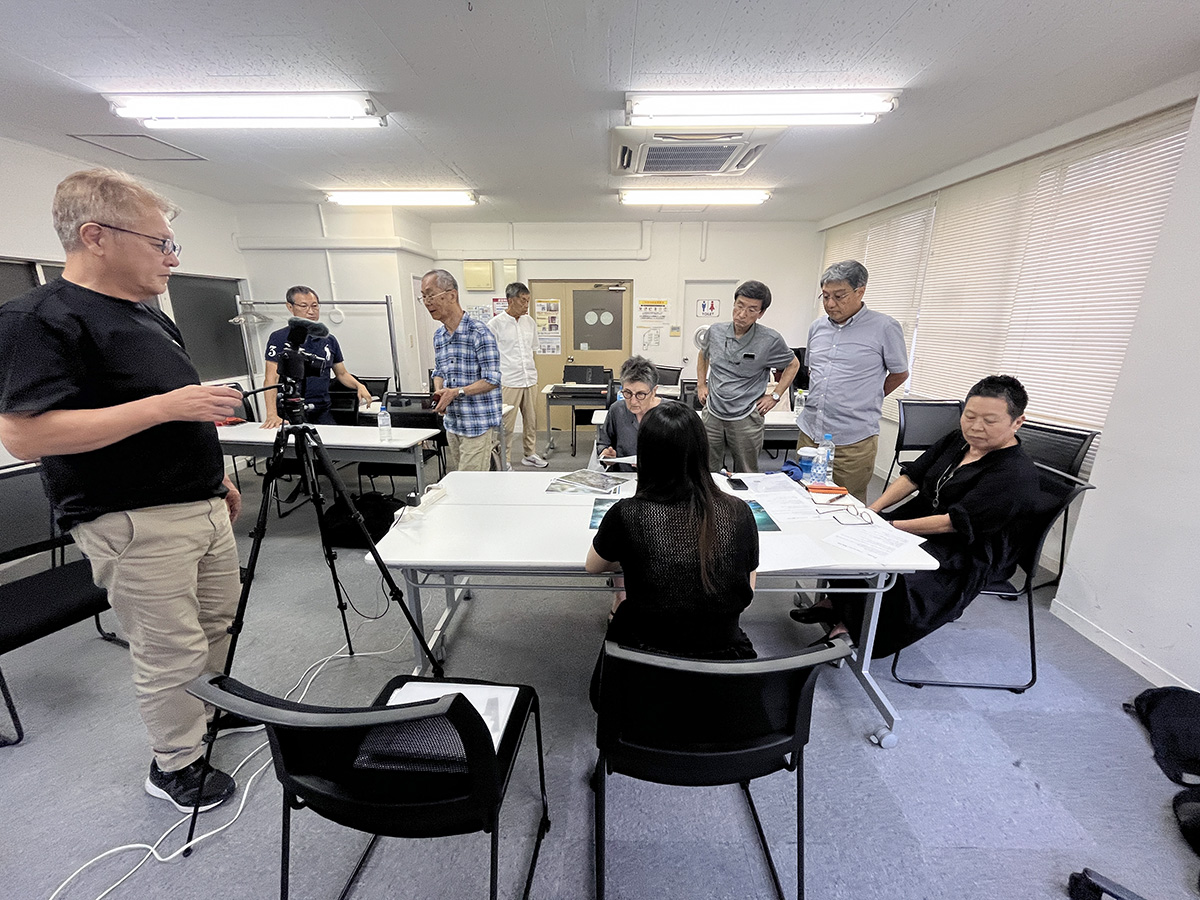
Deborah’s reviews are invaluable not only for one’s own project but also for the feedback she gives to other members. It was clearly a setting rich with learning opportunities for everyone.
デボラさんのレビューは自分のプロジェクトに対してだけでなく、他のメンバーに対する言葉であってもとても勉強になります。吸収することの多い場になったことは間違いないようです。
Hiroyuki Okuyama / 奥山 浩通
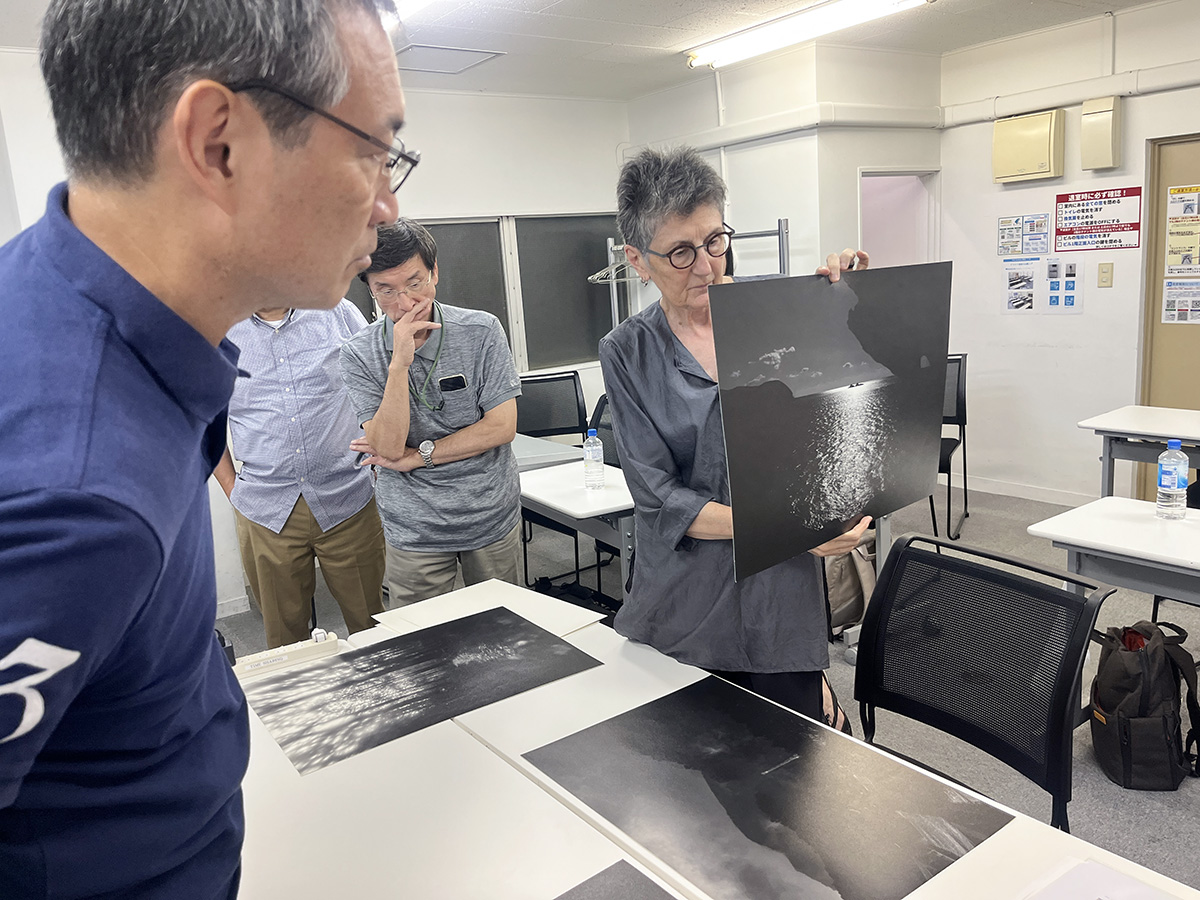
Okuyama’s work is highly distinctive, featuring unusually dark, edge-to-edge compositions dominated by black tones. The landscapes within are not immediately apparent and require careful observation—something Deborah noted as a strong point of the work.
あまり見たことがないほど全体的に黒が多く、暗いトーンで、フチ無し。奥山さんの作品はとても個性的です。よくよく目を凝らして見ないと、そこに含まれている風景もよくわからない。そこがいいとのこと。
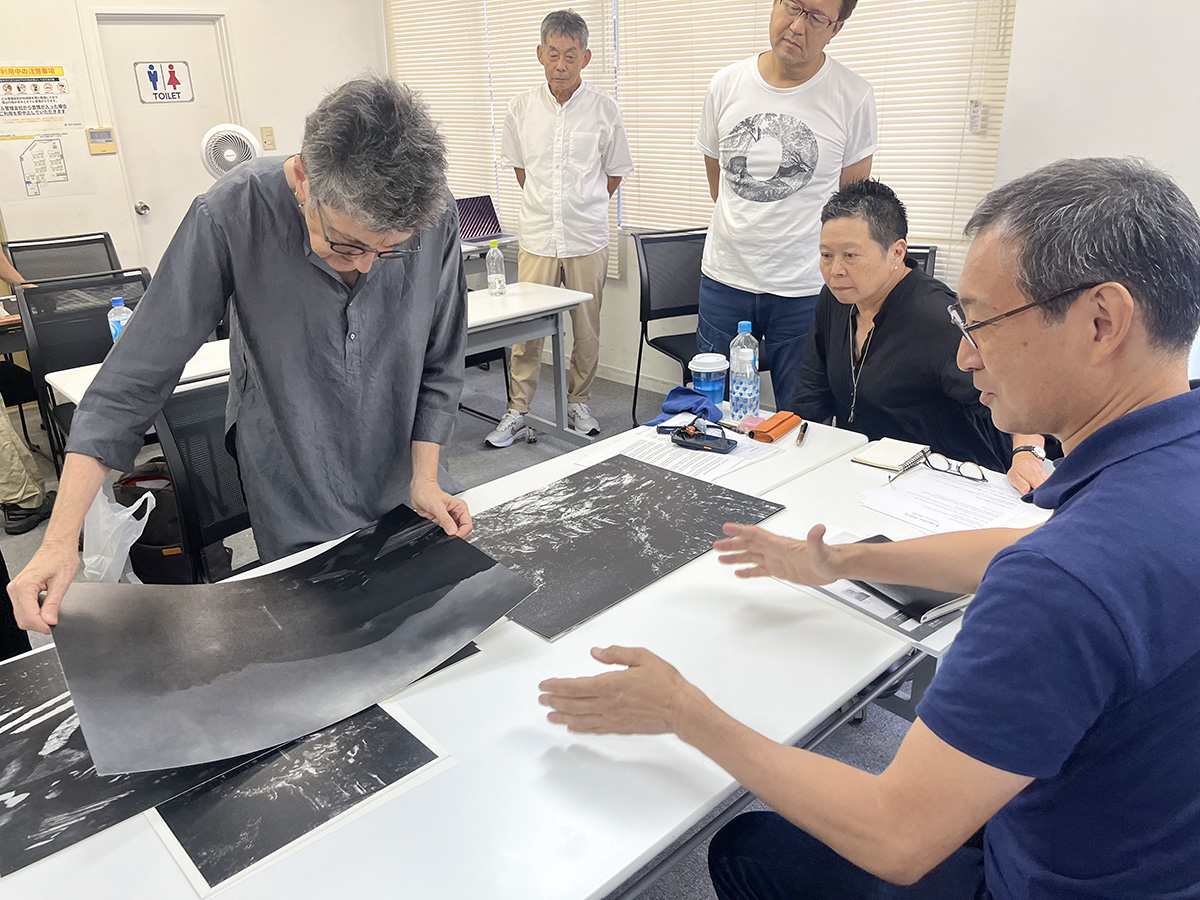
She explained that because the images are not immediately recognizable, viewers spend more time in front of the work, slowly discovering its details. Deborah noted that creating such an effect makes a work truly valuable.
それは例えば、ひと目で認識できないことによって、鑑賞者は時間をかけてゆっくりその作品の前で時間を過ごすことになる。そういう効果を生む作品は貴重だとデボラさんから言われました。
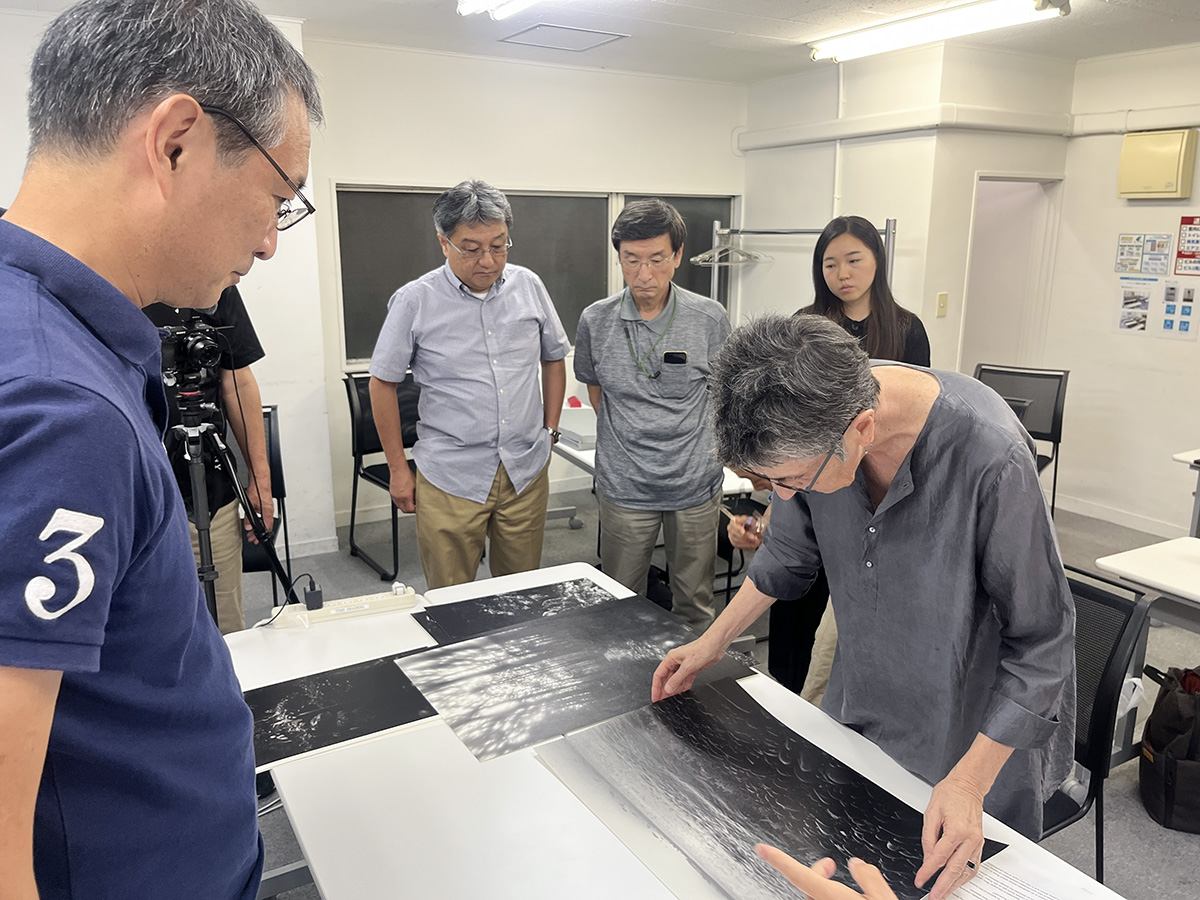
She also suggested intentionally reducing the number of works in the exhibition, as a way to encourage viewers to take their time with each piece. It was an idea Okuyama hadn’t considered, but he seemed to respond with a thoughtful, “I see.”
あえて、展示作品の点数を少なくすることも提案されました。それはやはり一点一点をゆっくり見てもらうための工夫。考え付かなかった提案でしたが、奥山さんも「なるほど」と思われたようでした。
Dear Deborah Klochko,
Thank you so much for taking the time to meet with us during your busy trip to Japan. We deeply appreciate your thoughtful feedback and inspiring comments. While our next review will likely be online, we look forward to continuing to work with you as SAMURAI FOTO prepares for next year’s KG+ exhibition. Your guidance means a great deal to all of us.
デボラ・クロチコさんへ
日本旅行中の忙しい中、私たちのために時間をつくってくださってありがとうございました。とても興味深い意見やタメになる感想をありがとうございました。次回はオンラインになるかと思いますが、来年のKG+出展までSAMURA IFOTOをよろしくお願いいたします。
Feel free to contact us.
Nothing will make us happier than having visitors share their thoughts.